
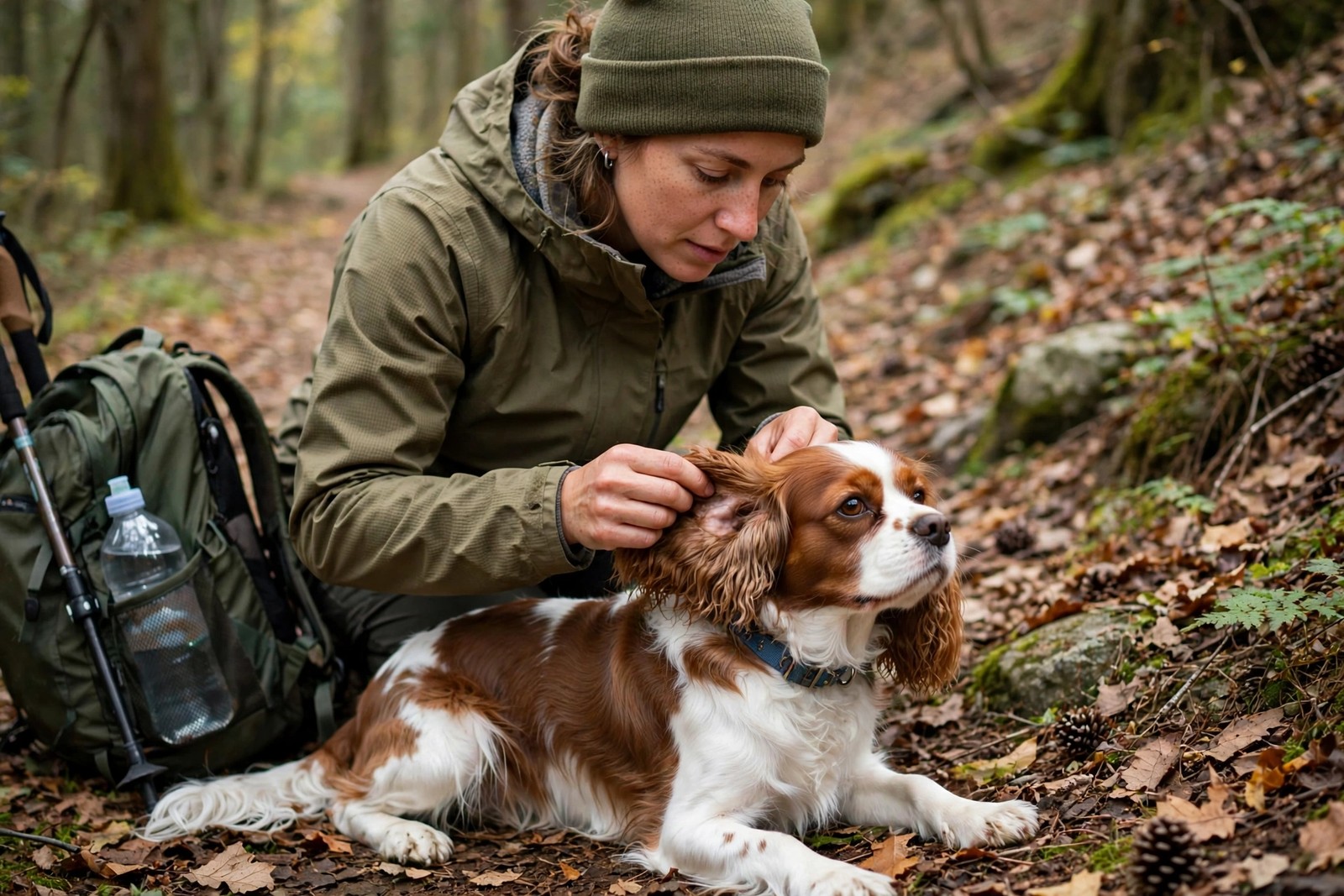
After every walk — especially through grass, leaf litter, or woods — run your hands slowly over your dog's entire body, feeling for small bumps, and look closely at the ears, neck, armpits, belly, groin, and between the toes. A thorough check takes about five minutes and is the simplest way to find ticks before they have been attached long.
The Hands-On Sweep, Step by Step
Ticks are easier to feel than to see, particularly on thick-coated breeds like a Chow Chow or a Husky. Work methodically so you do not skip zones:
- Start at the head: check inside and behind the ears, around the eyes and muzzle, and under the collar — a favorite hiding spot owners forget because the collar covers it.
- Move down the neck and shoulders, parting the fur against the grain where it is thickest.
- Run your fingers into both armpits and along the chest and belly.
- Check the groin, the base of the tail, and around the rear.
- Finish with the legs and paws, spreading each toe — ticks wedge between toes and in the webbing.
On a short-coated dog, a Dalmatian or a Boxer, you can often spot a tick visually as a dark oval that was not there yesterday. On any dog, your fingertips are the real tool: a feeding tick feels like a small, firm skin tag or a pea under the fur.
If You Find One: Removal Basics
Use fine-tipped tweezers, grasp the tick as close to the skin's surface as you can, and pull upward with steady, even pressure — no twisting, burning, or folk remedies like nail polish, which waste time and irritate skin. Clean the bite area and your hands afterward, and note the date. Your vet can advise on the safest way to dispose of the tick in your area; some clinics like you to save it in a sealed container in case questions arise later.
Then watch your dog over the following weeks for unusual tiredness, appetite loss, stiffness, or fever. Tick-borne illnesses can take time to show, and those early signs are easy to shrug off as an off day — which is exactly why noting the find, with its date, matters.
Prevention Still Does the Heavy Lifting
Post-walk checks are the safety net, not the whole strategy. Ask your vet about tick prevention suited to your region and your dog's habits, and keep it current the same way you would flea prevention. After hikes, a quick brush-out on the porch before coming inside knocks loose wanderers that have not yet attached. In high season, sticking to trail centers and avoiding tall grass and brush piles lowers the number that hitchhike home in the first place.
A Record Your Vet Will Thank You For
One tick find is trivia; a pattern of finds, with dates and any treatments, is useful medical history. Note tick finds and treatments in KinsLe's Pet Passport — the records packet holding vaccines, medications, allergies, and documents — so you can share it with your vet if symptoms ever show up weeks later. "He had a tick sometime in the spring" becomes "two ticks, April 12 and May 3," and that precision helps your vet think clearly. When symptoms surface weeks after a hike, a vet can work from the Pet Passport history on KinsLe — each find dated, each product used noted, and any fever or stiffness added beside it.