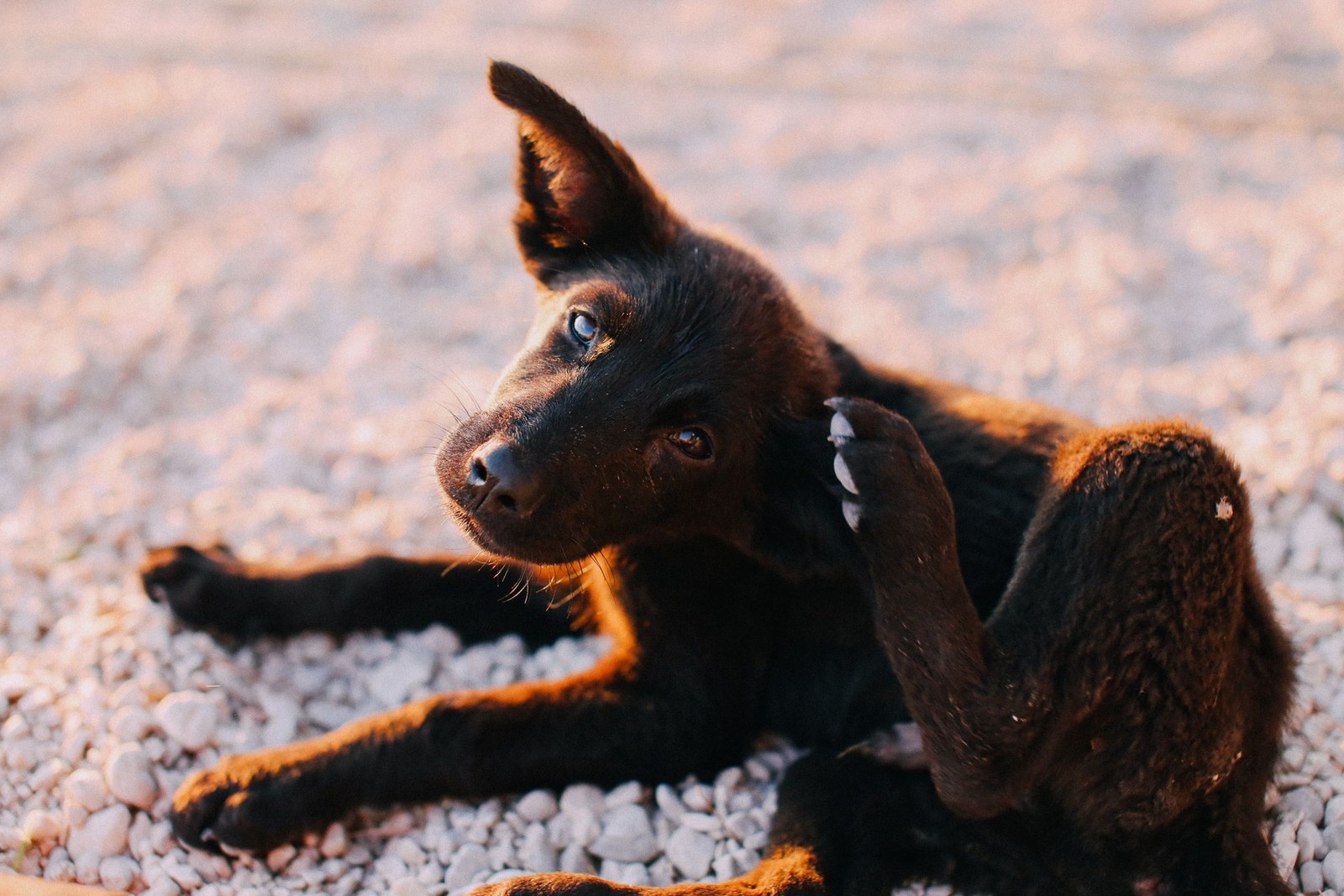
Occasional scratching is normal for any dog, but scratching that will not stop — especially with paw licking, ear shaking, skin chewing, redness, odor, or hair loss — is a sign something like allergies, fleas, irritation, or infection needs attention. The itch is a symptom, not a diagnosis, and your veterinarian's job is to find the cause rather than just quiet the scratching for a week.
Know the difference between normal and not
Every dog scratches, rolls, and grooms. Worry when the behavior changes in frequency, focus, or force: your dog wakes at night to scratch, stops mid-walk to chew a paw, rubs their face on furniture, or works one spot raw. Licking that stains light fur reddish-brown, a yeasty or sour smell from ears or skin folds, head shaking, and scooting are all part of the same picture.
Check calmly at home. Part the coat and look for fleas or flea dirt, redness, bumps, crusts, or moist hot spots. Sniff ears — a strong odor matters. Look between toes and in Bulldogs, Shar-Peis, and other folded breeds, inside the folds. Note where the itch lives: paws and ears often suggest one set of causes, backs and tail bases another. That map helps your veterinarian, even though it cannot replace an examination.
What you can safely do at home
Keep your dog from making it worse. Interrupt licking gently and redirect, keep nails trimmed so scratching does less damage, and use a recovery collar if your veterinarian advises one for a sore spot. Keep parasite prevention current exactly as your veterinarian has directed, bathe only with products your veterinarian approves for itchy skin, and rinse thoroughly.
Do not apply human creams, leftover medication, or strong home remedies to inflamed skin, and do not start or stop prescribed treatment on your own. Many well-meant applications sting, get licked off, or mask signs your veterinarian needs to see. Photograph the worst areas in good light before you change anything.
When to book — and when to go sooner
Book a veterinarian appointment when scratching is constant for more than a few days, keeps returning, or comes with any skin change, ear signs, or hair loss. Go promptly if there are open sores, swelling of the face or ears, discharge, pain, lethargy, or your dog cannot rest. Puppies, seniors, and dogs with known allergies or on long-term medication deserve a lower threshold for calling.
Expect the visit to be detective work. Your veterinarian may examine skin and ears closely, check for parasites and infection, and ask about food, season, new products, and other pets. Allergies in breeds like French Bulldogs, West Highland White Terriers, and Labradors often need long-term management, not a one-time fix.
Keeping prevention from slipping
Itchy dogs improve on consistency: prevention given on schedule, follow-ups kept, ears checked after swimming, bedding washed during flare-ups. The owners who struggle are rarely careless — they are busy, and a dose due on the first of the month quietly becomes the ninth, then missed.
Questions to Ask Kimmy About a Returning Itch
When scratching returns, the questions worth bringing are specific to what you are seeing that week. Ask Kimmy in KinsLe whether paw licking plus a sour ear smell changes how soon to book, what to photograph before a visit, or how bathing and bedding washes fit a flare. Follow each reply with the next detail from your dog — a new hot spot, a stained paw, a sleepless night — so the picture you take to your veterinarian keeps getting sharper. Kimmy answers further questions about persistent scratching, paw licking, and ear odor in KinsLe, drawing on KinsLe Answers.