
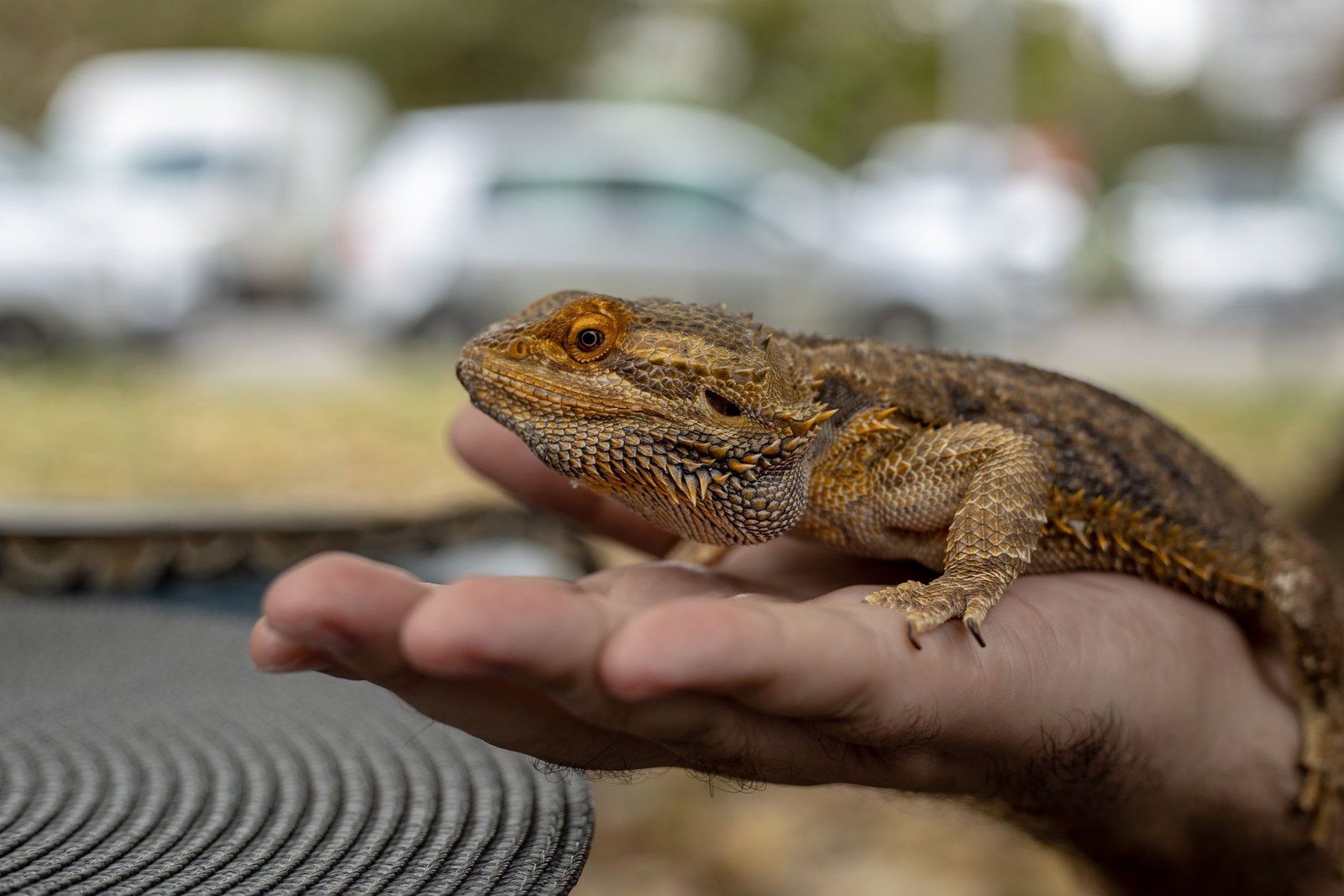
To handle a bearded dragon so it stays calm, slide a hand under its chest and belly so all four legs and the tail base are supported, rather than reaching down from above; let it settle on your hand, forearm, or lap, and keep sessions short, warm, and unhurried. Dragons read a shadow and a grasp from overhead as a predator arriving, while a slow hand sliding under the chest reads as a branch lifting them somewhere safe.
The Scoop, Step by Step
Approach from the front or side where your dragon can see you coming, and talk or move slowly enough that you are not a surprise. Slide one hand under its chest and belly, lifting so its front and back legs are supported rather than dangling, and steady the tail base with your other hand or against your forearm. Dangling legs are a top reason dragons wriggle, scratch, and panic — a dragon that feels fully held usually relaxes within moments.
Once lifted, bring your dragon close to your body or down onto your lap. Height makes most dragons nervous, so a seated handler on the sofa will have a calmer session than someone standing and carrying a dragon across the room.
Let the Dragon Set the Pace
Set your dragon on your hand, lap, or a blanket and let it explore at its own speed. Some dragons love perching on a forearm and watching the room; others want to wander a small, safe area. Watch body language: a relaxed dragon sits with a soft posture and calm breathing, while gaping, a darkening beard, frantic scrambling, or repeated attempts to leap are clear requests to end the session or return to the warmth of the enclosure.
End before your dragon gets stressed or cold. A bearded dragon away from its heat source cools down steadily, so a pleasant fifteen minutes beats an hour-long outing that ends with a chilly, grumpy pet.
Common Handling Mistakes to Skip
- Grabbing from above or by the tail — never lift a dragon by its tail.
- Passing a nervous dragon quickly from person to person like a novelty.
- Handling right after meals or during a shed, when most dragons prefer rest.
- Letting a dragon roam a room unsupervised, where it can wedge under furniture or find unsafe things to taste.
- Squeezing to prevent escape; support and calm blocking work better than grip.
If your dragon bites — rare, and usually a mistaken-identity nibble when fingers smell like food — stay calm, avoid yanking your hand away, and gently set it down. Wash hands before handling so fingers do not smell like greens or insects.
Kids, Guests, and Consistent Rules
Calm handling is a household skill, not just an owner's skill. Children do best seated on the floor or sofa, with the dragon supported over their lap, and guests should get the thirty-second version of the scoop rule before they are handed a dragon. When everyone uses the same approach, the dragon stops bracing for surprises and starts treating handling as routine.
Sharing the Rules at Home
That consistency is easier when the guidance is written down where everyone can find it. Written handling notes — scoop from underneath, support the tail, sessions short while it is young — show the house method instead of leaving each person to improvise. New sitters and younger family members learn the house method before their first hold, and your dragon gets the same calm experience every time. The profile maintained for this dragon can be opened by relatives you pick after sharing through KinsLe Family Sharing.