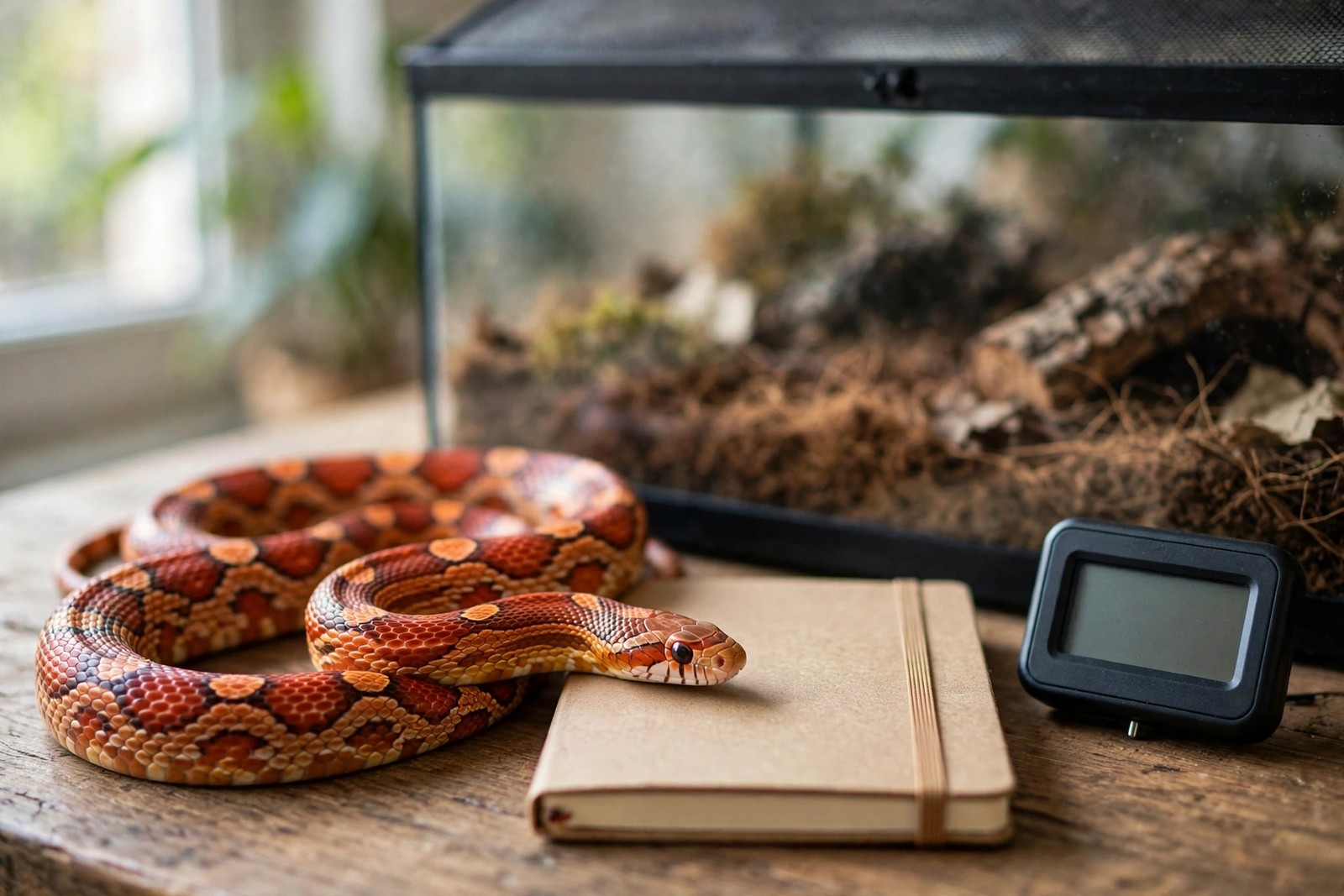
A corn snake that skips a meal has not necessarily given you a problem. It has given you a data point, and one data point means little until it sits beside the offers before and after it, recorded the same way every time.
The Fields to Record Every Time
Use the same closed set for every offer: date offered, prey type and size, taken or refused, whether a shed is due or underway, and enclosure warm and cool readings as you record them.
Do not skip an entry because the snake ate well. Taken meals are half the pattern, because they show how often feeding resumes and whether a refusal stands alone or belongs to a run. Record a refusal on the day it happens, including whether the prey was left in the enclosure, removed promptly, or offered again later, as a note attached to that entry rather than a replacement for it.
Consistency in prey description matters. Write the prey type and its size in the same terms each time, so a run of refusals after a size change reads differently from refusals on the usual prey. The same discipline applies to readings: enter the warm and cool readings you actually measured, in the same places, rather than writing that temperatures seemed fine.
Patterns That Are Usually Normal
Short refusals around shedding are a common pattern. Many corn snakes lose interest in food as their eyes cloud and their skin dulls, then feed again soon after the shed completes. When the log shows a refusal, a shed marked due or underway beside it, and a taken meal shortly after, that sequence explains itself.
Seasonal fasts are another familiar pattern. Appetite often dips in cooler, darker parts of the year even in a heated enclosure, and breeding-season males in particular may ignore food for a stretch while they stay restless and active. A male who refuses for weeks, holds his weight, and moves normally presents very differently from a snake who refuses and fades, and the record is what lets you separate the two calmly.
A single refused meal after a handling-heavy day, a move, or an enclosure change also fits a normal picture when the next offer is taken. Context notes help, but they support the closed set rather than replacing any part of it.
The Pattern That Should Worry You
The worrying pattern is refusal plus change elsewhere. Refusal paired with weight loss, a visibly thinner body, wheezing or bubbles, mouth discoloration, retained shed that keeps repeating, unusual stillness, or repeated regurgitation routes to a veterinarian. Bring the log with you, because the sequence of offers, sheds, readings, and weight trend answers the first questions a veterinarian will ask.
Weigh the snake on a regular rhythm and note the trend beside the feeding entries. Weight held steady through a short fast is reassuring context. Weight sliding while offers keep being refused turns waiting into delay, even if no single missed meal looked serious on its own.
Avoid inventing a fixed number of missed meals as your personal rule. A growing juvenile refusing repeatedly, an adult in a seasonal fast, and a breeding-season male are not on the same clock, so the trend and the company the refusal keeps matter more than a count alone.
Making the Log Easy to Keep
Keep the record where feeding happens, and fill it in before you leave the enclosure. Two minutes at that moment beats a Sunday reconstruction of which evening the mouse was refused and whether the shed had started yet.
Review the entries monthly in one pass. Read down the taken and refused column, check shed notes against refusals, glance at the warm and cool readings for drift, and confirm the weight trend still matches the story the meals are telling.
KinsLe's Pet Passport history places sheds, temperatures, and meals side by side, giving a veterinarian the full context behind any fast.