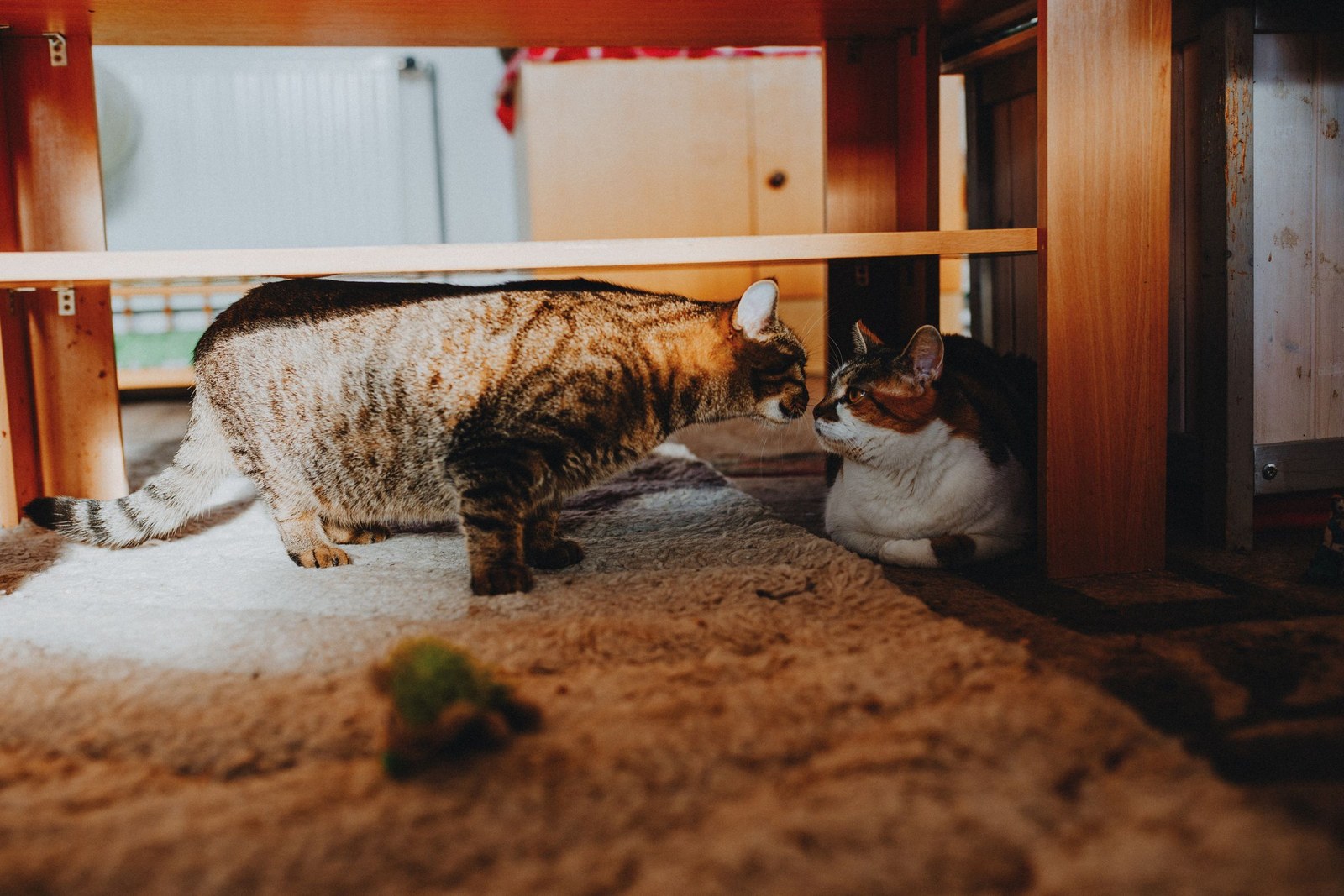
Yes — hissing when cats first meet is completely normal. A hiss is communication, not a verdict on whether your cats will get along. It means, in plain cat language, "I am unsure and I need more space," and a cat who hisses and then backs away is actually handling the moment politely. Judge introductions by the trend over several days, not by a single noisy first encounter.
What a hiss is actually saying
Cats rely heavily on scent and personal space, and a new cat is a flood of unfamiliar information. Hissing, along with a turned head, flattened whiskers, or a low growl, creates distance without anyone having to make contact. It is the alternative to a swat or a chase, and you want your cats to have that verbal option.
Context matters. A brief hiss when the newcomer rounds a corner too fast, followed by both cats settling, is very different from sustained growling, fixed staring, and one cat stalking or blocking the other. Watch the whole body: loose posture, slow blinks, and a tail carried normally suggest a cat who is annoyed but coping. A puffed tail, pinned ears, and a body that stays tense long after the other cat leaves suggest you need to slow things down.
How to respond in the moment
Do not scold or punish a hissing cat — she is giving you useful information, and punishing her only adds your stress to hers. Instead, calmly increase the distance. Call one cat away with a treat, toss a toy in the opposite direction, or simply let the hissing cat retreat to her safe room.
Avoid picking up a tense cat to "show her it's fine." Being held removes her escape route and can redirect fear onto your hands. If meetings consistently end in escalating noise, end the session earlier next time and add more distance, a barrier, or a shorter duration.
Slowing an introduction back down
Going backwards is not failure; it is how introductions succeed. If hissing is increasing day by day, return to the previous stage:
- Separate rooms again, with scent swapping and door feeds
- Visual contact only through a gate or cracked door
- Shorter face-to-face sessions with parallel play and treats
- Extra rest, hiding places, and litter and food resources for each cat
Make sure competition is not fueling the tension. Separate feeding spots, enough litter boxes in different locations, and multiple resting and scratching places mean neither cat has to defend the essentials while also learning to share a home.
When to worry — and when to get help
Some hissing in the first days, fading as curiosity grows — investigating the other cat's room, playing under the door, eating calmly nearby — is a healthy trajectory. Pause and seek help if you see actual fights with fur flying or bites, one cat hiding and refusing to eat, changes in litter habits, or tension that is worse after two to three weeks of careful, staged work. Your veterinarian can check for pain or illness making a cat less tolerant, and can point you toward a qualified behavior professional if needed.
Keep a simple log so you are judging facts, not your worst five minutes. On KinsLe, KinsLe Messenger is the per-pet communications hub where your household can compare notes on each session — who hissed, how quickly they recovered, and what helped — all in one thread tied to that cat. Post each session's outcome in a KinsLe Messenger thread on KinsLe, and the next person to run an introduction can see whether hissing faded, how fast each cat recovered, and which step helped most.