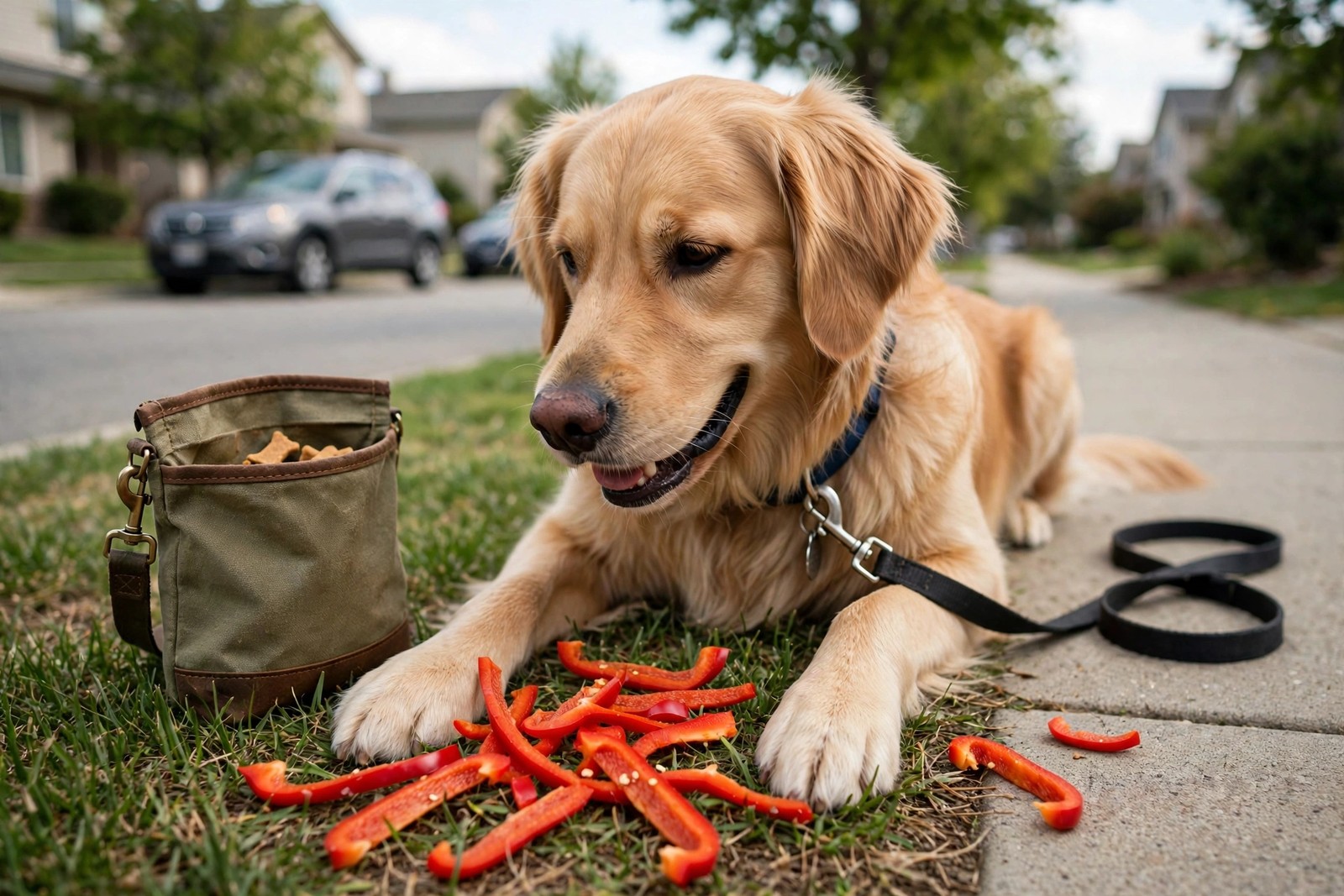
Yes, you can share bell peppers with your dog, and a few crunchy red strips dropped during fajita prep make a reasonable treat once you check what landed. Bell peppers are mild, sweet vegetables rather than hot ones, and dogs can eat the flesh raw for crunch or lightly cooked for a softer texture. The preparation matters more than the pepper itself, since fajita strips often carry oil, salt and seasoning mixes that may include onion or garlic. Offer plain pepper you have prepared for the dog, and treat floor finds as an inspection job before anyone celebrates.
Preparing Peppers Properly
Wash the pepper, cut away the stem and the pale core, and shake or scrape out the seeds. That inner material is not the main event in a pepper, and removing it keeps the portion digestible and tidy. Slice the flesh into strips for a larger dog who chews well or into small squares for a small dog, and keep pieces large enough to encourage chewing rather than gulping. Light steaming or brief cooking without oil softens firm peppers for older dogs and for dogs who bolt raw vegetables, and raw strips suit enthusiastic chewers who enjoy the crunch.
Start with two or three pieces and wait a day. Pepper skins and fibre can produce gas or soft stool in a dog new to vegetables, and a small first portion tells you how this dog handles this food. A dog who enjoys peppers and digests them calmly can have a few strips as an occasional treat, counted inside the day's treat allowance rather than added beyond it.
Colours Compared Plainly
Colour in a bell pepper signals ripeness rather than a different vegetable. Green peppers are unripe fruit with a sharper, more bitter taste, and many dogs refuse them while accepting riper colours happily. Yellow and orange peppers sit in the middle for sweetness, and red peppers are fully ripe with the sweetest flavour and a softer texture. All four colours are acceptable for dogs, and the practical choice is whichever ripe colour your dog enjoys, bought fresh and firm rather than wrinkled or mouldy at the edges.
Hot peppers stand apart completely. Chilli heat that registers as a pleasant burn for you can distress a dog's mouth and stomach, and spicy peppers should never be offered, mixed into food or left where a scavenging dog can reach them during cooking. Fajita night puts chillies, onions and seasoned meat within dog range at once, and keeping the dog out of the kitchen during prep prevents the whole category of accident.
When Peppers Cause a Problem
Most dogs handle small pepper portions without incident, and the common reactions are gas, soft stool or a refused strip spat onto the floor. Vomiting that repeats, marked diarrhoea, drooling after eating something spicy or signs of mouth pain deserve a call to your vet, who can judge whether the pepper explains the picture or another possible cause needs investigation. Bring the detail of what was eaten, including any seasoning on the strips, since that information shapes the vet's advice.
Store prepared strips in a sealed container in the fridge and use them within a few days, discarding any pieces that turn soft, dark or slimy at the edges. Fresh pepper should snap cleanly, and a pepper that bends without breaking belongs in your cooking rather than in the dog bowl.
A shared kitchen note prevents repeat surprises when several people cook and feed in one home. Through KinsLe Care Teams, a carer can log a new treat and its portion against the day, and the timestamped entry gives the household one clear record when anyone later wonders what the dog ate.