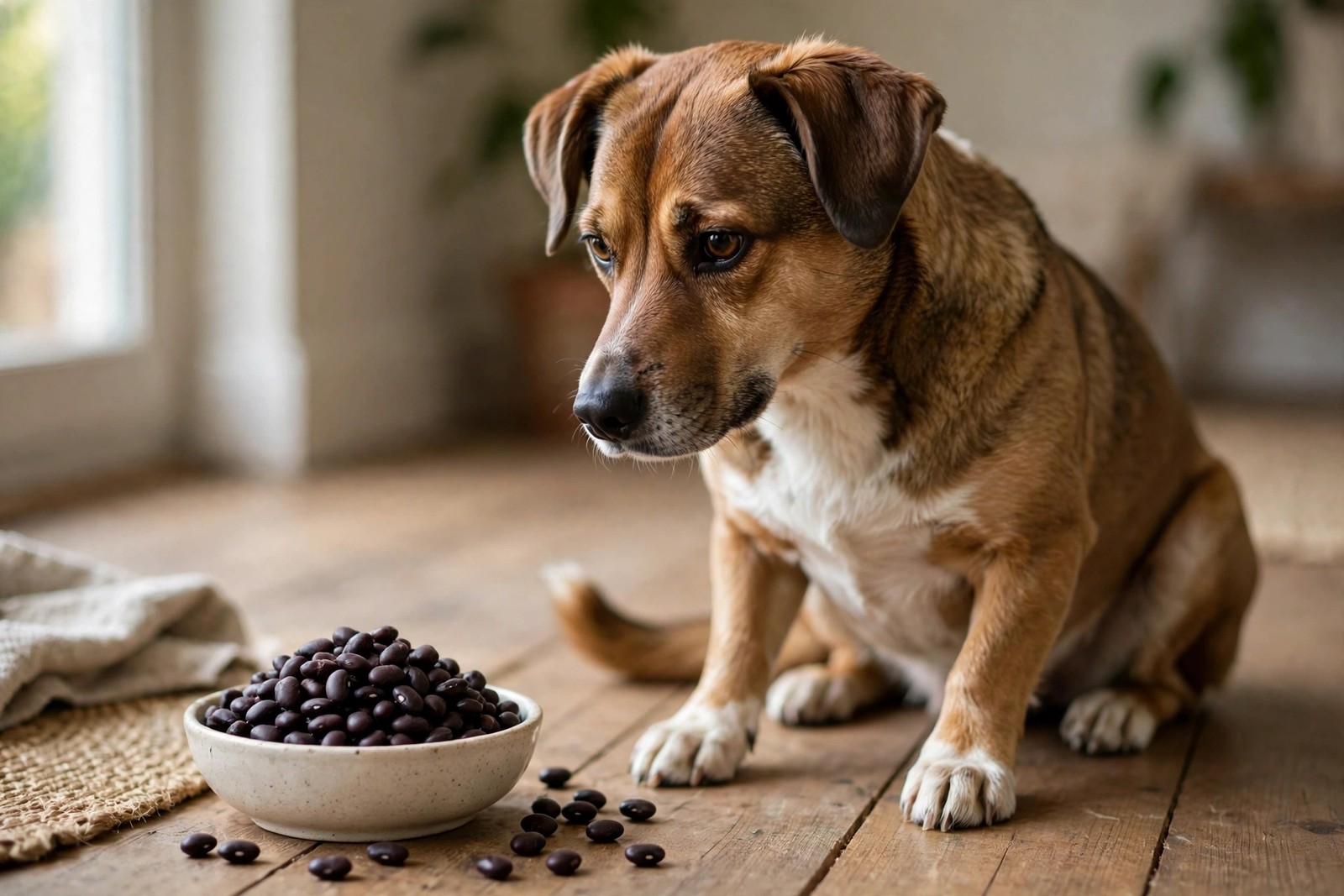
Yes, you can share plain cooked black beans with your dog in a small, measured amount once the beans have been rinsed well. The beans themselves bring plant protein, fibre, and a soft texture that mixes easily into regular food. The can around them is where this scenario needs care. Canned beans sit in liquid that carries salt and starch, and that liquid should go down the sink rather than into your dog's bowl.
Rinse First, Then Decide
Tip the beans into a sieve and rinse them under running water until the water runs clear and the slippery coating has gone. Check the rinsed beans with a fork. Each bean should feel soft all the way through, with no firm centre. Serve only beans that were cooked with no onion, no garlic, no chilli, and no added seasoning. If the can was opened for a spiced burrito filling and the beans have already met those flavours, those beans are no longer the plain food described here. Set aside your dog's spoonful before the pan gets seasoned, and the sharing stays simple.
Portions That Fit the Dog
Measure the first serving instead of guessing from the spoon. A small dog gets one tablespoon of rinsed beans. A medium or larger dog gets two to three tablespoons. Mix the beans through the normal meal so your dog eats them slowly alongside familiar food. Offer this as an occasional extra, a few times a week at most, and keep the rest of the day's feeding unchanged. Treats and extras work well as a small part of the day, and beans earn their place by staying minor. If your dog has a sensitive stomach, begin with half the amount listed here and watch the next day before you repeat it.
The Raw and Dried Bean Rule
Never offer raw or dried black beans, and never offer beans that were soaked but not fully cooked. Hard dried beans resist digestion, swell as they take on liquid, and can leave a dog uncomfortable, gassy, or sick. A bean that crunches is not ready for people or for dogs. If your dog raids a bag of dried beans from a cupboard, take the bag away, note roughly how much is missing, and watch for vomiting, a swollen belly, or a loss of appetite. Call your vet for guidance if those signs appear or if your dog ate a large handful.
Gas, Stools, and Honest Feedback
Beans have a reputation for a reason. Fibre that ferments in the gut can produce wind, softer stools, or a grumbly stomach during the first few tries. One windy evening after a first spoonful is useful information rather than a crisis. Loose stools that continue into the next day, repeated vomiting, or a dog who skips the following meal tell you to stop the beans and return to plain regular food. Puppies, very small dogs, and dogs with known digestive conditions need extra caution with any new fibrous food, and your vet can advise on whether beans suit your dog at all.
Keeping Burrito Night Consistent
The risk in a family kitchen rarely comes from one careful owner. It comes from a second person adding an unrinsed spoonful, a child dropping seasoned filling, or a helper assuming beans are fine in any form. Write the rule down once in plain words: rinsed, plain, cooked, measured. Put the portion next to the rule so nobody has to guess. That shared note is exactly the sort of detail KinsLe Care Teams holds for a household, with feeding duties assigned to named people and each completed task marked, so the bean rule survives busy evenings.