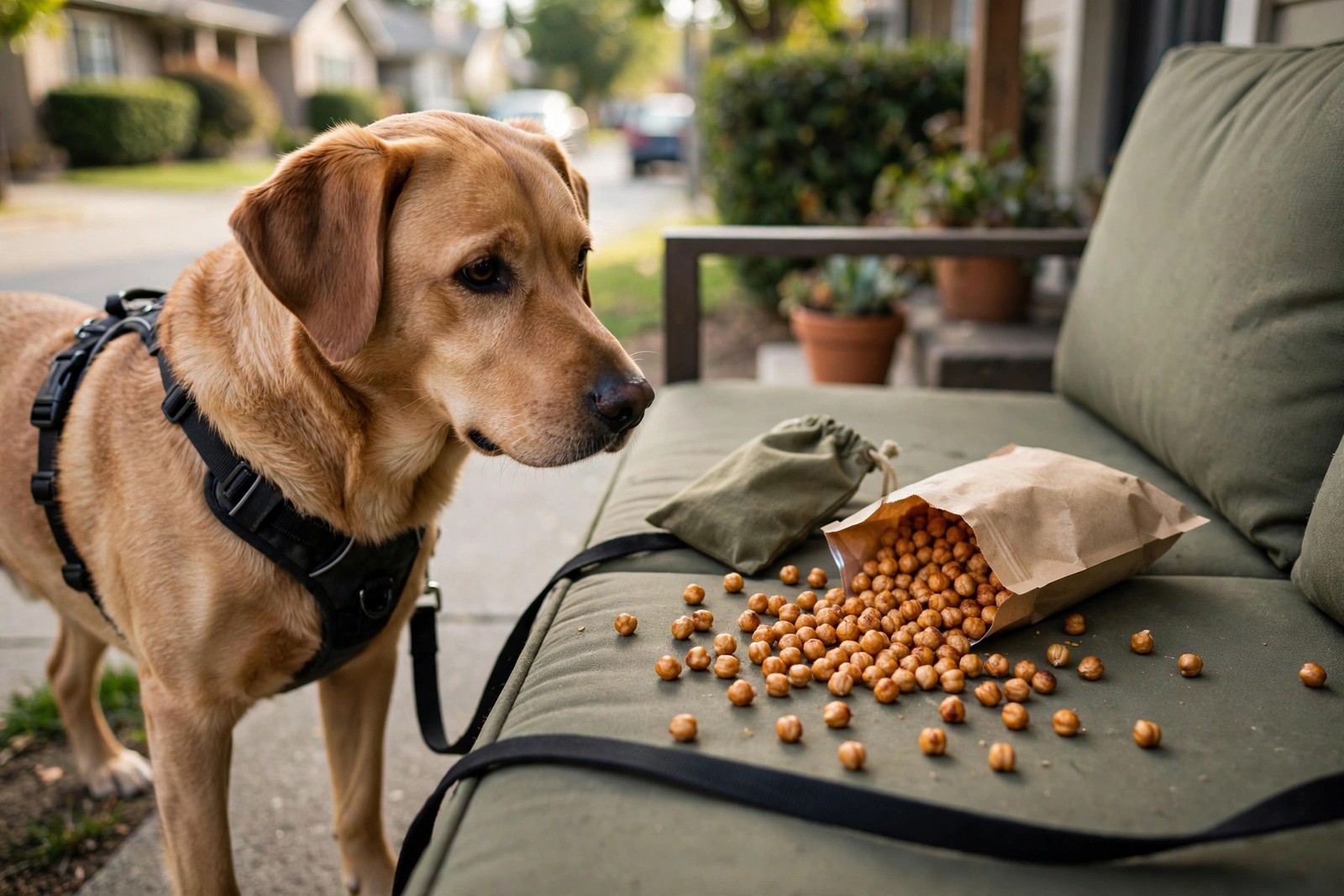
Yes, chickpeas can be shared with your dog in a modest amount, and this scenario contains the exact version to refuse. Roasted chickpea snacks spill from a packet looking dry, plain, and harmless. In practice those snacks are roasted with salt, oils, and spice blends, and a dog who crunches through a spilled pile gets the seasoning along with the chickpea. Pick up spilled snack chickpeas rather than calling your dog over to clear them.
The Plain Cooked Version
The shareable chickpea is a soft one. Simmer dried chickpeas until they yield easily when pressed, or tip canned chickpeas into a sieve and rinse away the canning liquid. Serve the chickpeas with nothing added: no salt, no spice, no oil, and no sauce. A chickpea for a dog should taste of very little, and that blandness is the point. If the chickpeas on the table went into a curry, a stew with onion and garlic, or a salad dressing, they have left the plain category and should not be diverted to the bowl.
Shape, Size, and Portions
A whole chickpea is round, smooth, and just large enough to tempt a dog into swallowing it whole. For a small dog, mash each chickpea with a fork or cut it in half. Larger dogs can manage whole soft chickpeas more comfortably, and mashing a few still slows down a fast eater. Portion three to five chickpeas for a small dog. Portion up to two tablespoons for a medium or larger dog. Offer chickpeas as an occasional extra mixed into regular food, and start below those amounts for a dog who has never eaten them.
Hummus Is a Different Food
Owners often ask whether a spoonful of hummus counts as chickpeas in another form. It does not. Hummus blends chickpeas with garlic and lemon, and garlic is a food dogs should never be given deliberately, while lemon brings acid and oils that have no place in a dog's bowl. Tahini and salt add richness your dog does not need. Treat hummus as a human dip from start to finish, keep the tub out of reach during a film night, and offer a plain cooked chickpea instead if you want to include your dog in the snack.
Fibre and Its Consequences
Chickpeas carry fibre and plant protein, and fibre announces itself when portions creep up. Wind, softer stools, and a gurgling stomach are the usual signs that the amount suited the owner better than the dog. One small serving followed by normal stools and normal appetite means the portion fits. Loose stools that persist, repeated vomiting, or a dog who strains without result deserve veterinary advice rather than another experiment. Dogs with known kidney or digestive conditions should meet legumes only with their vet's agreement.
Dried Chickpeas Need the Full Treatment
A bag of dried chickpeas in the cupboard is not a dog food in waiting. Dried chickpeas are rock hard, and a dog who crunches them raw faces the same problem as a dog fed any hard dried legume: poor digestion and a real risk of a sore, gassy stomach. Soak dried chickpeas as the packet directs, then cook them until completely soft before the plain-cooked rule in this article applies to a single one of them.
Clearing Up After a Spill
A spilled packet creates a race that a dog usually wins. Move your dog calmly into another room, gather the snacks, and check the sofa cushions and floor edges where round chickpeas roll and hide. A short clean-up prevents a second helping discovered at midnight. Households do well to agree that snack foods stay in human hands at all times, no matter how similar they look to a plain ingredient. On film night, a warning inside KinsLe Care Teams that seasoned packet snacks stay in human hands while only soft, unseasoned chickpeas belong in a bowl keeps that distinction visible long after the sofa spill is forgotten.