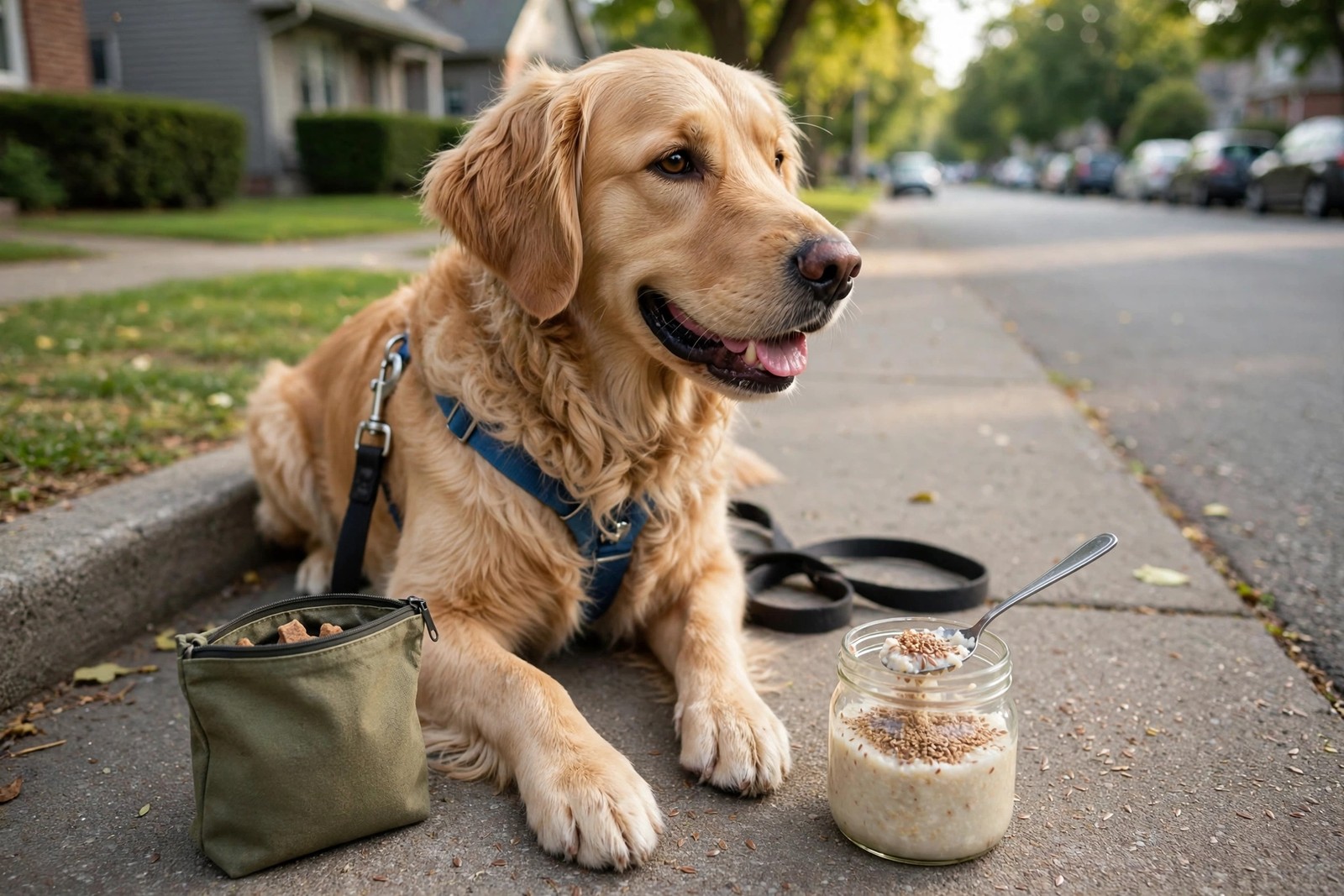
Yes, flaxseed can be part of your dog's extras, and the spoon your dog licked already held the useful version. Flax seeds wear a hard coat that protects the oils and fibre inside. A dog's digestion opens very few whole seeds, so whole flaxseed mostly travels through and out again, adding bulk without the benefit owners expect. Grinding breaks that coat open. Ground flaxseed is the form to buy, the form to store with care, and the only form worth sprinkling.
Measures for a Sprinkle, Not a Serving
Flaxseed works as a light topping measured in fractions of a teaspoon. Give about a quarter teaspoon to a small dog. Give half a teaspoon to a medium dog. Give up to one teaspoon to a larger dog. Scatter the measure over a regular meal a few times a week and mix it through so the powder coats the food rather than sitting in a dry pile. Begin with half of your dog's listed measure for the first week. A dog whose stools stay firm and whose appetite stays normal has accepted the addition at that level.
Why More Can Backfire
Flaxseed combines fibre with rich plant oils, and both push digestion along when portions grow. A heavy hand with the spoon can produce loose stools, wind, or a greasy and unsettled stomach. A dog who eats a large spilled amount of ground flaxseed may vomit or produce very soft stools for a day. Offer fresh water, return to plain regular food, and call your vet for guidance if vomiting repeats or your dog seems uncomfortable or unusually tired. Puppies and dogs with a history of pancreatitis or sensitive digestion should meet oily extras only with veterinary agreement.
Storage Decides Freshness
Ground flaxseed begins losing quality as soon as air and warmth reach its oils. Keep it in an airtight container, in a cool and dark cupboard or in the fridge, and close the lid straight after measuring. Smell the batch before each use. Fresh ground flaxseed smells mild and nutty, while a rancid batch smells sharp, bitter, or like old paint. Discard a batch that smells wrong rather than serving it to finish the bag, and buy quantities your household will use while the seeds stay fresh. Whole seeds store for longer, and grinding small amounts fresh is a sound habit for owners who already own a grinder.
Porridge Spoons and Shared Breakfasts
The spoon in this scenario held plain porridge and ground flaxseed, which is a harmless lick for a dog. Breakfast bowls become a problem when the porridge carries raisins, sweeteners, or large amounts of added sugar, none of which belong in a dog's extra. Keep the flaxseed sprinkle as a deliberate addition to your dog's own bowl rather than a habit of sharing your spoon, and the amounts stay measurable. A dog who expects a spoon lick at every breakfast will campaign for whatever the spoon carries that day.
Flaxseed Oil Is a Different Product
Owners sometimes ask whether a spoon of flaxseed oil can replace the ground seed. The oil carries no fibre, it turns rancid in the same way once opened, and a poured spoon is far harder to measure in the small amounts this article describes. The ground seed is the form covered here, and swapping in oil changes both the measure and the effect, so treat oil as a question for your vet rather than a kitchen substitution.
Keeping the Form Straight for Helpers
The single detail a helper can get wrong is the form: whole seeds from a baking bag look identical in purpose to the ground batch in the fridge. Label the container with your dog's name and measure, and keep baking supplies elsewhere. For anyone else preparing breakfast, storing the milled batch in a labelled jar and putting its quarter, half, or full teaspoon amount inside KinsLe Care Teams prevents whole seeds being swapped in by mistake.