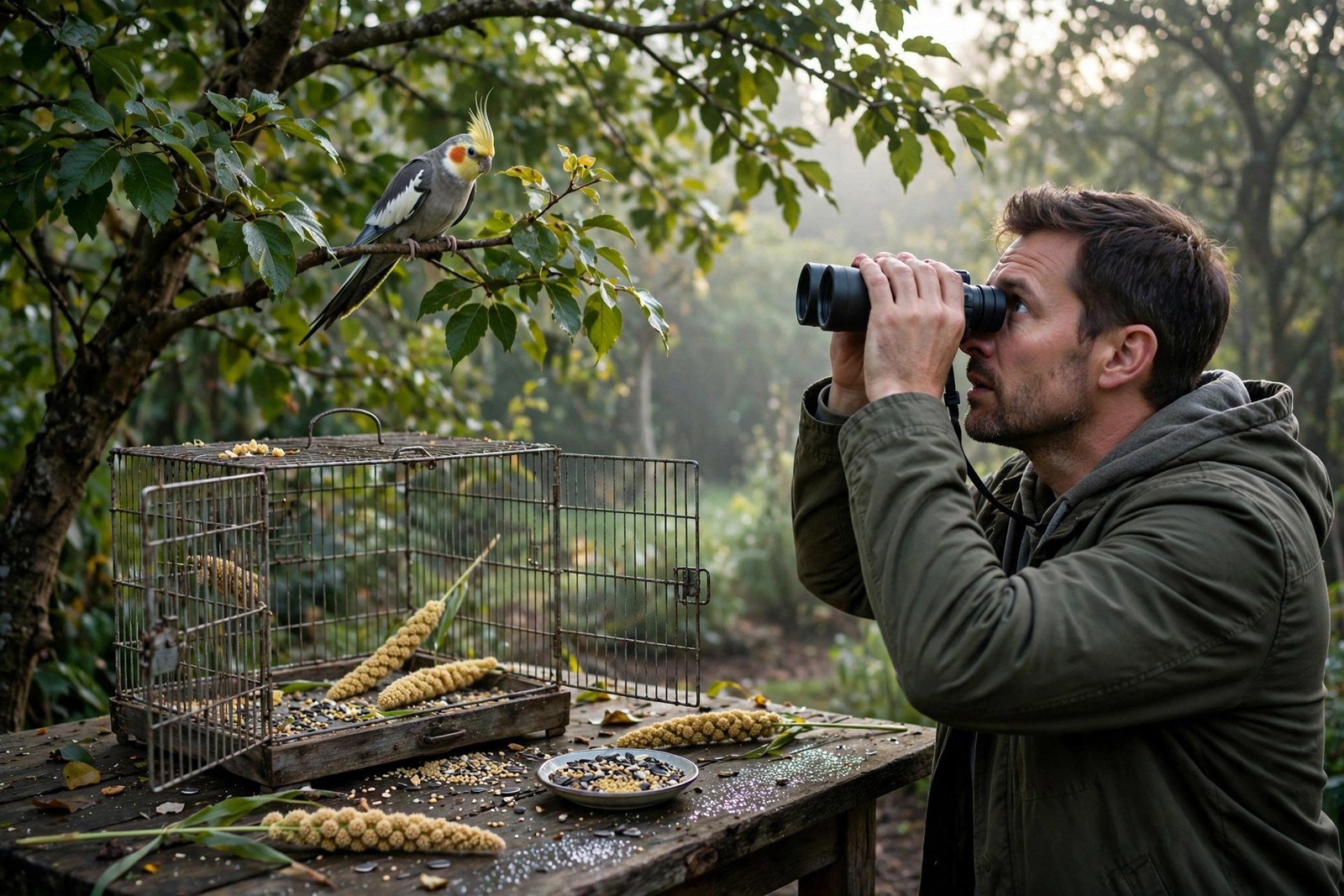
Move fast and stay hopeful: most escaped pet birds are found close to home, because a cage-raised bird is a weak flier outdoors and usually lands in a nearby tree, rooftop, or garden once the first panicked flight ends. The first day matters most, before hunger, predators, and weather push your bird further away. Split the work if you can — one person searching outside, one person setting up at home and spreading the alert.
Set Up a Landing Base at Home
Put your bird's own cage outside immediately, in clear view from above, with the door propped open and favourite food and water inside — millet spray, seed, or whatever treat your bird cannot resist. A familiar cage is the strongest visual lure you own. Play recordings of your bird's own calls if you have them, or recordings of the same species, from a speaker near the cage, and call your bird's name in the voice and phrases you use at home. Many birds answer calls even when they will not fly down, and a reply tells you exactly where to look.
Searching the Neighbourhood Properly
Search in widening circles on foot, looking up: check treetops, roof edges, aerials, and tall shrubs, and listen as much as you look, because an escaped budgie, cockatiel, or parrot often calls back from cover. Dawn and just before dusk are the best search times, when birds naturally vocalise and when a hungry bird is most motivated to come down to food. Bring the treat pot, a familiar hand perch or towel, and binoculars if you have them.
If you spot your bird, resist the urge to chase or shake the tree — a startled bird flies further and higher. Sit or stand where it can see you, talk calmly, rustle the food it loves, and be patient; hungry birds often work their way down branch by branch. Wetting a very tame bird's feathers gently with a fine spray can slow its flight enough to pick it up, but only try that at close range. As darkness falls, note the exact roosting spot: a bird rarely moves at night, so be back under that tree at first light with food ready.
Spread the Word the Same Day
Knock on neighbours' doors with a photo, because your bird may be sitting in a garden two streets away being watched by someone who does not know it is a pet. Post in local community and lost-pet groups with the species, colours, any leg band details, the street it escaped from, and your phone number, and tell local vets, pet shops, and bird rescues in case a finder brings your bird in. Simple posters on nearby lampposts still work — finders are usually within a few streets.
Warn well-meaning helpers not to grab at the bird or throw things to move it, and check every reported sighting quickly, since a tame bird may go to a stranger offering food. When your bird is home, offer water and food, let it rest somewhere warm and quiet, and book a vet check if it was out overnight, looks fluffed or exhausted, or has any injury — exposure and missed meals hit small birds hard.
Every extra pair of nearby eyes improves the odds in those first hours, and KinsLe's Lost Pet Alert System sends your bird's description and photo to nearby members straight away, with finders able to message you directly the moment they spot it.