
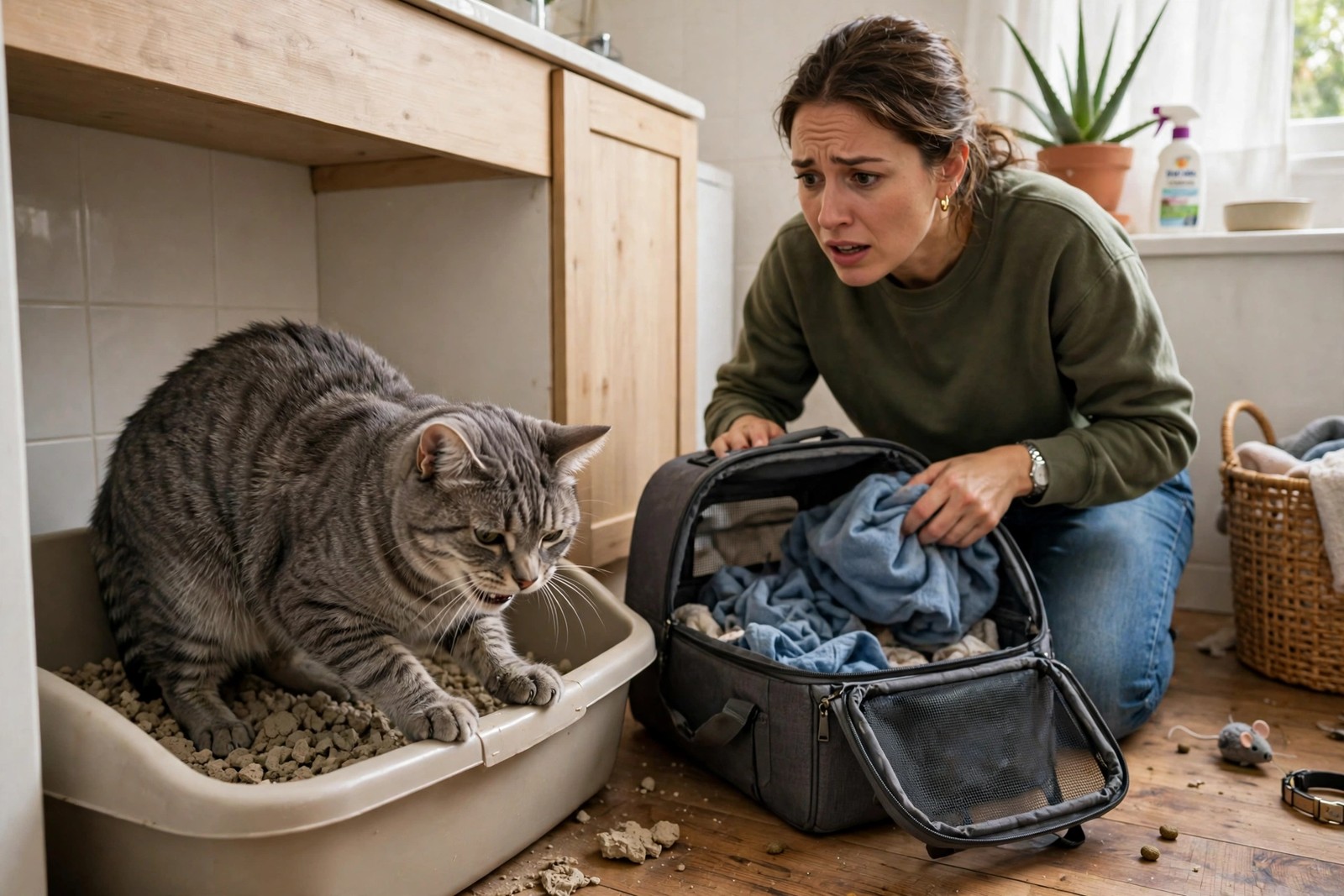
Yes — a cat straining to urinate is an emergency, especially if little or no urine is coming out. A cat who cannot pass urine can become seriously ill very quickly, so contact an emergency veterinarian right away, day or night. Do not wait until morning, do not wait to see if it passes on its own, and do not spend precious time trying home remedies first.
Why this cannot wait
Urine that cannot leave the body has nowhere to go. Pressure builds in the bladder, waste products that should be leaving start affecting the rest of the body, and a cat's condition can deteriorate over hours rather than days. Male cats are at particular risk of a complete blockage because their urethra is narrower, but any cat who is straining without producing urine needs urgent assessment — female cats included.
This is one of those situations where experienced emergency clinics would rather see ten cats who turn out to be uncomfortable but passing urine than one cat who waited too long. You are not overreacting by going in. You are doing exactly what they would tell you to do on the phone.
How to recognize straining
A straining cat often looks, at a glance, like a constipated one, which is why owners sometimes misread it. Look closer:
- Repeated trips to the box, crouching and pushing for a long time with little or nothing to show for it
- Crying, yowling, or licking at the belly or under the tail while trying
- Only drops appearing, or a clump far smaller than usual, despite obvious effort
- Restlessness, hiding, loss of appetite, or a tense, painful-looking posture
- In later stages, lethargy, weakness, or vomiting — signs the situation is advanced
Check the litter: if the box is dry or nearly dry after repeated serious attempts, say so plainly when you call. "My cat has been straining for an hour and has produced no urine" is exactly the sentence emergency staff need to hear.
What to do right now
Call your veterinarian or the nearest emergency clinic and follow their direction on how quickly to come in — usually immediately. Keep your cat in a quiet, confined space so you can monitor output and get her into a carrier without a chase. Do not press or squeeze her abdomen, do not try to express the bladder, and do not offer food, supplements, or any medication unless a veterinarian instructs you to.
On the drive, keep the carrier level and the car calm. If a second person can phone ahead with your estimated arrival time and your cat's age, sex, and symptoms, that helps the clinic prepare.
What happens at the clinic
The veterinary team will examine your cat, assess her bladder, and stabilize her as needed; they may run bloodwork and urine testing, and use imaging where appropriate. If there is a blockage, relieving it is a procedure only the clinic can perform. Ask them to explain what they find, what monitoring they recommend afterward, and which signs should bring you straight back — then write those signs down while you are there, because stressful nights are hard to remember accurately later.
Afterward, follow the clinic's feeding, medication, and recheck instructions exactly as given, and keep litter output notes for the first days at home. Any return of straining, shrinking output, or crying in the box means contacting a veterinarian again without delay.
In a stressful moment, identification should be the last thing you have to dig for. With KinsLe, your cat's Pet Pass is her verified ID card, giving any clinic a quick, reliable way to pull up her basic ID information when minutes matter. Present the Pet Pass on KinsLe at the emergency desk, and staff can identify her and reach you without a search for paperwork.