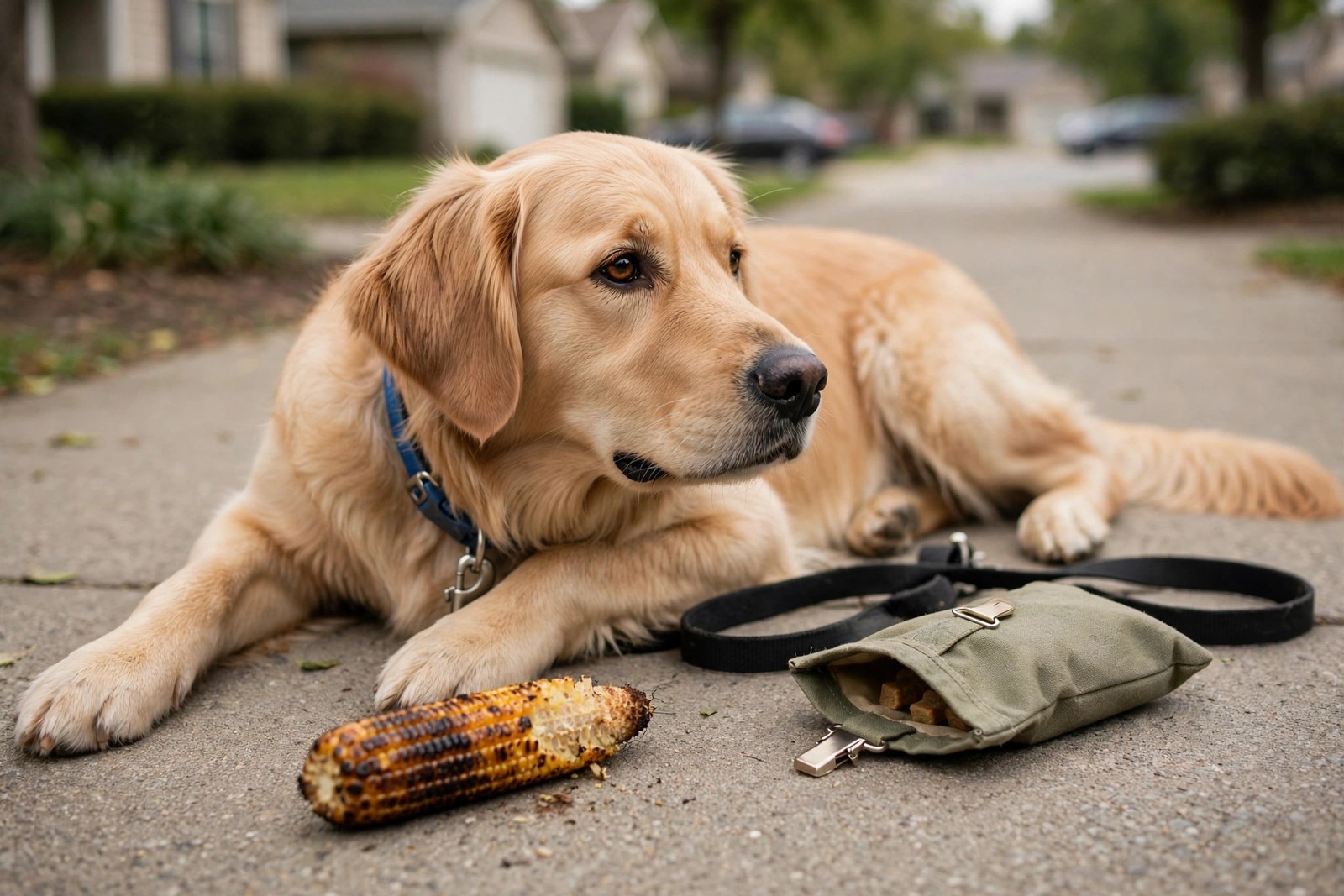
A leftover corn cob from a family barbecue is one of the few kitchen leftovers that deserves the word emergency, and a dog who is desperate to chew one should lose the argument every time. The kernels and the cob are two entirely different foods. Plain kernels cut away from the cob can be shared in small amounts. The cob beneath them is a dense, fibrous cylinder that dogs chew into chunks and swallow, and those chunks are a classic cause of intestinal blockage.
Take the Cob Away First
Remove the cob calmly and trade something permitted for it if your dog resists, because a tug of war teaches a dog to gulp the prize before it disappears. Check the cob carefully once you have it. A cob that is intact apart from teeth marks is a scare rather than an event. A cob with a section missing, a chewed end, or fragments on the ground means some cob may already be inside your dog, and that possibility drives the next step. Collect every other cob from plates, low tables, and the ground around the barbecue, and put them in a bin with a lid that a dog cannot raid later in the evening.
When a Swallowed Piece Means the Vet, Promptly
If your dog swallowed a piece of cob, call your vet promptly and describe the size of the missing piece, your dog's size, and when it happened. Do not wait for symptoms to confirm the problem, because a blockage can develop while a dog still looks bright. Call straight away, or use an emergency service, if you see repeated vomiting, retching without result, drooling, refusal of food, straining to pass stool, a swollen or sore belly, restlessness, or unusual tiredness. Never try to make your dog vomit at home unless a vet directs you to do so. A cob piece travelling back up can lodge in the throat, and the vet may judge that monitoring or another route serves your dog better.
Kernels Off the Cob Are the Shareable Part
Owners who want to include a dog in a barbecue can do so safely with the kernel half of this food. Cut plain cooked kernels away from the cob with a knife, serve a spoonful for a small dog or up to two spoonfuls for a medium or larger dog, and keep butter, salt, and seasoning off your dog's portion. Serve the kernels in a bowl rather than letting your dog strip them from a held cob, because a dog stripping kernels will keep going into the cob itself once the kernels thin out. Husks and silk should also stay out of the bowl, since both are fibrous and awkward to digest in quantity.
Why Dogs Want the Cob So Much
A used cob carries butter, salt, and the smell of the whole barbecue in a shape that fits a dog's mouth like a chew. That combination explains the desperation in this scenario better than hunger does. Offering a proper chew or a permitted treat at the moment cobs appear gives your dog an occupation while people eat. A dog settled on a mat with something legal to work on is far less likely to patrol plate height for the one object that can put him in surgery.
Barbecue Rules That Prevent the Sequel
Clearing up is a risky moment for cob incidents, because plates stack on low surfaces and attention has moved on. Agree the rule before the first cob is served: cobs go from hand to lidded bin, never onto a plate left at dog height, and never tossed toward a garden bed for later collection. Tell guests plainly, because a guest who hands a dog a cob believes he is giving a classic treat. At clean-up, put one named guest in charge of collecting every spent cob for the lidded bin, and confirm that assignment inside KinsLe Care Teams before grilling starts, so no plate is abandoned within reach during dessert.