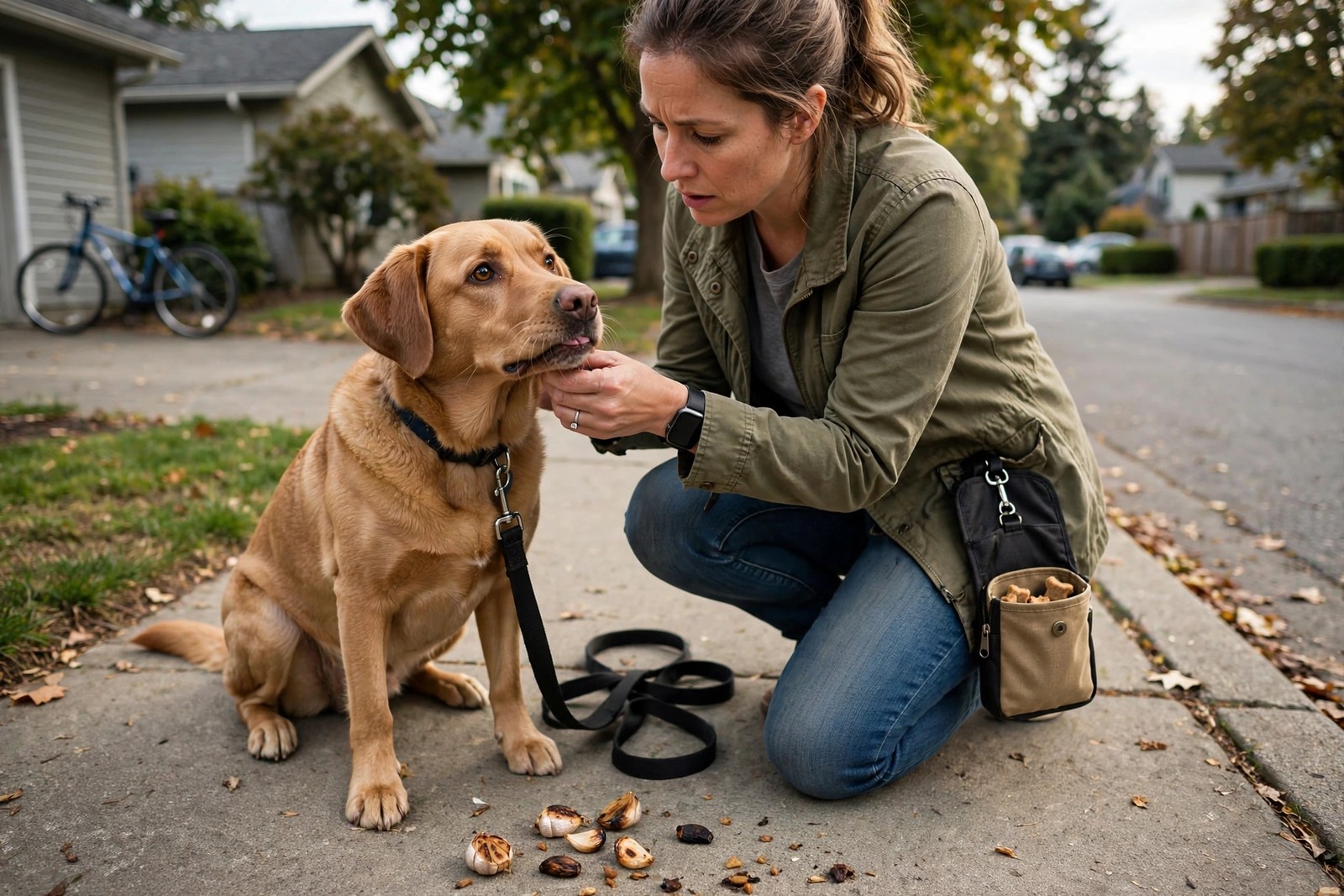
Call your veterinarian straight away, even if your dog seems bright after eating roasted garlic cloves that fell from a tray. Garlic belongs to the allium family, alongside onions and leeks, and alliums can injure a dog's red blood cells. The difficult part is timing. A dog can look normal on the evening of the meal while damage builds quietly, and signs linked to anaemia may only show over the following days. Roasting does not remove that risk, and cloves are a concentrated form of the plant, so a tray accident during dinner prep deserves a prompt call rather than a wait-and-see approach at home.
What to record before you call
Gather facts while the tray is still in front of you, because a veterinarian will reason from amount, timing, and the dog in front of them rather than from panic. Count the cloves you served, count the cloves that remain, and write down the gap between the two numbers. Note the time the cloves fell, whether your dog ate whole cloves or fragments, and whether butter, oil, salt, or other seasonings coated them. Add your dog's approximate weight, age, and any long-term condition or regular medicine you already discuss with the practice. If you cannot pin the amount down, say so plainly and give a range.
Signs that can arrive late
Because red-cell injury develops over time, your watching brief extends well beyond the evening of the meal. Look for growing tiredness on walks that normally suit your dog, less interest in food, and gums that look paler than your dog's usual pink. Faster breathing at rest, a racing pulse, weakness, wobbliness, or collapse all raise the urgency. Dark, red-brown, or tea-coloured urine is another sign to report at once, as is vomiting or diarrhoea that continues rather than settling. Compare each observation with your dog's normal baseline.
What not to do at home
Do not try to make your dog vomit unless a veterinarian directs that step for your dog and talks you through it. Do not offer garlic remedies, activated products, extra meals, or human medicines in an attempt to counter the cloves, and do not wait for pale gums before calling if you have not yet spoken to a practice. Put the remaining tray, the serving dish, and any packaging out of reach, then check the floor, the gap under the oven door, and the route your dog took after the fall. A second helping eaten during the clean-up would muddy both the amount and the timing you just recorded.
Watching through the next few days
Follow the review plan you agree with your veterinarian, and keep notes dated by day rather than held in your head. Record appetite at each meal, energy on the usual walk, gum colour in daylight, breathing while your dog sleeps, and the colour of urine when you can see it. If a sign on your watch list appears, call promptly and report the sequence, not just the final detail, because the pattern across days is what the clinician needs. Seek emergency care at once for collapse, laboured breathing, very pale or white gums, or an inability to stand.
Keeping roasted garlic out of reach next time
Change the prep layout that produced the accident. Rest hot trays on a back counter or inside a closed oven rather than near an edge, move the serving dish straight to the table, and sweep the floor before your dog re-enters the kitchen. During busy cooking, a closed door or a gate keeps a hopeful dog out of the drop zone without repeated commands from a distracted cook. That shared log lives in KinsLe, where Care Teams keeps the overnight gum checks, meal notes, and callback reminders together, so a tired household does not rely on memory alone.