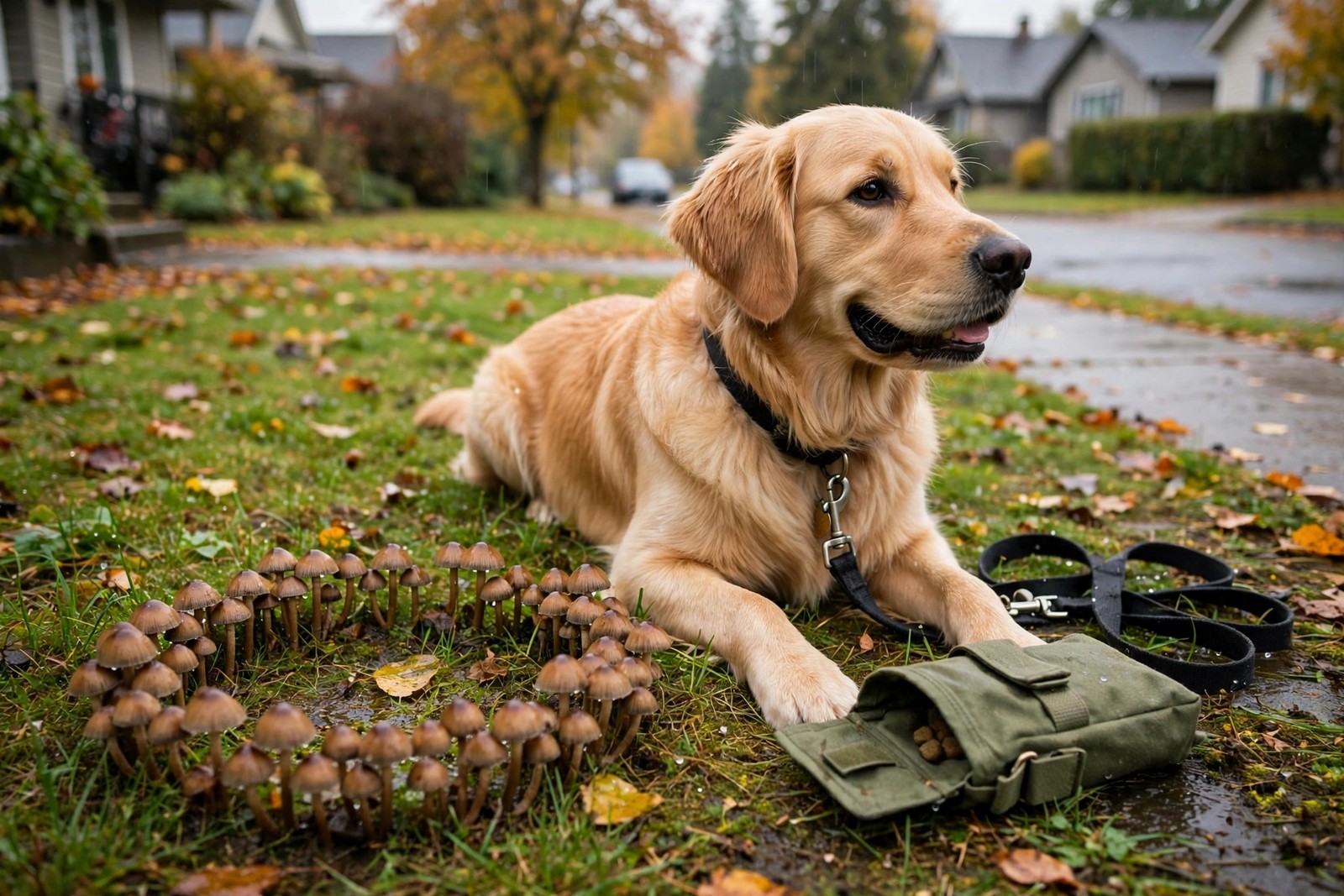
Treat mushrooms eaten from a ring on the lawn after autumn rain as an emergency now. Call your veterinarian, or an emergency practice outside normal hours, before you settle into watching at home. Some wild mushrooms that grow in grass can poison a dog severely, and owners cannot separate a harmless lawn species from a dangerous one by colour, size, or a photograph found online during a stressful evening. Early contact gives the clinical team more to work with, and it gives you a watching plan shaped by what your dog actually ate rather than by general hope.
Gathering identification clues without delaying the call
Make the call first, then collect clues while someone drives, phones the emergency practice, or stays with the dog. Photograph the ring from above so its shape and spacing show, then photograph one mushroom from the side and one from underneath, where gill colour and stem shape carry identification value. Note cap colour when dry and when wet, whether a ring of tissue sits on the stem, and whether the base swells into a cup. If the practice asks for a sample, wear gloves, lift one or two whole mushrooms with soil at the base, and wrap them in paper rather than plastic, keeping the package away from your dog and from food.
Signs and how quickly they can change
Early signs often look digestive: drooling, vomiting, abdominal discomfort, watery diarrhoea, and a dog who will not settle. Depending on the species involved, a poisoned dog may later become wobbly, weak, disoriented, unusually sleepy, or agitated, and tremors, seizures, or collapse can follow in severe cases. Some mushroom poisonings trouble the liver or kidneys over a longer span, which is one more reason the initial call matters even when the first hour looks mild. A sequence that moves from vomiting to wobbliness within an evening tells the clinical team something different from vomiting that fades, and both sequences shape what happens next at the practice.
Actions that can make matters worse
Do not make your dog vomit unless a veterinarian directs that step for your dog and stays in contact while you carry it out. A drowsy or wobbly dog can inhale stomach contents, and home induction wastes time that belongs to the journey. Do not offer milk, oils, human medicines, or leftover pet remedies in an attempt to soak up a poison whose identity nobody has confirmed. Keep your dog off the lawn, stop other pets using that patch of garden, and prevent a second mouthful during the rush to leave. Let the remaining mushrooms stand until you return, unless the practice advises otherwise, because the untouched ring may still be needed for identification.
After the emergency call: the lawn itself
Once your dog is being cared for, deal with the source. Photograph and remove mushrooms from the ring area with gloved hands, digging out the base rather than snapping caps at grass level, and place them in a bag in an outside bin that dogs cannot open. Check the lawn after each spell of rain, at the shaded edges, under trees, and along fence lines where rings and clusters recur. Walk the garden before letting your dog out unsupervised, and keep the affected patch fenced or lead-only until regrowth stops.
Keeping the household response rehearsed
An emergency handled once should leave a better plan behind. Save the normal practice number and the emergency practice number in the phones of everyone who lets the dog out, agree who drives and who phones, and keep a roll of paper bags and disposable gloves with the lead rather than in a distant cupboard. That division of labour can be written down inside KinsLe, where Care Teams lists the driver, the caller, and the person clearing the lawn as named duties, so the next scare starts with assigned roles instead of a scramble at the back door.