
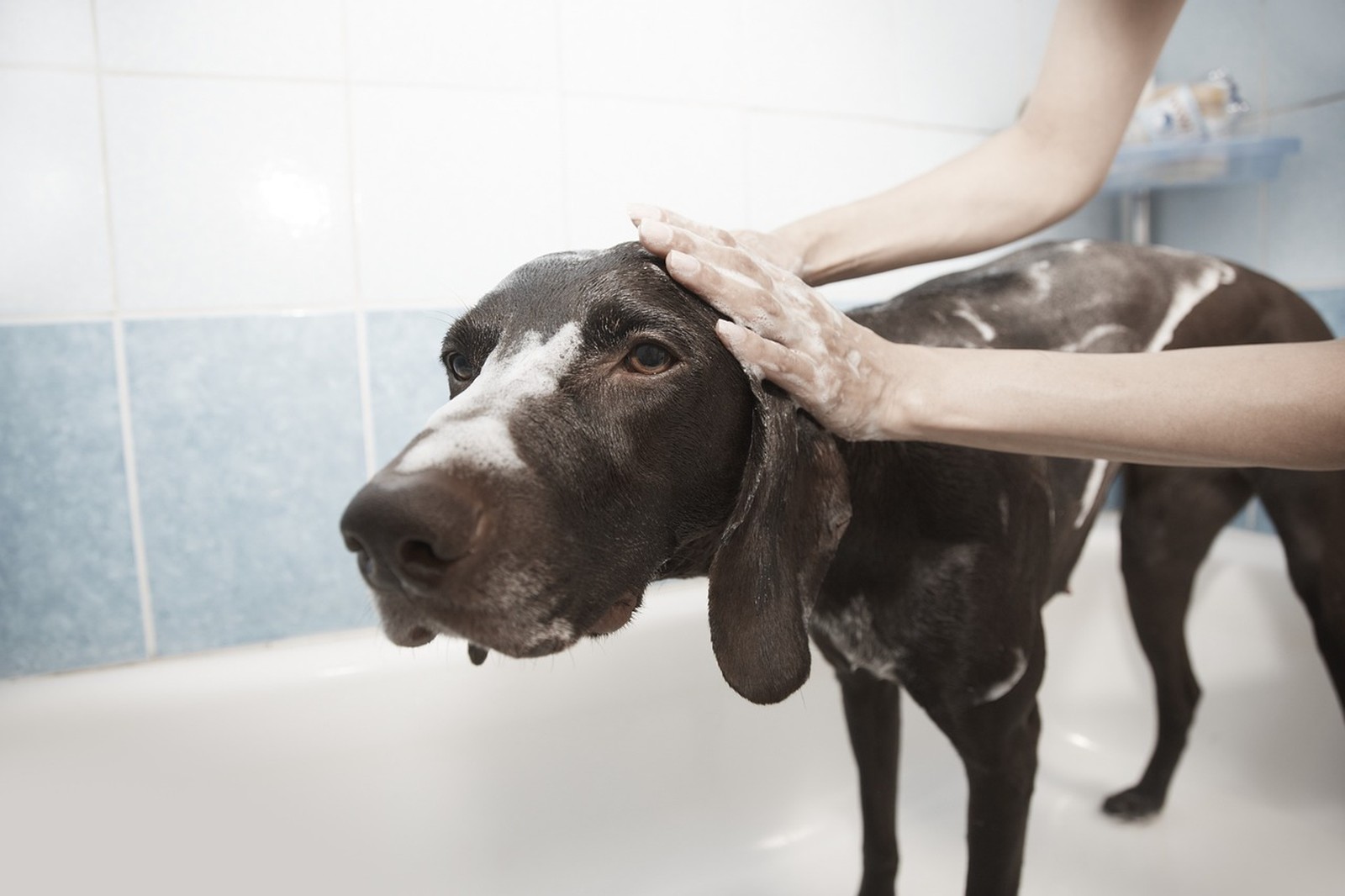
You make bath time easier for a dog who hates it by changing what the bathroom predicts: before any water is involved, build happy associations with the tub itself — treats, a lick mat, short visits that end well. Then keep baths calm and brief, with lukewarm water, a non-slip mat underfoot, a handheld shower if you can, and rewards all the way through. Most bath-hating dogs are not stubborn; they are worried, and worry responds to patience far better than wrestling.
Start Without Water
If your dog's only experience of the tub is being soaked in it, of course they bolt. Rebuild from zero. For several days, let your dog wander into the bathroom or step into the dry tub for a treat and praise, then leave — no bath, no agenda. Stick a lick mat smeared with something tasty to the tub wall and let them lick it dry-tub a few times. Feed a favorite chew beside the tub. You are teaching one simple lesson: this place pays well and nothing bad happens here. Only once your dog hops in willingly do you add water — and even then, the first "bath" can be a brief rinse of the paws, rewarded and finished.
Set the Bath Up for a Nervous Dog
Slipping is a huge, underrated cause of bath fear. A non-slip mat or an old towel on the tub floor gives secure footing and calmer dogs instantly. Use lukewarm water — never hot — and a handheld shower head or a jug rather than a roaring tap, keeping spray pressure gentle. Keep water and shampoo out of eyes and ears, talk in a steady, boring voice, and narrate less than you think; calm quiet beats excited encouragement for most anxious dogs.
Wash efficiently: dog shampoo lathered once, rinsed thoroughly, and done. Have towels within reach before you start so there is no dripping pause while you hunt. Reward during the bath, not just after — small treats delivered in the tub teach that enduring it pays in real time.
Alternatives When the Tub Is Too Much
Some dogs do better outside the bathroom entirely. A walk-in shower, a garden hose on a warm day with a gentle spray, or a self-serve dog wash at a pet store (where the tub is raised and the footing is grippy) all count as baths. For small dogs, a sink can feel safer than a cavernous tub. And between full baths, paw wipes, a damp-cloth rub-down, and thorough brushing handle everyday dirt — a dog who only gets grubby paws does not need the full production.
If your dog panics — thrashing, snapping, trying to climb out — stop and regroup rather than forcing it. For genuinely phobic dogs, a groomer experienced with anxious dogs, or a chat with your vet about the fear itself, is the kind path.
Writing Down What Works for Your Dog
Every bath-shy dog has a specific recipe that works: the lick mat, the jug not the shower head, the towel on the floor, ten minutes maximum. KinsLe Messenger, the per-pet communications hub, is the place to keep those notes where everyone caring for your dog can see them — so a sitter, partner, or family member runs the same calm routine instead of improvising a scary one. The notes live with your dog's profile, not in someone's memory. Use the KinsLe Messenger thread on KinsLe to agree within the household who handles the next bath and to record which lick mat, jug rinse, and floor towel kept your dog calm.