
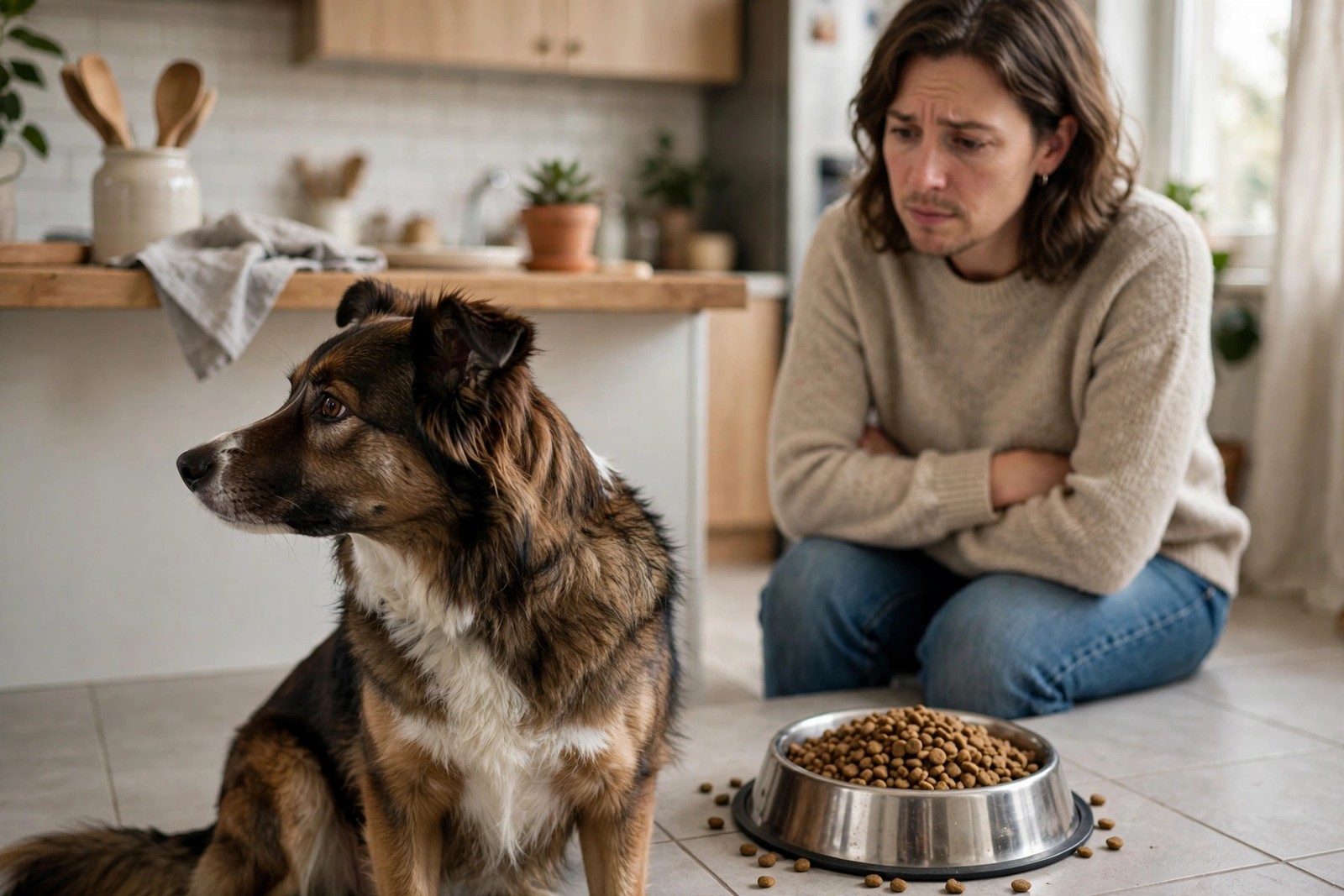
A dog who suddenly isn't interested in food deserves attention, but not always alarm. One missed meal after travel, excitement, visitors, hot weather, or a disrupted routine can be harmless, especially if your dog is otherwise bright and drinking normally. Be concerned if the refusal lasts more than a day, comes back repeatedly, or arrives with tiredness, vomiting, diarrhea, drooling, lip-licking, or behavior changes — that combination should prompt a call to your veterinarian.
Start with the timeline, not the bowl
Think back over the last 48 hours. Did the food change, even the same brand in a new bag? Did your dog get extra treats, table scraps, a rich chew, or access to the trash or a compost bin? Did something stressful happen — fireworks, a house guest, a new pet, construction noise, a trip?
Note when the appetite changed, how much water your dog is drinking, whether they will take a favorite treat even while refusing dinner, and any vomiting, stool changes, coughing, or energy shifts. A dog who refuses kibble but eagerly eats chicken may be bored, sore in the mouth, or holding out. A dog who refuses everything, including favorites, is telling you something different. That timeline is gold for your vet — bring specifics, not just a few days of not eating much.
Common reasons appetite drops
Dental pain is an underrated cause: a cracked tooth, sore gums, or something stuck in the mouth can make chewing hurt while interest in soft food remains. Stomach upset from scavenging is another frequent culprit, often with softer stool a day later. Stress and routine changes suppress appetite in sensitive dogs, and heat makes many dogs eat less at midday and more in the cool evening.
Beyond those everyday causes, many illnesses first appear as a poor appetite before other signs show. That is why duration and company matter: appetite loss alone for a few hours is watch-and-note; appetite loss with lethargy, repeated vomiting, diarrhea, increased thirst, weight loss, or pain is a vet visit. Puppies, seniors, tiny dogs, and dogs with ongoing conditions should be checked sooner, since they have less reserve.
What to do — and what to avoid
Offer fresh water and a normal, familiar meal at the usual time rather than a parade of new foods. Warming food slightly can release aroma for a picky but well dog. Keep portions measured so you actually know what was eaten.
Avoid forcing food, hand-feeding for days on end, or suddenly cooking rich meals that can upset the stomach further. Do not add human leftovers to tempt a dog who may already have an upset gut. If your dog chews slowly, drops food, paws at the mouth, or has bad breath, mention teeth specifically to your vet. And if appetite does not return by the next day, or other signs appear, call — early is easier than urgent.
When to call the vet today
Call the same day if your dog refuses food and also vomits repeatedly, has diarrhea with blood, seems painful or bloated, drinks far more or far less than usual, is a young puppy, or is elderly or managing a chronic condition. Trust the change you can see: owners usually know.
Keep everyone reporting in one place with KinsLe Messenger
Appetite changes get fuzzy when a partner feeds breakfast, a walker visits at noon, and a sitter handles dinner, each noticing only part of the pattern. KinsLe Messenger is the per-pet communications hub for your dog, so everyone caring for them can report meals eaten, treats given, and energy changes in the same thread tied to that one pet. That shared timeline turns scattered impressions into something your vet can actually use. KinsLe Messenger gives a partner, a midday walker, and an evening sitter one shared place inside KinsLe to log refused meals, treats accepted, and energy shifts as they happen.