
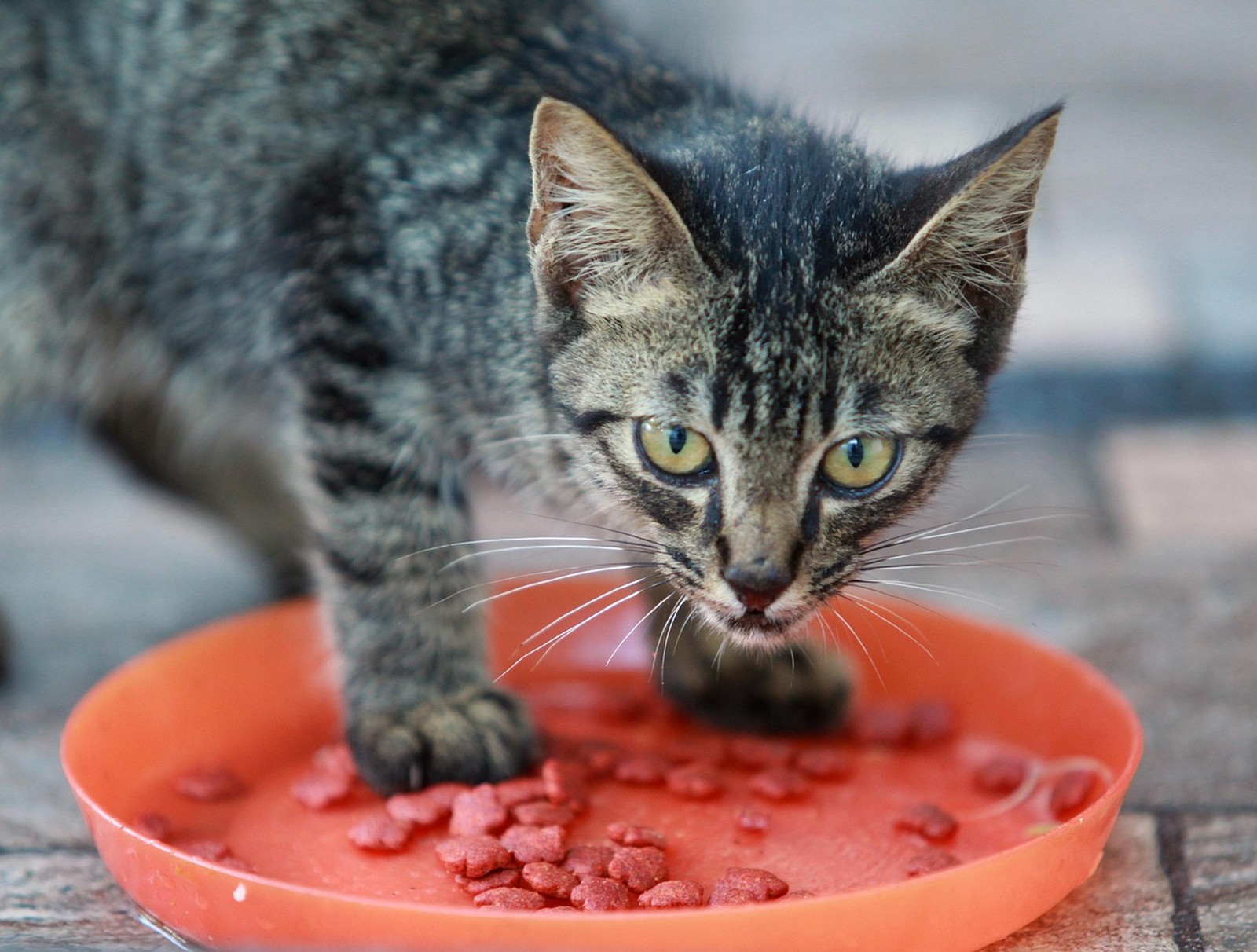
A few stolen mouthfuls will not harm your kitten, but a regular habit of eating your adult cat's food — and the adult finishing the kitten's — is not okay for either of them. Kitten and adult foods are formulated for different jobs, and a growing kitten who fills up on adult food may miss nutrients she needs, while the adult quietly gains weight on rich kitten food.
Why the Two Foods Are Different
Kittens are building bone, muscle, brain, and immune system at remarkable speed, and they do it on a tiny stomach. Kitten food is therefore more calorie-dense and richer in protein, fat, and key nutrients such as DHA, calcium, and phosphorus, in the proportions growth demands. A kitten needs considerably more energy per pound than an adult cat, delivered in three or four small meals a day.
Adult maintenance food, by contrast, is designed to hold a finished body steady. It simply does not pack the same nutrition into each bite. A kitten eating mostly adult food would have to eat a much larger volume to keep up — and her stomach may not manage it, so growth can fall behind even though she looks like she is eating plenty. The traffic matters in the other direction too: kitten food is so energy-dense that an adult stealing it regularly will round out, especially an indoor adult.
Separate Feeding That Actually Works
Wishing they would respect each other's bowls does not work. Management does. Feed in separate rooms with the door closed, or use a barrier the adult can step over but the kitten cannot — yet. Feed at the same time so neither is wandering hungry while the other eats, and pick the bowls up after twenty to thirty minutes rather than leaving food down to graze and steal. A microchip feeder for the adult is an option if separate rooms are impractical, since it opens only for the cat whose chip or collar tag it recognises.
Height helps briefly: feed the adult on a counter the kitten cannot reach, and recheck every couple of weeks, because kittens learn to climb fast. Keep water in both spots, and feed the kitten her own food first — a partly satisfied kitten steals with less determination.
A Note on All-Life-Stages Foods
There is one genuine exception to keeping the two cats on different foods. A food labelled complete for all life stages has been formulated to meet the most demanding standard in the range — growth and reproduction — so it covers a kitten's needs while remaining suitable for an adult. If bowl stealing is constant in a small home, feeding both cats an all-life-stages food removes the nutritional risk of the swapping entirely, though portion control still matters: the adult should get a measured maintenance amount, not kitten-sized helpings. Check the label's feeding statement rather than the front of the bag, and ask your vet if unsure whether a food qualifies.
When to Switch, and What to Watch
Most kittens move to adult food at around twelve months, though large, slow-maturing breeds such as Maine Coons may stay on kitten food longer — your veterinarian can advise for your cat. When the time comes, mix the foods gradually over a week or so rather than swapping overnight, which can upset the stomach. Meanwhile, watch both cats: the kitten should gain steadily and feel solid rather than bony, and the adult should hold a stable weight. A kitten who seems constantly hungry, produces loose stools, or is not growing as expected — or an adult visibly rounding out — deserves a vet conversation rather than simply bigger portions.
In a busy household, the separate-feeding plan only works if everyone knows it — which bowl, which room, which cat, and when the bowls get picked up — and KinsLe's Family Sharing puts each cat's feeding setup in front of the whole household, so the weekday feeder and the weekend cover follow exactly the same plan.