
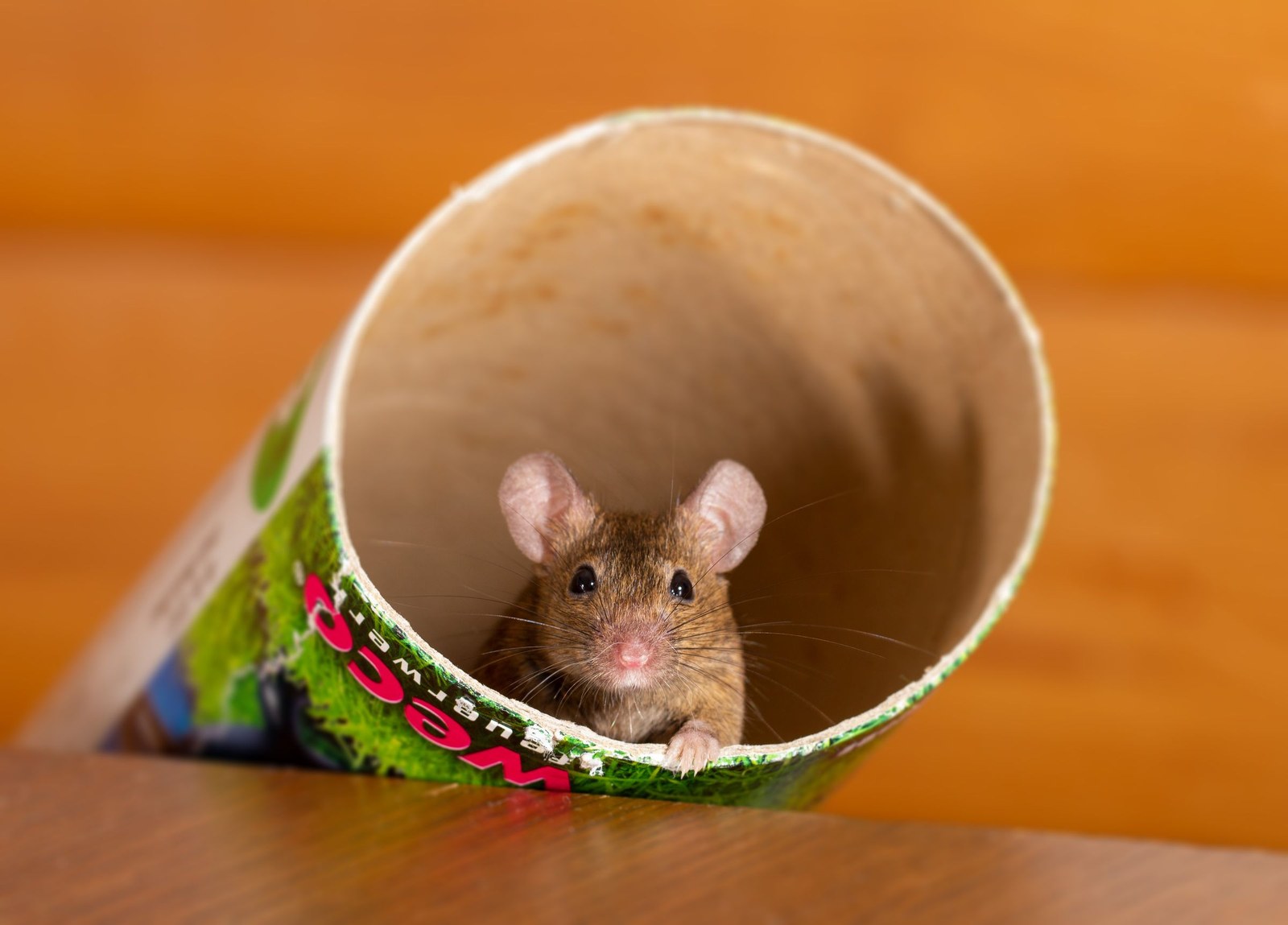
Probably not — mice run away when you reach for them because they are prey animals, and being scooped up by a giant hand is naturally frightening, especially from above. You are not failing; you are meeting normal mouse instincts. The fix is technique, not persistence: let your mice walk into a tube or cup on their own, support them fully when you do handle them, and reward calm moments with tiny treats instead of grabbing or chasing.
Why the Hand Looks Like a Predator
In the wild, mice are hunted by things that swoop and grab from above — owls, cats, weasels. A hand descending into the cage triggers that ancient wiring instantly, no matter how kind the hand is. Chasing a mouse around the enclosure compounds it, because the mouse learns that your arrival means a pursuit. This is also why mice who seem "untameable" often relax dramatically when the approach changes. Speed matters too: mice are quick, and a startled dash is a reflex, not a verdict on you as an owner.
The Tube-and-Cup Method That Changes Everything
Place a cardboard tube, small cup, or hide with one entrance inside the cage and let curiosity do the lifting. Most mice will walk into a tube voluntarily within moments — tunnels are irresistible. Lift the tube gently with your hands covering both ends, and you have a calm mouse you can move to a playpen or your lap without a single grab. For handling itself, let the mouse walk from the tube onto your cupped hands, keep them low over a surface, and let them explore hand to hand. Many mice become confident climbers once they learn hands are terrain, not talons.
Handling Rules for Tiny, Quick Animals
Always handle mice seated, over a bin, playpen, or your lap, because a fall from standing height can seriously injure an animal this small. Never pick a mouse up by the tip of the tail, and avoid sudden movements and loud voices during sessions. Keep handling brief at first — a minute or two of calm exploration, ending with a tiny treat like a single oat flake back in the cage. Wash hands before and after, and handle one mouse at a time until you are confident; a group of loose mice is a juggling act for anyone.
Every Mouse Has a Different Speed
Within one group you will usually find a spectrum: one bold mouse investigating immediately, one cautious mouse who needs a week of tube rides, and one shy soul who may always prefer limited handling — and that is acceptable. Not every mouse becomes a lap pet, and respecting a shy mouse's limits is good ownership, not defeat. Illness or pain can also make a previously calm mouse suddenly avoid handling, so a sudden change in behaviour is worth monitoring and, if it persists or comes with other signs, a veterinary check.
Note Each Mouse's Temperament in Their Profile
Each pet on KinsLe has a profile with a unique QR ID, and a mouse group benefits hugely from individual notes: which mouse is bold, which needs the tube, which is mid-taming and responding to oat rewards. Recording that in each mouse's profile means a family member or sitter handles every mouse the right way instead of applying one method to all — and if a mouse ever needed help while away from home, their profile carries who they are and how they are best approached. Tiny pets, individual plans. That identification matters most when a mouse slips loose outside the cage: through KinsLe, a Verified QR ID Pet Profiles listing lets whoever finds the mouse verify that this animal belongs to you and find your contact route at once.