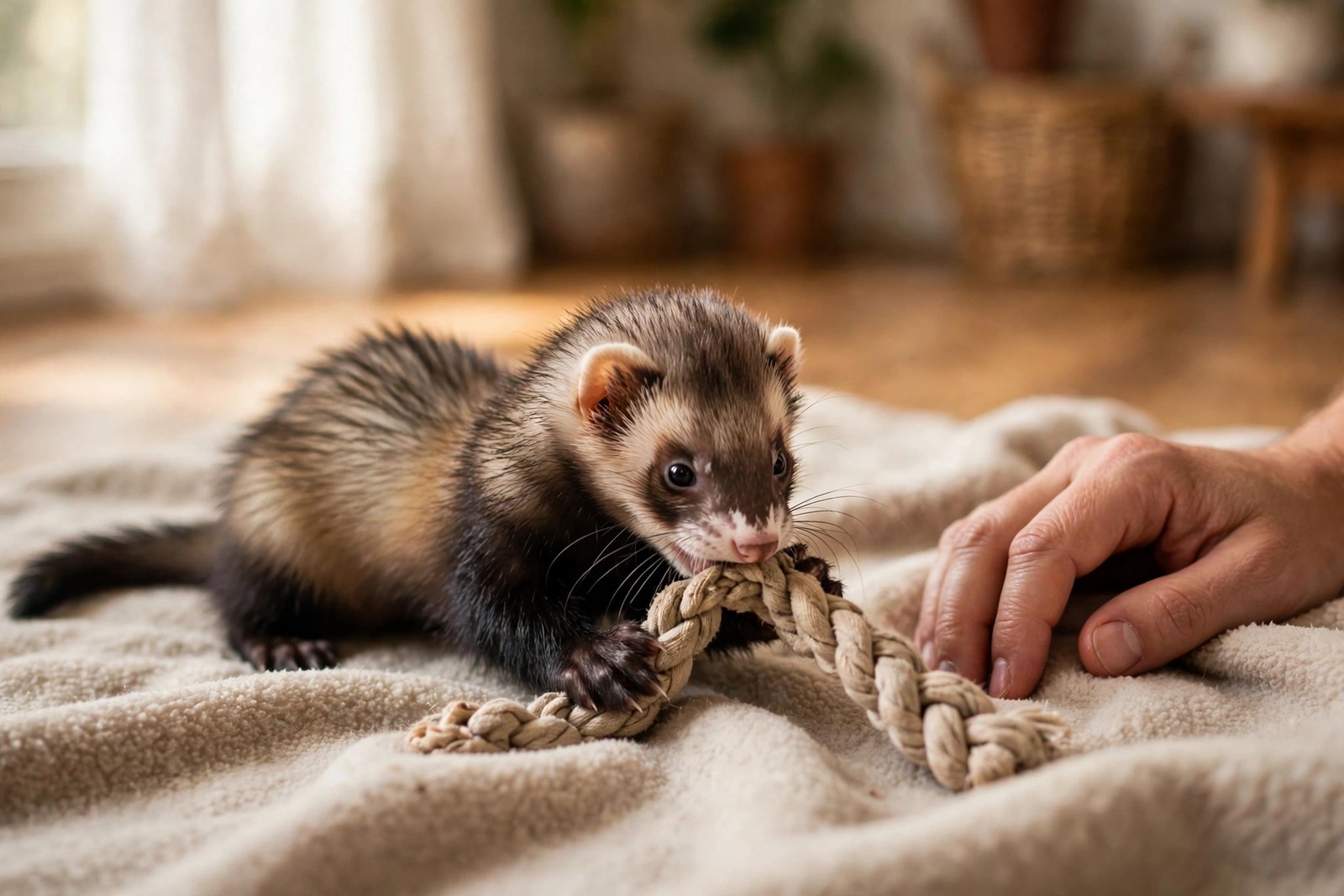
A nipping kit is not a naughty ferret. Kits wrestle their littermates with open mouths, drag each other around by the scruff area during play, and test every new thing — including your fingers — with their teeth. Your job over the first weeks is to teach one clear rule: toys and littermate-style roughhousing are for ferret play, while human skin ends the game. Most kits improve dramatically within a few weeks of calm, consistent responses.
Why Pulling Away Makes It Worse
The instinctive flinch is exactly the wrong lesson. A hand that jerks away looks like fleeing prey and like an invitation to chase, so many kits grip harder or lunge again in excitement. Instead, go still. Freeze your hand, say ouch in a clear, firm voice — some owners add a big theatrical yawn afterwards, a ferret calming signal that helps reset an overexcited kit — and wait for the mouth to open. The moment it does, calmly offer a toy that can be bitten, shaken, and dragged away. You are not rewarding the nip; you are showing your kit precisely what those teeth are for.
The Time-Out That Actually Teaches
When freezing and redirecting twice in a row does not land, play stops. Pick your kit up calmly and place them in an empty, boring time-out spot — a clean carrier or a travel cage with nothing fun inside — for one or two minutes only. Longer is pointless: a ferret's memory for cause and effect is short, and a lengthy banishment just becomes a nap. Let them out without a fuss and restart play. If the nip comes again, repeat the same short time-out. Kits who love play learn this pattern quickly, often within days, because the consequence is instant, predictable, and directly tied to the teeth.
What Never to Do, and What Helps Instead
Never flick or tap a ferret's nose, never tap the head, and never bite back or shout in their face. Those responses either frighten a small animal who weighs very little beside you or read as an invitation to escalate the wrestling game, and both outcomes make nipping worse. Bitter sprays on hands help a minority of ferrets and simply season the game for the rest. What genuinely helps is meeting the need underneath: kits nip most when they are overtired, overexcited, or have been handled too long. Watch for the frantic, open-mouthed bouncing that precedes a nip, and schedule handling in shorter bursts with toy breaks between them.
Consistency Across Every Pair of Hands
A kit who learns that one person squeals and waves their hands — great fun — while another goes still will keep testing the entertaining person. Children need the same script, supervised: freeze, say ouch, offer the toy, and let an adult run any time-out. Keep sessions gentle while baby teeth are replaced by adult teeth in the first months, and mention persistent hard biting at your kit's veterinary check, because pain and poor eyesight can both sit behind unusual biting. Agree the household script once and record who is handling play sessions in KinsLe Care Teams, so your kit hears one rule from every person and learns it in half the time.