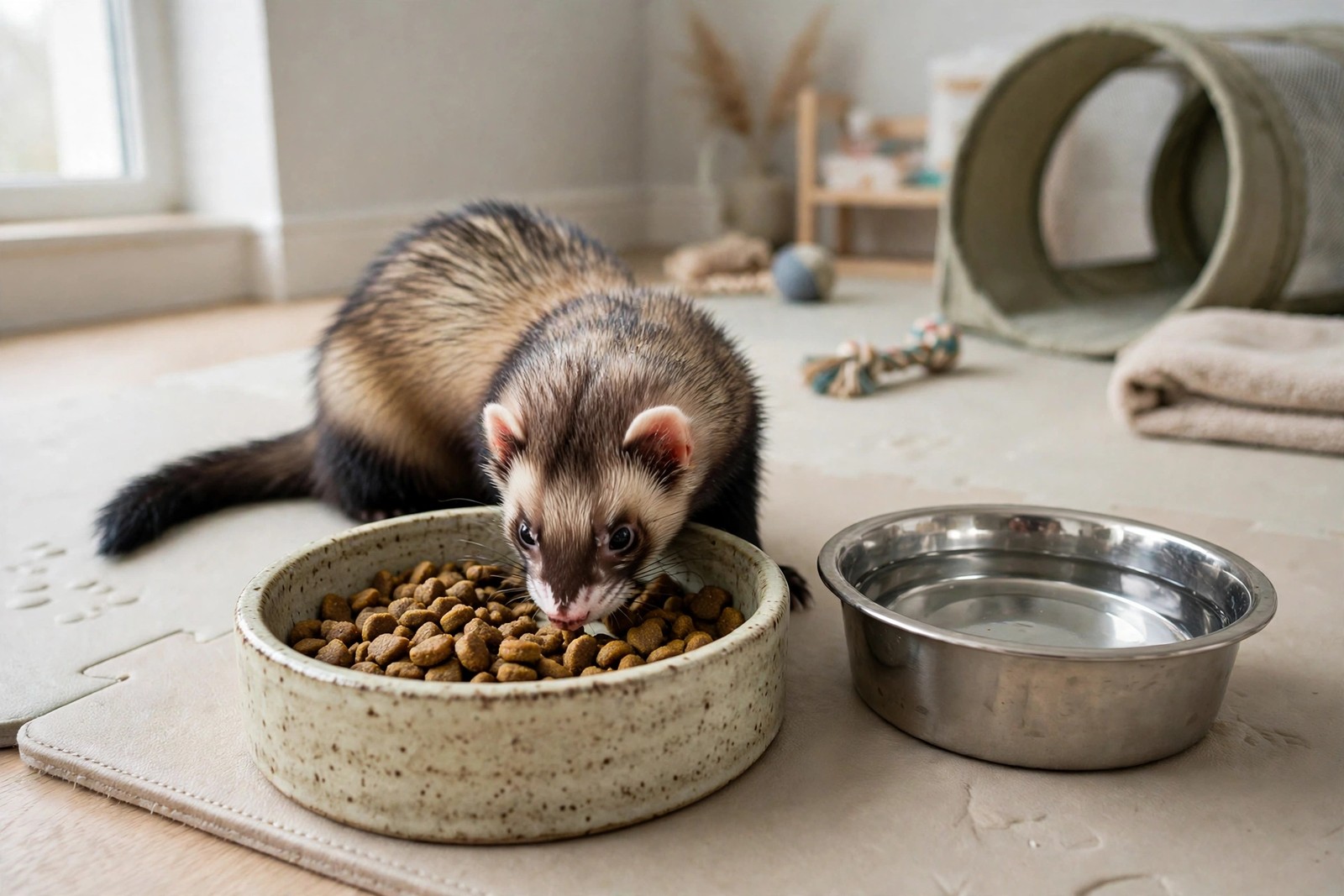
A ferret's body settles this question before the shopping starts. Ferrets are obligate carnivores, built like the polecats they descend from: a short digestive tract, a fast transit time of only a few hours, and no real ability to extract nutrition from plant material. Everything about daily feeding follows from that design, and the common beginner mistake is feeding a ferret like a small omnivore, closer to a rat or a dog, than the strict meat-eater he is.
The Daily Staple
For most owners the staple is a quality meat-based ferret kibble, left available around the clock, because a ferret's fast metabolism suits grazing in small, frequent meals rather than one or two set feeds. Read the label rather than the branding. Animal ingredients, such as chicken or turkey meal and animal fat, should lead the ingredient list. As a guide, established ferret care guidance typically looks for protein roughly in the mid-thirties percent or higher and fat around the high teens to twenty percent, with fiber kept very low. Some owners feed a carefully balanced raw or cooked meat diet, whole prey, or a mix of meat-based wet food instead; those routes can work well, but they take planning to cover calcium and organ meats, and a bowl of plain cooked chicken alone is not a complete diet.
What to Keep Off the Menu
Sugar is the headline problem. Sweet treats, yogurt drops, fruit, and raisins are poorly tolerated and a sugary diet is widely associated with insulin problems in ferrets, a common and serious condition in the species. Vegetables, grains, and plant-heavy foods pass through largely undigested and can cause blockages in the case of hard pieces such as raw carrot. Dairy upsets most adult ferrets. Dog food is unsuitable, being too low in protein and built around plant ingredients, and cheap cat foods heavy in pea or other plant protein are a poor substitute for genuinely meat-based food. Treats that fit the diet are simple: small pieces of cooked meat, freeze-dried meat, or a little raw or cooked egg on occasion.
Water, Bowls, and Daily Rhythm
Fresh water must be available at all times, offered in a heavy bowl that resists tipping, a bottle, or both, since many ferrets drink more readily from a bowl and play in it besides. Check and refill food and water morning and evening even though kibble is down all day, because ferrets stash and spoil food in corners and hammocks, and a bowl that looks half full may be mostly crumbs. Young kits eat astonishing amounts while growing, older ferrets may need softer food if teeth wear, and any ferret who stops eating for more than a day needs a vet promptly, because that fast gut runs into trouble quickly.
Sharing a Feeding Routine That Never Sleeps
Because food, water, and stash checks happen several times a day, ferret care divides naturally across a household. Recording who checked the bowls and water, and when, stops both gaps and duplication. KinsLe's Care Teams lets you assign those morning, evening, and water checks to different family members for your ferret, with each completed task timestamped, so a fast-burning little carnivore never depends on one person's memory.