
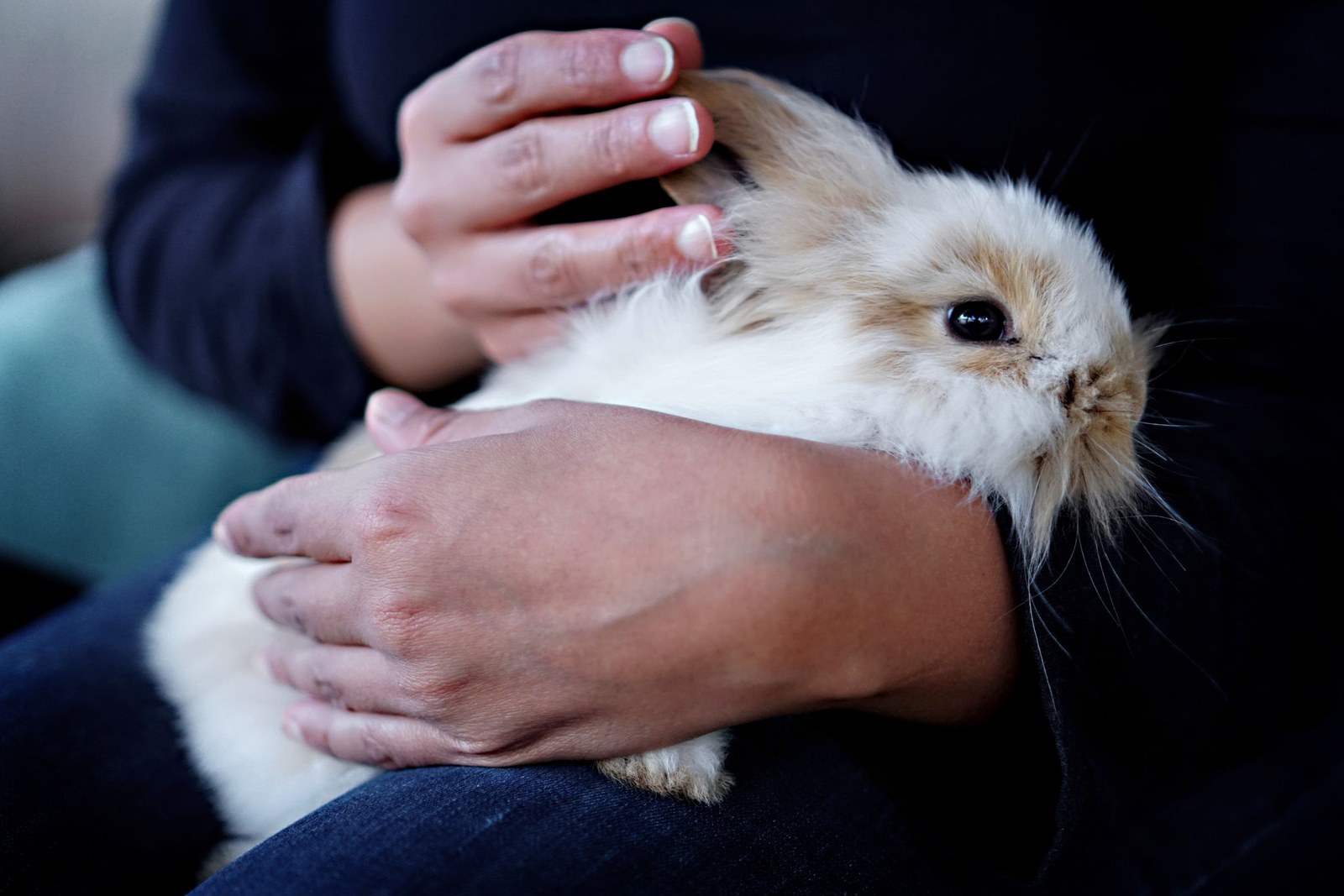
The safest way to pick up a nervous rabbit is to lift only when you need to, support the chest with one hand and the hindquarters securely with the other, and hold them close against your body so they feel stable — never by the ears or scruff. Most rabbits prefer all four feet on the ground, so good handling starts with floor-level interaction and treats a lift as a brief, purposeful event.
Why rabbits panic when lifted
In the wild, being grabbed and raised off the ground means a predator has caught them. That wiring does not switch off in a living room. A nervous rabbit may freeze, then explode into kicking and twisting — and a rabbit's powerful hind legs combined with a relatively delicate spine means a struggle or a fall can cause serious injury. Respecting that fear is not indulgence; it is the core safety skill of rabbit ownership.
Signs your rabbit is not coping include frantic scrabbling, thumping after being set down, flattened ears, wide eyes, and bolting the moment feet touch floor. A rabbit who does this needs the slower approach below, not firmer gripping.
Prepare at floor level first
Start where your rabbit feels safe: on the ground. Sit on the floor, let them approach, and stroke the top of the head and cheeks — areas rabbits enjoy — while avoiding looming over them. Offer a favorite herb so your hands predict good things. Only practice lifts once your rabbit will sit calmly beside you and accept stroking without flinching.
Choose the moment well. Do not lift a rabbit who is eating, sleeping, or already startled by noise or another pet. A calm rabbit lifted briefly and set down safely learns that handling ends well.
The secure lift, step by step
- Crouch or kneel beside your rabbit rather than reaching down from standing height.
- Slide one hand under the chest, just behind the front legs.
- Bring the other hand under the hindquarters, supporting the full weight of the back end.
- Lift smoothly and tuck your rabbit against your torso, hind feet supported, so there is no dangling or swinging.
- Keep the hold low and brief — move to where you need to be, then set them down hindquarters first, still supporting until all four feet are on the ground.
If your rabbit kicks hard mid-lift, crouch down immediately to reduce the fall distance rather than tightening your grip in the air. A towel or fleece "bunny burrito" wrap can also help for necessary tasks like nail checks, ideally with a second person assisting.
What never to do
Never lift by the ears, by the scruff alone, or by one or two legs. Never let children carry a rabbit around the house — children sit on the floor and the rabbit visits their lap. And avoid flipping a rabbit onto their back to "calm" them; that still, limp response is a fear reaction, not relaxation, and is stressful for the rabbit.
Making sure sitters handle your rabbit your way with Care Pass
Handling preferences are exactly the kind of detail that gets lost when someone else cares for your rabbit. KinsLe's Care Pass lets you share a temporary, scoped link with your rabbit's care notes — including that they do better at floor level, how they should be lifted when it is necessary, and what calms them — and the recipient needs no account or app to read it. A sitter who knows the plan keeps your nervous rabbit feeling safe. Care Pass on KinsLe lets your neighbor see, for Saturday evening only, just the two-handed support hold, the ban on lifting by ears or scruff, and which herbs calm them.