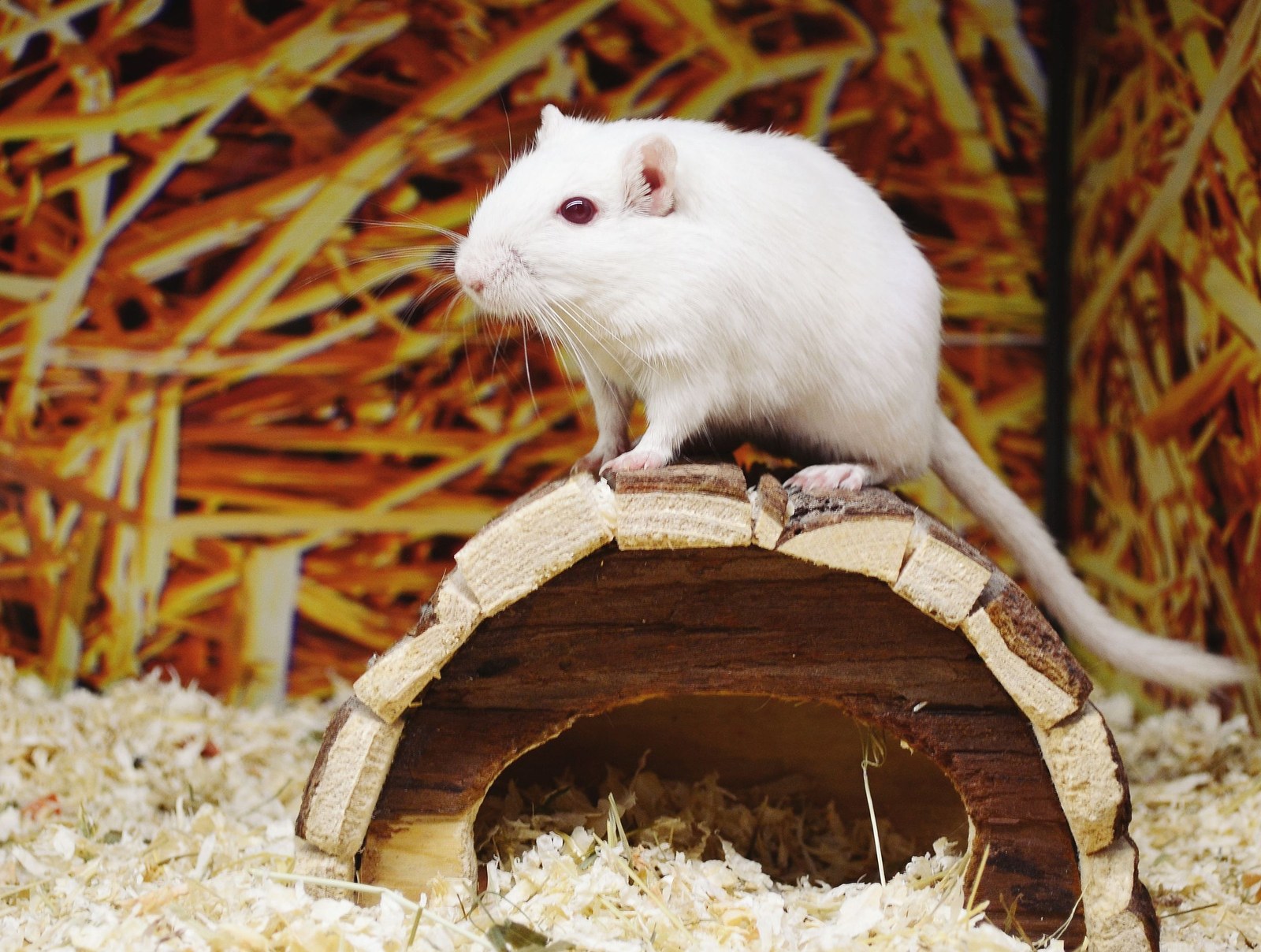
Gerbil foot thumping is usually an alarm or excitement signal, and corner digging is normal burrowing instinct — even when there is nowhere to go. One gerbil thumps to warn cage mates that something startled or thrilled them, and the digging is simply a desert burrower doing exactly what gerbils are designed to do.
What That Thump Is Really Saying
Mongolian gerbils live in family groups in the wild, so communication is constant. A rapid thump-thump-thump with the hind feet, often while sitting upright and alert, can mean: I heard something, I saw something move, or I am very wound up. You might notice it after a sudden noise, a shadow passing the tank, a new smell, or even during mating behavior and playful excitement.
Thumping is contagious on purpose. One gerbil alerts, the others freeze, listen, or thump back, and the whole group decides together whether the danger is real. That is why staying calm and quiet after a thump helps them settle faster — your stillness becomes part of the all-clear signal. Avoid tapping the glass, reaching in quickly, or making loud reassuring noises, which can confirm to a nervous gerbil that something really is wrong.
If thumping happens often with no obvious trigger, look for patterns. Is it at feeding time, when a cat walks past, when the tank is in a busy hallway? A small change in placement or routine often reduces unnecessary alarms.
Why the Corners Never Stand a Chance
Corner digging looks frantic, but it is deeply normal. Gerbils are burrowers who would spend hours excavating tunnels in dry grassland soil. In a tank, the corner is where a tunnel would start, so they scratch there with focused determination, sometimes for long stretches, even against smooth glass.
The answer is not to stop the digging, but to give it somewhere useful to go:
- Provide deep bedding — ideally enough to burrow properly, not just a thin layer to walk on — so tunnels can actually hold their shape.
- Mix in hay or shredded cardboard to help bedding stay tunnelable and interesting.
- Add buried tubes, cork tunnels, and wooden houses under the bedding so digging leads to discovery.
- Rotate a digging box or change the layout occasionally for gerbils who seem bored and repetitive.
If digging becomes obsessive — worn nose, constant corner scratching in a shallow cage, no interest in anything else — treat that as a welfare clue. More depth, more space, and more enrichment usually matter more than any attempt to discourage the behavior itself.
Reading Thumps and Digging Together
A gerbil who thumps, then immediately returns to digging, eating, or grooming was probably just startled for a moment. A gerbil who thumps, hides, stays frozen, and will not come out may need quiet, cover, and time. A gerbil who digs, grooms a cage mate, and explores is usually a contented gerbil expressing instinct in a safe home.
Gerbils do best in pairs or small groups, so watch the group dynamic too. Thumping followed by everyone piling into a nest together is social communication working exactly as it should.
Keeping Everyone in the Loop With KinsLe
These little signals are easy to misread if only one person in the house knows them. Sharing behavior notes like thumping after loud noises or favorite digging spots through KinsLe Messenger, the per-pet communications hub on KinsLe, keeps the whole family clued in on what your gerbils are saying. A quick message — thumped at the vacuum, settled in five minutes — stops someone else from worrying or from reaching in at exactly the wrong moment.
KinsLe Messenger carries that warning cleanly: text your sister that the pair thumped at the vacuum yet settled within minutes, so she stays quiet instead of lifting the lid to check.