
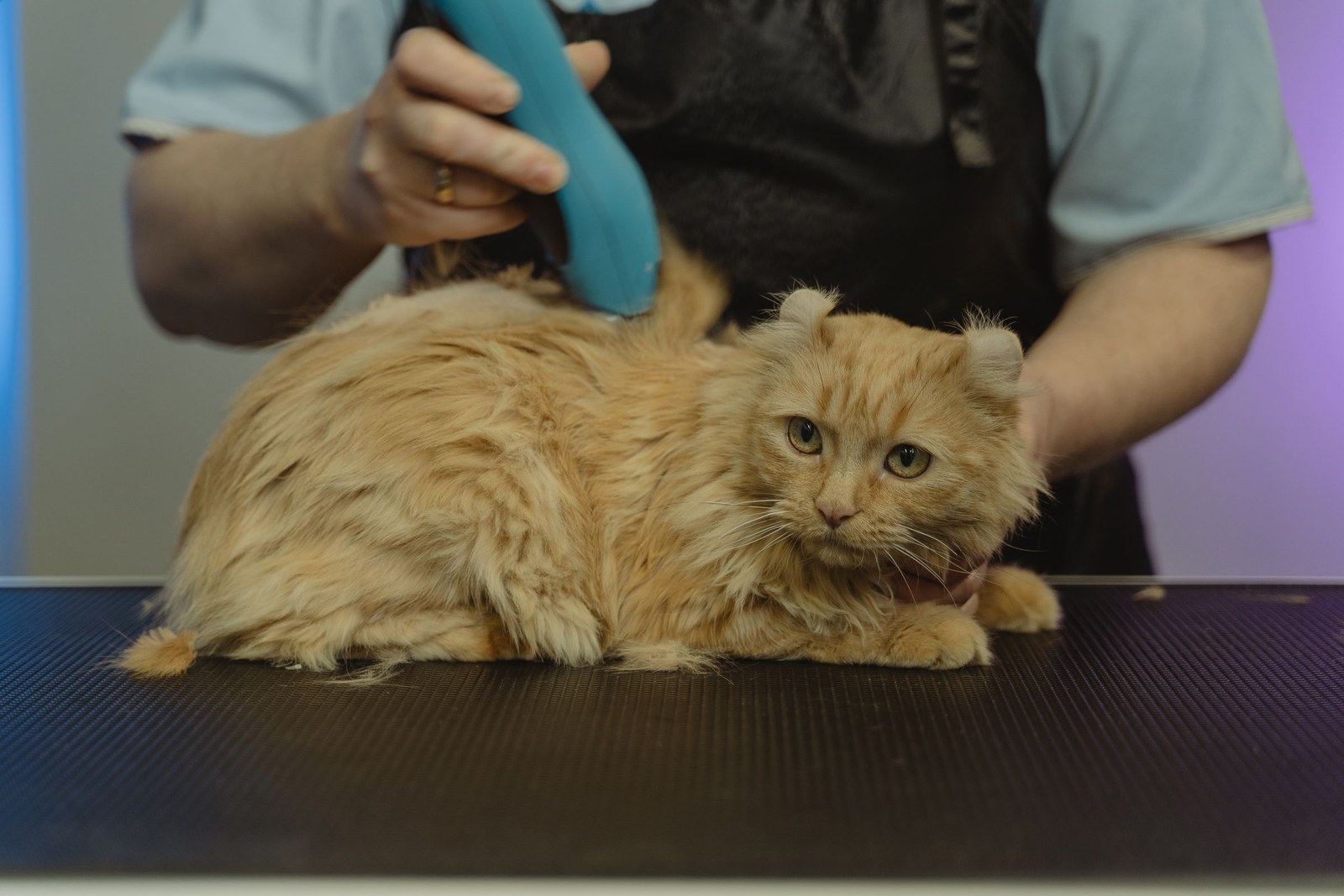
Work small mats out gently with your fingers or a mat splitter, starting at the outer edges and never pulling hard or cutting close to the skin with scissors — cat skin is thin, tents up into mats, and tears frighteningly easily. Severe, tight, or widespread matting belongs to a groomer or your veterinary clinic, and new matting appearing in an older cat is worth mentioning to your veterinarian, because it often signals she has stopped grooming an area for a reason.
Why Mats Take Hold in Senior Cats
Matting starts where friction and loose undercoat meet: behind the ears, under the collar, in the armpits, along the belly, and over the hips. An older cat grooms those zones less as stiffness makes twisting uncomfortable, so shed undercoat stays in the coat instead of being licked away, felts together, and tightens a little more each day. Long-haired seniors mat fastest, but any older cat who naps in one position for hours can develop a felted patch on the side she sleeps on. A small mat is a five-minute problem; a neglected one becomes a painful, pulling blanket.
Removing Small Mats the Safe Way
Settle your cat somewhere comfortable, keep sessions short, and try this order:
- Fingers first. Hold the base of the mat close to the skin so it does not pull, and gently tease the outer hairs free a few at a time
- Then a tool. Work a wide-tooth comb under the loosened edges, or slide a mat splitter through in short strokes away from the body, always knowing exactly where the skin is
- Brush the area out once the mat is gone, so loose undercoat does not restart the process tomorrow
Stop if your cat is distressed; half a mat today and half tomorrow is fine. What you must not do is reach for scissors. Mats pull skin upward into a hidden fold, and cutting 'just the mat' is how cats end up needing stitches — clinics see this injury often enough that it is the single rule every groomer repeats.
When It Is a Professional's Job
Book a groomer experienced with cats, or your veterinary clinic, when mats are large, numerous, tight against the skin, or anywhere your cat will not let you touch. Professionals can clip matted sections out safely with the right guards and a second pair of hands, and a cat in heavy matting is often more comfortable after a careful partial clip than after an hour of detangling at home. If matting is new, sudden, or paired with weight loss, behavior change, or sore areas, mention it to your veterinarian — pain, skin trouble, and simple old-age stiffness all show up in the coat first.
Preventing the Next Round
Prevention is gentle and boring, which is the point: brief comb-outs a few times a week, daily for long-haired seniors, focused on the friction zones, so loose undercoat leaves on the brush instead of felting in place.
In KinsLe, Care Teams can assign those weekly coat checks to a specific person, with timestamped completions, so a busy household does not each assume someone else brushed the cat this week. Caught at pea-size, mats stay a minor chore instead of becoming a clinic visit. Write the household plan down where everyone follows it: Care Teams on KinsLe assigns each coat check to a named person, sets the same fingers-first routine for every groomer, and keeps the written schedule where the household can see it.