
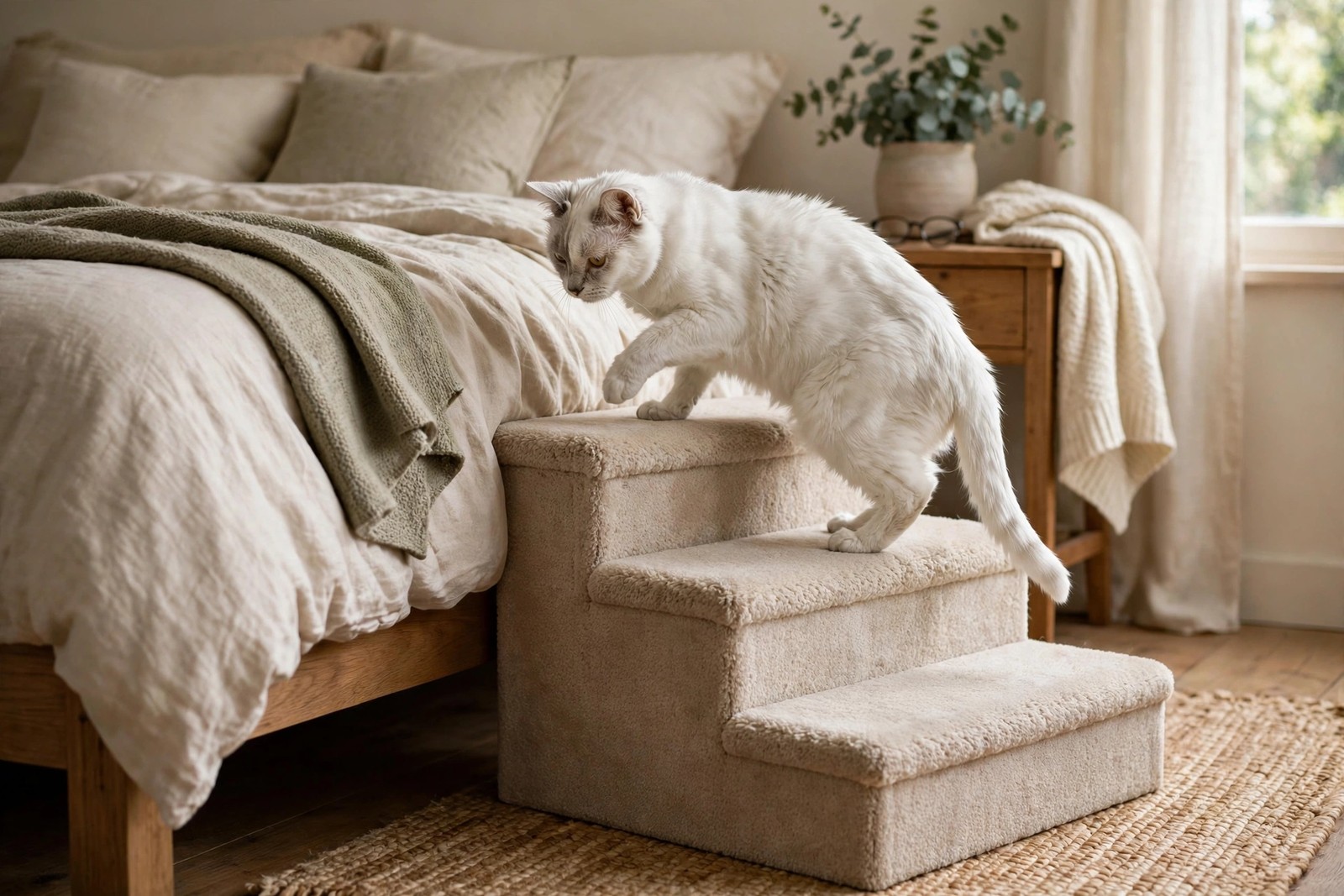
When your senior cat can't jump onto the bed anymore, help her climb instead of leap: place a low ramp or a set of pet stairs beside her favourite high spots. Then move the essentials — food, water, bed, and litter box — onto one easy level, so nothing she needs each day depends on a jump she can no longer make.
Choosing steps or a ramp that a cat will trust
Cats reject wobbly equipment instantly, and an unused ramp helps nobody. Look for pet stairs with deep, carpeted or high-traction steps and a solid, non-slip base, wide enough for an unhurried cat. A ramp suits cats who struggle with step height altogether; choose a gentle incline with a grippy surface and side stability. Place it flush against the bed or sofa, exactly where she used to jump up — cats are creatures of route, and the aid works best on the path she already chooses. Encourage first uses with a treat trail and patience, never by lifting her onto it repeatedly.
Rearranging one easy level
Audit your home from cat height. If food is upstairs, the litter box in the basement, and the best bed on a windowsill, your senior is doing an obstacle course on stiff joints. Consolidate: one floor — ideally where you spend evenings, so she keeps your company — should hold food, water, a bed, a scratching option, and a low-entry litter box. Cut-down or low-sided boxes matter, because stepping over a high rim can become as hard as jumping. Keep a second water station wherever she naps longest.
Little comforts that add up
Older joints feel the cold and hard floors more. Add a padded, washable bed at floor level near (not on top of) a heat source, and consider a low windowsill platform reached by one step so she keeps her sunbathing spot — losing favourite places is a real quality-of-life loss for a cat. Keep nails trimmed, since overgrown claws catch on bedding and make climbing painful, and watch slick floors: runner rugs along her main routes give elderly paws purchase and confidence.
When reduced jumping is a vet conversation
Losing the jump is often about mobility, pain, or both, and it deserves mentioning at the next vet visit — sooner if it arrived suddenly, or comes with weight loss, appetite change, hiding, or crying when picked up. Don't start pain medication or supplements on your own; options that are safe for cats are a veterinary decision. Your dated observations — when she stopped jumping, which heights went first — help your vet judge how fast things are changing.
Making sure the whole household keeps the setup
A ramp only works if it stays put. Tell everyone at home where the steps live, what sits on her level now, and what not to move back during tidying, so one helpful clean-up doesn't undo her access to the bed. Shared notes keep her world consistent. Your daughter can be given access to the profile for this ageing cat through Family Sharing on KinsLe, ready to open on any visit.