
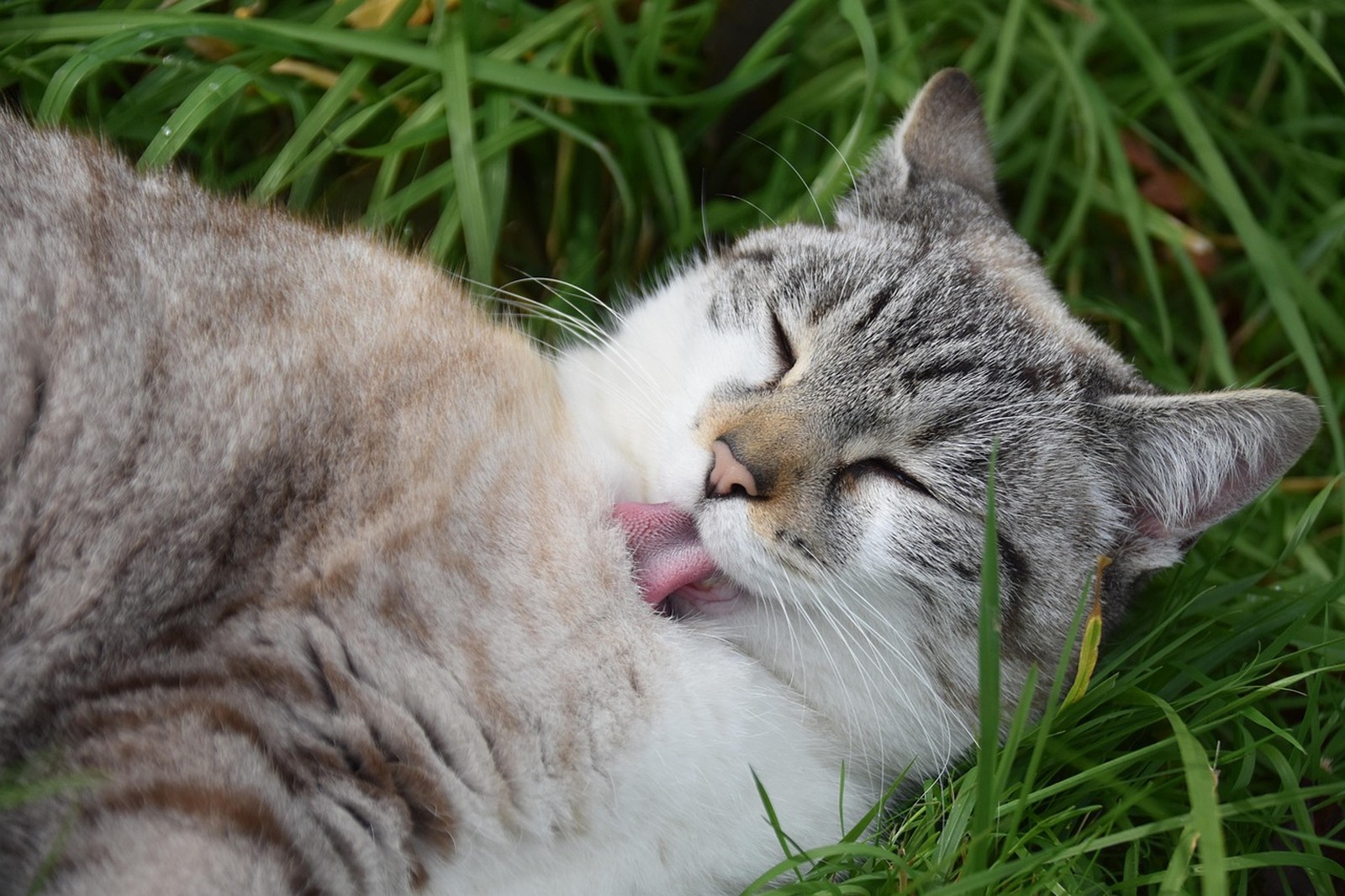
If your senior cat is not grooming herself like she used to, you become her grooming routine — gently, a few times a week. Reduced grooming is common in older cats who are stiffer, heavier, or sore, because the twist-and-reach positions a full wash requires simply hurt. The result shows up as a dull or greasy coat along the back and hips she can no longer reach, flaky skin, mats behind the ears and under the legs, and more loose fur swallowed on the occasions she does try.
Brushing sessions that help instead of stressing
Choose a moment when she is already relaxed, not when you have just come home or the house is noisy. Start with a soft brush or grooming mitt and short strokes in the direction the fur grows, beginning with areas she enjoys — cheeks and chin for many cats — before moving to the back and sides. Five calm minutes beats twenty minutes of determined detangling.
Keep sessions frequent and brief, two to four times a week, and finish with a treat or quiet praise so brushing predicts good things. Watch her body language throughout: leaning in and purring means continue; skin rippling, tail thumping or moving away means stop for today. A cat who once loved brushing but now objects to one specific spot may be sore there, which is information worth mentioning to your vet.
Dealing with mats safely
Matted fur pulls on skin with every movement and can hide redness or sores underneath, so do not ignore it — but never tug a mat out or cut close to the skin with scissors, where a wriggle can cause a nick. Work a small mat apart gently with your fingers, teasing from the outer edges, or use a mat-splitting tool carefully as directed. If a mat is tight to the skin, large, or clearly painful, stop and let a groomer or your veterinary team remove it safely.
While you brush, use the time as a quiet health check. Run your hands over her body for new lumps, bumps, scabs, fleas or ticks, sore patches, and areas where the coat is thinning. Note anything new, and raise persistent changes, strong odour, or a sudden greasy coat at her next vet visit — grooming changes sometimes accompany other age-related issues that deserve a look.
Baths, nails and the bits she cannot reach
Most senior cats do not need frequent baths, and a full bath can chill and stress a frail cat. Unless your vet advises otherwise, spot-clean with a warm, damp cloth, especially around the rear for a cat who cannot twist to clean herself, and dry her thoroughly in a warm room. Keep nails checked every couple of weeks; less active cats wear them down more slowly, and overgrown claws can catch in bedding or curl toward the pad.
Clean sleepy eyes and check ears gently during the same calm session, only wiping what you can see on the outside, and stop if you find redness, discharge or odour — those belong to the vet, not to deeper home cleaning.
Finding a patient groomer through the Pet Services Directory
Some coats, mats and temperaments simply need professional hands. KinsLe's Pet Services Directory helps you find local groomers, vets, sitters and trainers, so you can look for a patient groomer experienced with senior cats — someone who offers shorter appointments, non-slip handling and breaks, rather than a fast, full salon session designed for young cats. Ask before booking how they handle arthritic or anxious seniors and whether you can stay nearby for a first visit.
Your search for a patient groomer starts in the Pet Services Directory inside KinsLe, where senior experience, shorter appointments, and willingness to pause are the details to confirm before booking.