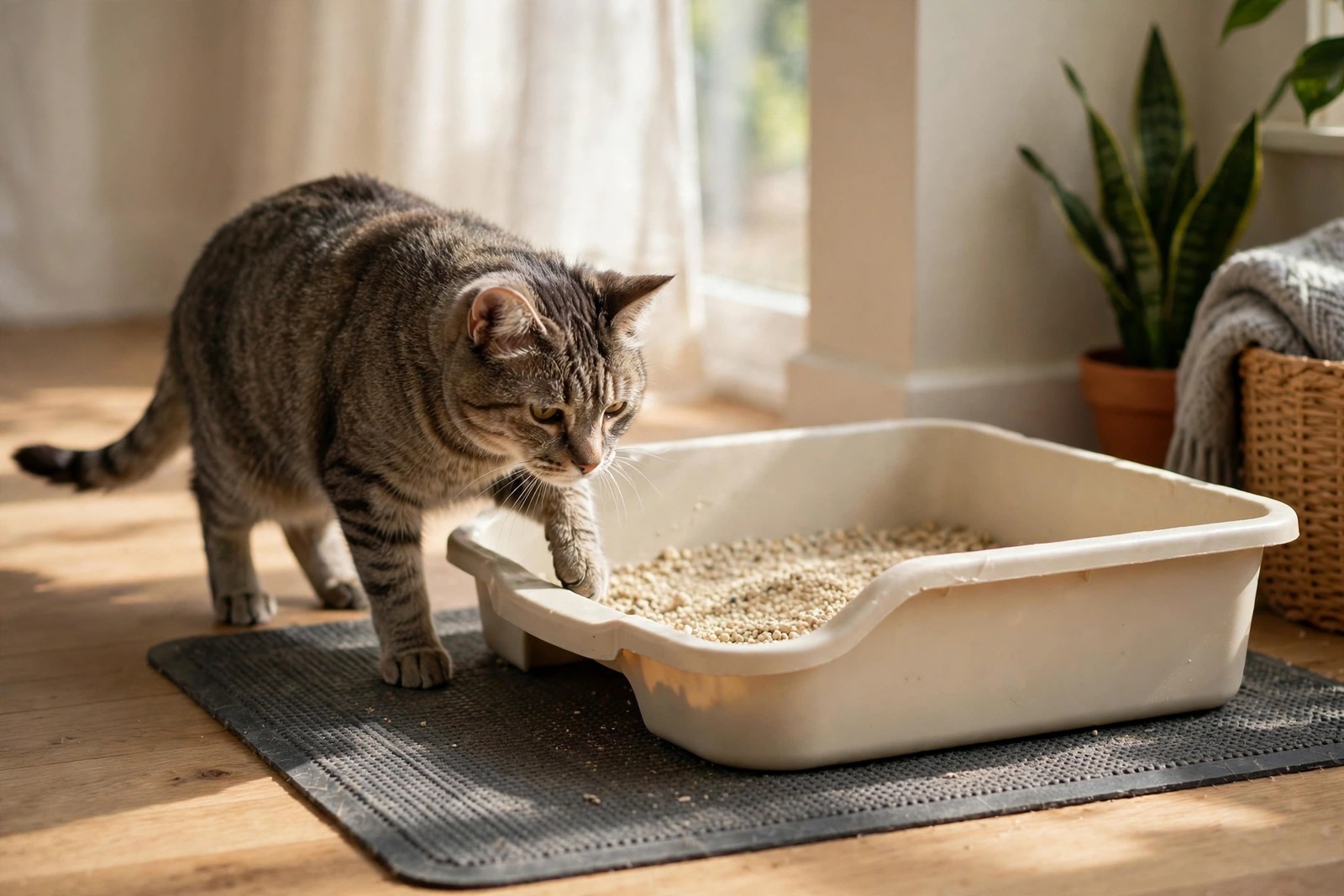
Choose a large, uncovered tray with one very low entry side, or a standard tray with one side cut down smoothly, so your cat can walk in without lifting sore legs high or jumping. Arthritis changes the litter visit in specific ways: stepping over a high wall hurts, balancing while turning hurts, and landing on an unsteady surface after a jump hurts. The right tray removes those three moments rather than asking the cat to tolerate them.
What the tray itself should offer
Look for a tray long and wide enough for your cat to stand fully inside, turn around without pressing against the sides, and squat without perching on an edge. One low side is the entry; the other sides can stay higher to contain litter that she kicks while digging. If you cut a side down yourself, smooth every edge, leave no sharp lip, and check that the remaining wall still feels rigid when she leans on it. Avoid top-entry trays, covered trays that force a crouch under a low roof, trays reached by a step, and small trays designed for kittens, because a kitten tray solves height but creates a cramped turn.
Place a washable non-slip mat under the tray and partly in front of the low entry.
Litter depth, texture and cleaning
Keep litter shallow enough that her paws do not sink and shift under her weight, but deep enough that she can cover waste if she still wants to dig. A fine, unscented litter is usually easier on tender paws than large, hard pellets, yet any sudden change can cause avoidance, so mix a new litter in gradually over several days while watching her reaction. Scoop daily, because an arthritic cat who finds a dirty tray may hold on, circle uncomfortably, or choose a softer spot nearby instead of climbing back in.
Top up little and often rather than refilling to a deep level once a week. If she begins standing with her front paws on the low edge and her back paws outside, or if she urinates just beside the tray, read that as information about pain, entry height or turning space before you read it as behaviour.
Placement matters as much as the tray
Put the tray where she already spends her day, on one level, without stairs, a cat flap or a long walk past slippery flooring between her resting place and the tray. Keep it away from food and water, in a quiet corner where another pet cannot ambush her while she is in a vulnerable squat, and with enough light for an older cat whose vision may also be changing. If your home has more than one level and she still uses both, provide a tray on each level she actually visits rather than expecting her to travel to a single tray.
Do not move a much-loved old tray and the new low-entry tray to a new room on the same day. Set the new tray beside the old one first, let her choose it voluntarily, and remove the old tray only after she has used the new one confidently for several days.
When the tray is not the whole answer
A new tray cannot treat joint pain. Book a vet visit if she cries when she postures, struggles to squat, grooms one joint repeatedly, sleeps in new positions, jumps less, or starts missing the tray after it has been lowered and repositioned. Take a short note of when misses happen, where she goes instead, and whether getting in or getting out seems harder, because that pattern helps your vet judge mobility rather than guessing from a single visit. Never start, stop or change pain relief on your own; ask your vet what is appropriate for her.
With KinsLe's Pet Passport, you can store her arthritis notes, appointment dates and the tray setup that worked in one portable packet, so a vet, sitter or family member sees the same details.