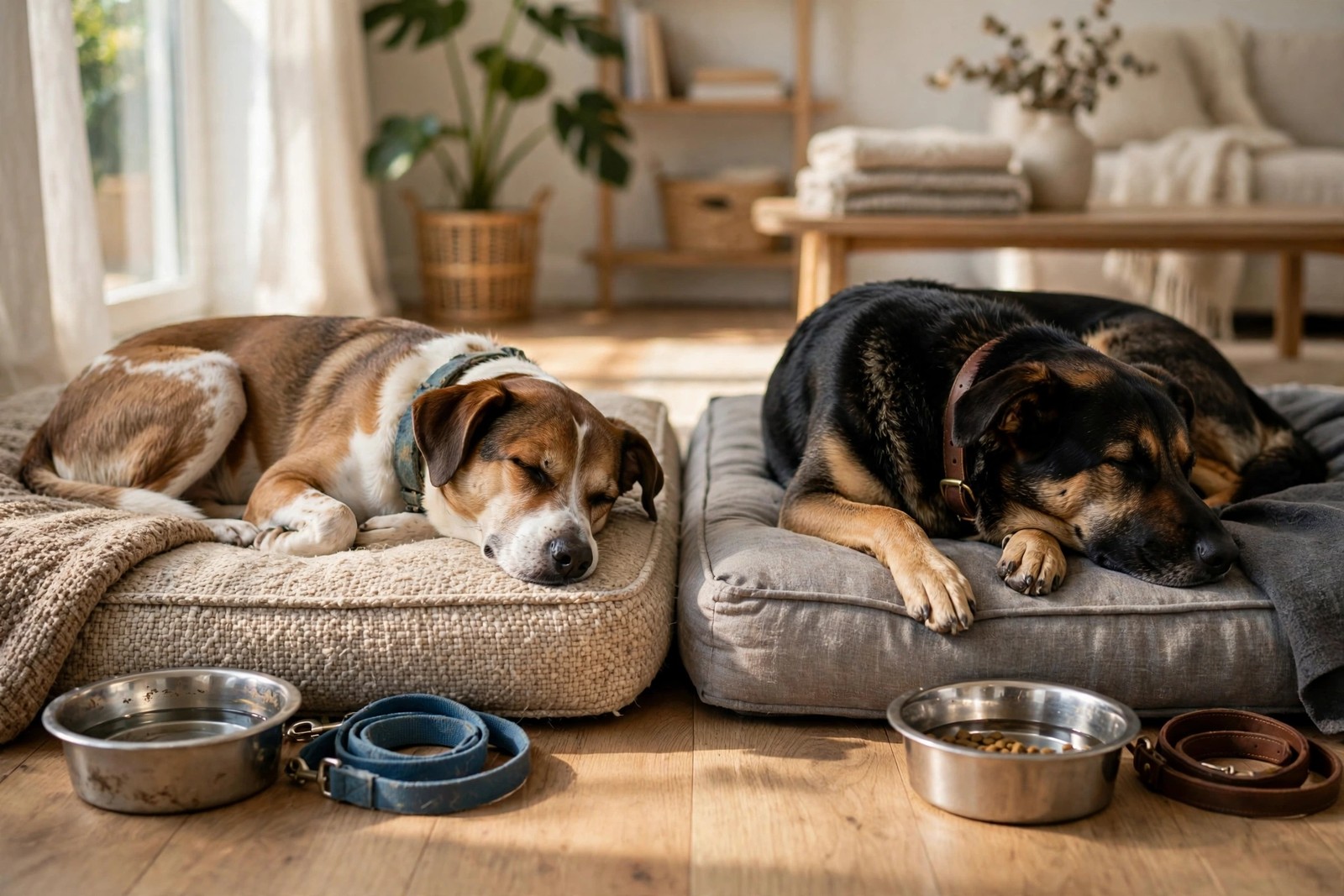
The default answer is one dog first. That is not because bonded pairs are a bad idea; it is because the pair decision bundles two adoptions, two training projects, and two sets of costs into a single first week, when you know least about how either dog behaves in your home. The exception matters just as much: some pairs are so interdependent that separating them would be unkind, and shelters and rescues identify those pairs plainly because placing them together is in both dogs' interest.
What bonded actually means
The word covers two different situations. A truly bonded pair panics, refuses food, or searches constantly when separated, and has usually lived together for years, often arriving together after an owner's death or a house move. A shelter pair may simply be two friendly dogs kennelled together for company, who enjoy each other but will settle separately without distress. Ask the shelter directly which situation you are looking at, how each dog behaves on a solo walk, and whether each eats, sleeps, and takes treats normally when the other is out of sight. The answers decide whether you are meeting a welfare need or simply adopting two dogs at once by choice.
What a pair gives you, honestly counted
Companionship is the real benefit. A bonded pair arrives with a trusted friend, which can soften the first nights, reduce alone-time stress if your work pattern suits two dogs, and provide play and social learning you do not have to supply. Against that, count the doubling without flinching: two lots of food, insurance, vaccination and parasite care, two beds, two leads, two seats' worth of car space, and boarding or sitting fees for two when you travel. Veterinary surprises also come in pairs over a lifetime, and two ageing dogs reach senior care together.
The training problem nobody mentions
Two newly adopted dogs rehearse each other's habits. If one barks at the fence, pulls on the lead, or guards a chew, the other learns the lesson in days. Training therefore has to happen separately as well as together: separate short sessions, separate walks at least some of the time, and separate resting places where each dog can be alone by choice. That separate work is what keeps each dog bonded to you as well as to each other, and it is the part new owners underestimate. A dog that will only walk, eat, or settle with its partner present is vulnerable on the day its partner is at the vet, so gentle separations with food rewards placed in each dog's mouth, one dog at a time, belong in the routine from the start.
The one-first sequence, and why it works
Adopt one dog, give it several months to learn your routes, rules, and rhythms, and train recall, lead manners, and settling until they are boring. Then add a second dog whose temperament complements the first, introduced on neutral ground with parallel walking before any shared living space. Your resident dog now models the house rules, your training skills are practised rather than theoretical, and the second adoption's costs land in a household that already knows its dog budget. The pair you end up with is chosen by you, matched on energy and sociability, rather than accepted as a package.
When to say yes to the pair
Say yes when the bond is genuine, when you have walked both dogs together and separately, when your budget absorbs doubled routine costs plus one emergency, and when at least two people in the household can walk and train separately on busy days. Say yes, too, when the dogs are older and calmer and their combined energy matches your life better than one young dog would. Whichever route you choose, give each dog its own bed, bowl, lead, and records from day one, so individual care never blurs into pair care. Allocating the solo walks, separate training sessions, and feeding turns for two dogs through KinsLe's Care Teams stops one dog quietly getting less of everything.