
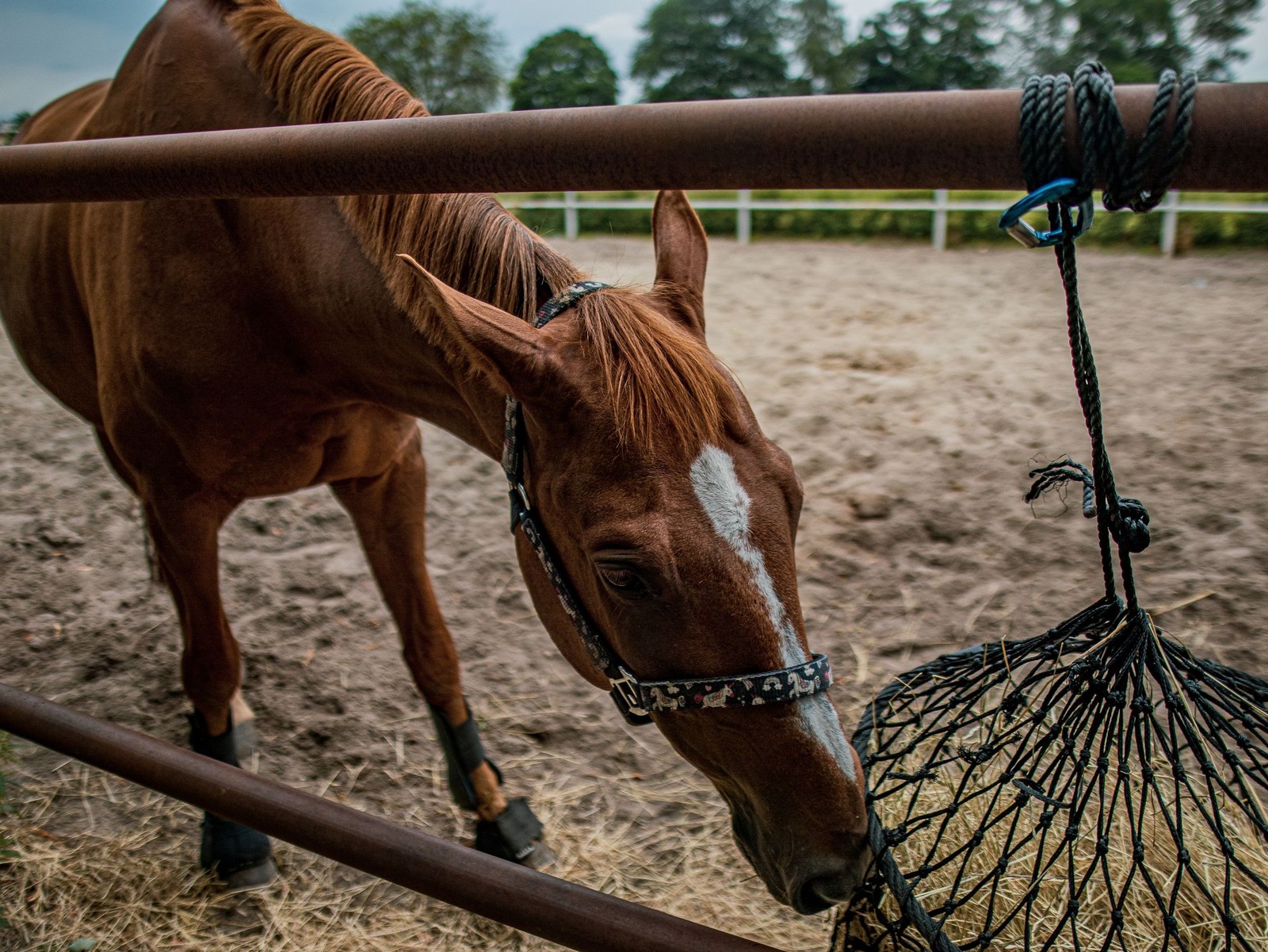
Yes — most horses need a feeding adjustment when winter arrives. Cold weather raises calorie needs, pasture goes dormant and stops contributing nutrition, and the horse's best internal furnace is fermentation of fiber in the hindgut. In practical terms, that usually means more hay, offered consistently, before you reach for more grain.
Why hay is winter's hero feed
Digesting long-stem forage generates significant body heat — nutritionists sometimes call it the horse's internal furnace. A horse with ample hay and shelter handles cold far better than a horse on a big grain ration with skimpy forage. As temperatures drop below about 40°F, an unclipped horse in good condition starts burning extra calories to stay warm; wind and rain strip heat faster still, multiplying the effect. Blanketing, windbreaks, and shelter reduce the demand, but the feed side of the equation still needs attention.
How to adjust without overdoing it
Start by increasing hay 10 to 20 percent as sustained cold sets in, and watch the body over two to three weeks. Horses that winter outdoors, seniors, hard keepers, and those in continued work may need more; easy keepers with shelter may need barely any change. Keep the increase in forage first — adding grain to a cold horse without enough hay is backwards. Water matters as much as feed: horses drink less when water is icy, and less water plus more hay is the classic recipe for winter impaction colic. Heated buckets or tank heaters, checked daily, are some of the cheapest insurance in horse care.
Watch the individuals, not the calendar
Not every horse winters the same. A fuzzy, fat pony may need a grazing muzzle even in December, while the senior Thoroughbred next door needs extra hay and a blanket. Clip patterns change everything — a trace-clipped horse in work loses the insulation his coat provided and needs both blanketing and feed to match. Re-score body condition monthly through winter; coats hide a multitude of sins, and spring should not reveal a horse two scores lighter than November.
Safety notes
Introduce additional hay gradually over several days, and never feed frozen or moldy hay. Check blankets regularly for rubs and shifting, and make sure blanketed horses can still move freely to generate warmth. Any horse shivering persistently, losing weight despite extra feed, or going off water needs prompt veterinary attention.
Stay ahead of the season
Winter feeding is about anticipation, not reaction — the time to adjust is before the coldest weeks, not during them. Kimmy, KinsLe's built-in AI assistant, can take questions as they come up while you prepare — how much extra hay a clipped senior needs, whether icy water is cutting intake, or when blanketing helps more than it hinders. Kimmy in KinsLe can take your follow-up questions about raising hay gradually for winter, returning answers drawn from the KinsLe Answers library.