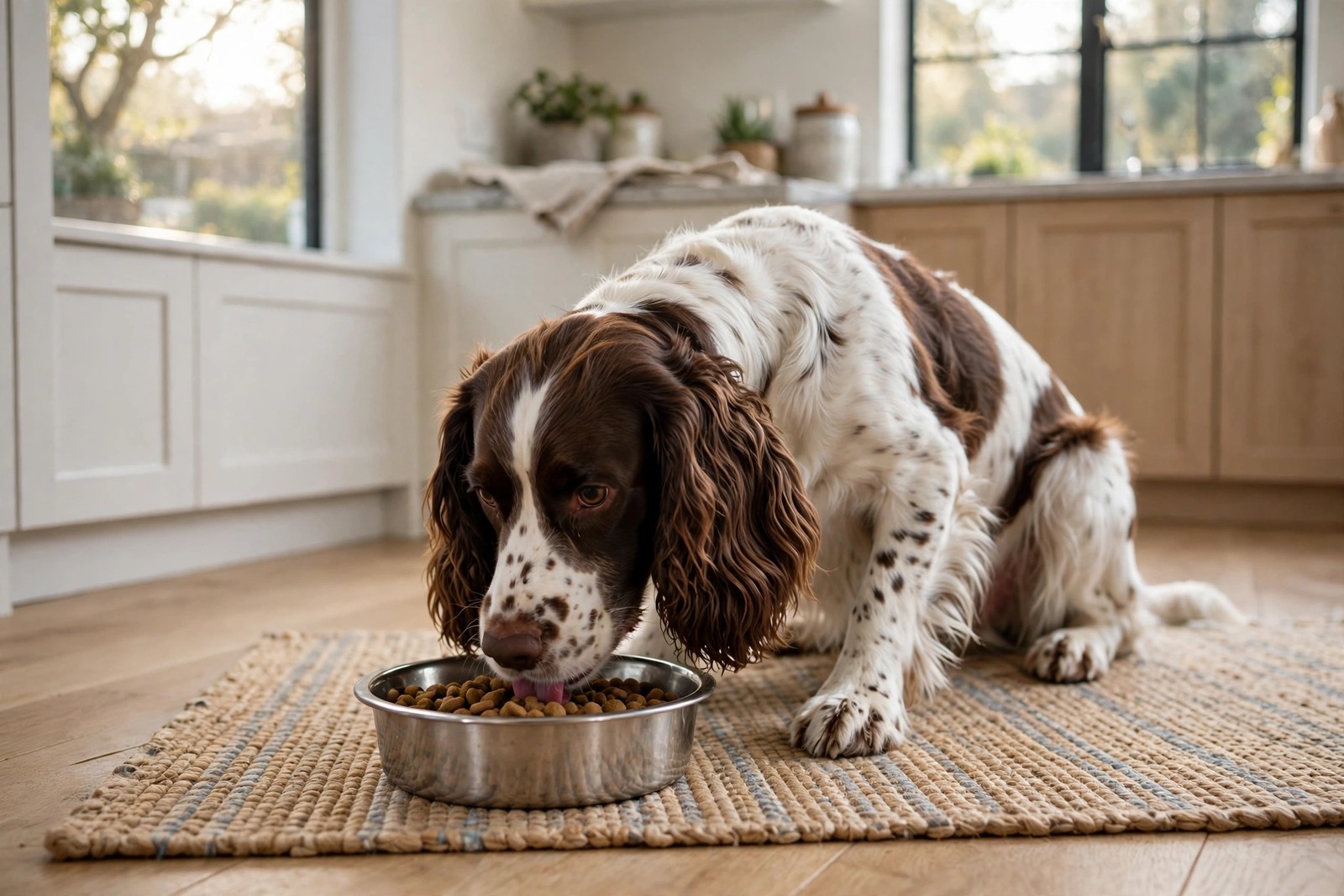
Both styles fill the bowl, but they run very different households. Scheduled feeding means measured meals offered at set times and picked up again shortly after; free-feeding means a bowl that is topped up and available all day. For the great majority of dogs, the schedule is the healthier and more informative choice — and the reasons are practical ones you will feel within the first fortnight.
What Scheduled Meals Give You
Portion control is the headline benefit. When you measure two meals a day, you know exactly what your dog ate, and you can trim or add a small handful in response to body condition — ribs felt easily under a thin fat cover, a waist visible from above. Toilet training runs on the schedule too: dogs, especially puppies, usually need to relieve themselves soon after a meal, so set meals make set outings, and accidents drop sharply once input times are predictable. Most importantly, a scheduled dog's appetite becomes information. A dog who always finishes breakfast and suddenly leaves it has flagged a problem — pain, nausea, stress, a sore tooth — on the first day it starts, while a grazing dog's reduced intake can go unnoticed for a week. Schedules also make medication with food, weight-loss plans, and multi-dog fairness straightforward.
Where Free-Feeding Quietly Goes Wrong
The permanently full bowl has real drawbacks beyond the obvious one. Kibble left out for hours loses aroma and crispness and absorbs moisture, and each top-up buries the oldest, stalest kibble at the bottom under the fresh; wet food left out is a hygiene problem within hours. Many dogs, particularly easy-keeping and food-driven breeds, simply eat more across a day of grazing than they would from two measured meals, and the weight creeps on invisibly because no single eating episode looked like much. In multi-dog homes the bowl becomes contested ground: the bold dog eats double, the shy dog waits and goes short, and guarding behaviour around an always-available resource is a common and avoidable source of friction. Free-feeding also blurs hunger, which makes training rewards less effective — a dog who snacked an hour ago works less keenly for a treat.
Making the Switch
Choose two anchor times that fit your day — three or four smaller meals for young puppies — and weigh or measure the food rather than eyeballing scoops, which drift generous over time. Put the bowl down, give the dog fifteen to twenty calm minutes, then lift whatever remains without ceremony or coaxing; offer the next meal at its normal time and size. Most healthy dogs accept the new pattern within a few days, and the first skipped meal usually produces a dog who eats the next one promptly. Keep water available at all times — the schedule applies to food only. If your dog is underweight, elderly with a fading appetite, managing a medical condition, or on a vet-directed feeding plan, talk to your vet before tightening any routine; a small number of dogs do better grazing, but that should be a decision, not a default.
Keeping the Schedule Shared
The weak point of scheduled feeding is the household, not the dog: one person feeds at seven, another assumes it was not done and feeds again at eight, and the portion plan quietly doubles. Write the meal times and amounts down where everyone can see them and tick each feed off as it happens. KinsLe's Care Teams turns each meal into an assigned, timestamped duty, so whoever is home feeds the dog, everyone else can see it was done, and the schedule that protects your dog's weight and routine survives shift work, teenagers, and helpful grandparents.