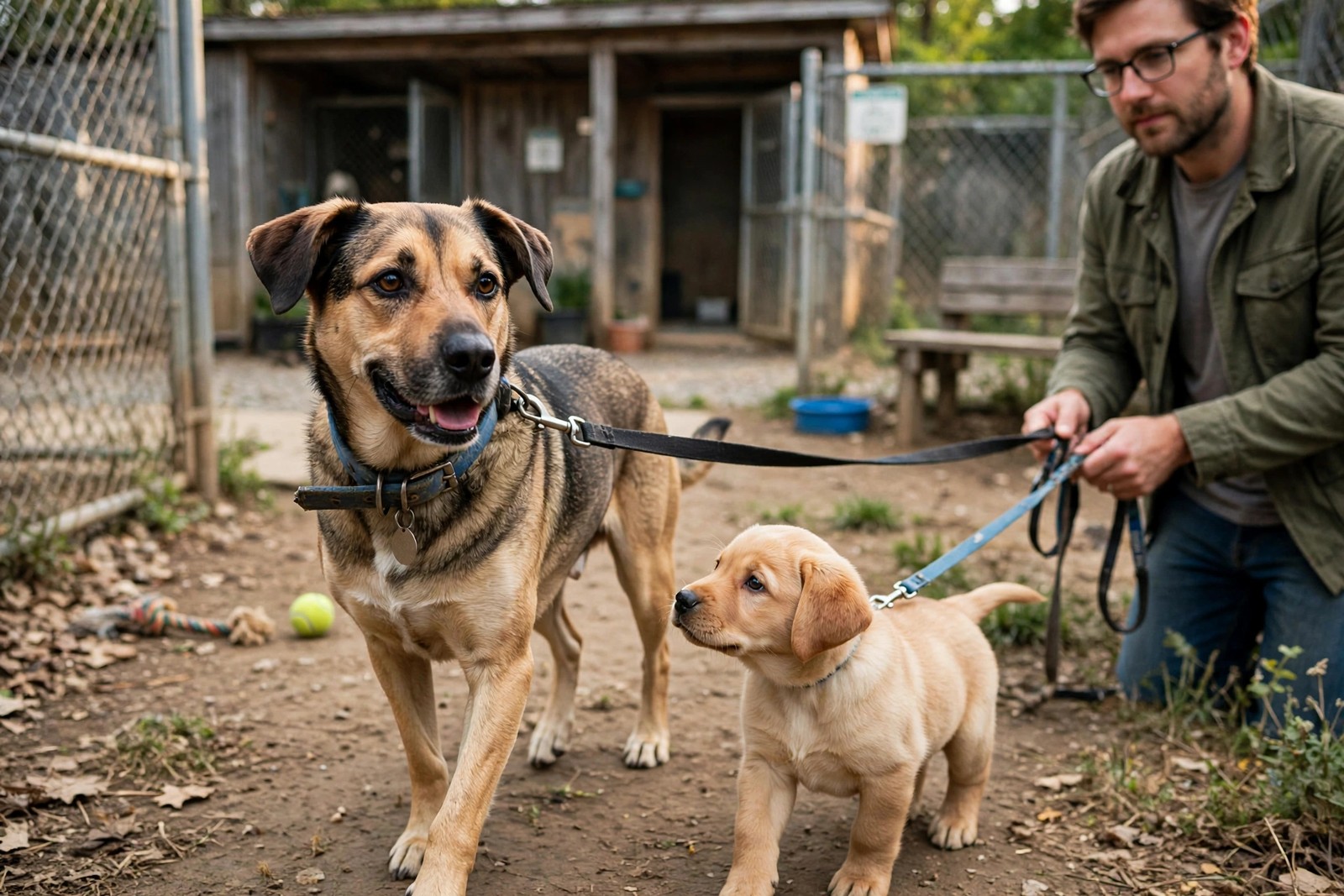
This is the first real fork in the road for a new owner, and the honest answer depends less on which dog is 'better' than on how much unstructured time your life actually contains. A puppy and an adult dog are both joys, but they are different jobs: one is raising an infant of another species through its fastest learning period, the other is welcoming a formed individual whose habits — good and bad — you can assess before you commit.
What a Puppy Really Costs in Time
For the first weeks, a puppy needs the toilet outside every one to two hours, after every meal, nap, and play session, plus at least one trip in the night — and house training still takes weeks of consistency before it is reliable. Mouths are the other full-time job: teething puppies chew chair legs, skirting, shoes, and hands, and supervision or management is constant while they learn what is theirs. The socialisation window in the early months is precious and brief, so those same weeks should include careful introductions to people, sounds, traffic, handling, and other dogs. Add the unknown quantities: a mixed-breed puppy's adult size can surprise, energy and confidence are still forming, and early vet visits come in a cluster. None of this is a reason to never choose a puppy — raising one is a privilege many owners treasure — but it demands someone home most of the day, tolerant of lost sleep, for the first stretch.
What an Adult Dog Hands You on Day One
An adult dog arrives readable. The size, coat, and energy you see are the ones you will live with; shelter and rescue staff can tell you how this dog behaves with people, in a home, and around other animals, because they have watched it. Many adult dogs come with house training and basic manners started, sleep through the night, and settle into a routine within weeks rather than months. The work that remains is real but different: an adult may bring habits you did not choose, may need patience while it grieves a previous home, and deserves a settling-in period before you judge its true character. For a first dog, though, that predictability is gold — you are learning dog ownership alongside a dog who already knows some of the job.
The Honest Self-Test
Ask three questions. Who is home during the day, really — if the honest answer is 'nobody for eight hours', a young puppy is not a fair plan, while an adult dog with a midday walker can thrive. How is your sleep and patience budget this year — a puppy taxes both nightly at first. And what do you picture enjoying: the shaping of a youngster from scratch, or walks, training classes, and companionship with a dog who can join in fully from the start? Cost cuts both ways too: puppies front-load vet and equipment spending, while an older adult may bring senior care sooner — neither is the cheap option, just differently timed.
Where to Meet Your Match
If you choose an adult, spend time with the individual dog, ask for its full history, and take the rescue's matchmaking seriously. If you choose a puppy, choose the breeder with the same care — health-tested parents, puppies raised in the home, and a willingness to take the dog back at any age. Either way, get the dog's records and routines in writing at handover: KinsLe's Transferrable Profiles moves an adult dog's profile — vet history, feeding, quirks, and all — to you intact so care never restarts from zero, and a puppy's profile starts on day one and carries everything forward for life.