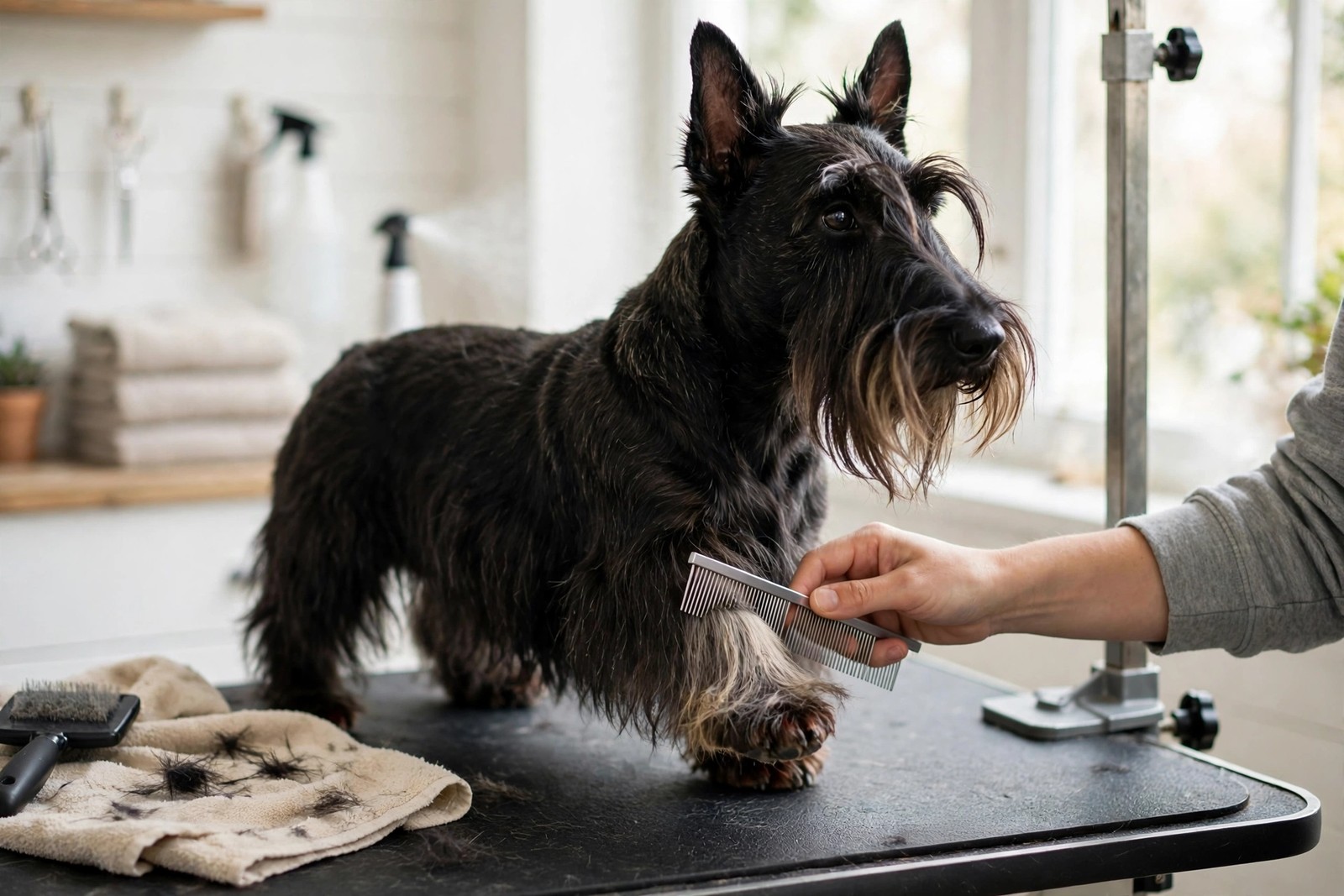
A Scottish Terrier's coat is a working jacket, not a decoration: a harsh, wiry outer layer sheds weather and dirt, while the softer undercoat beneath insulates. Grooming that skims the surface leaves the real problems underneath, so the schedule below is built around reaching the skin, protecting the furnishings, and making a deliberate choice about how the coat will be maintained for the dog's whole life.
The Weekly Brush and Comb-Through
Once a week, brush the whole dog and then comb through in sections, parting the coat so the comb travels from the skin outward. The undercoat sheds and packs down if it is never lifted, and tangles begin close to the skin behind the ears, under the collar, in the armpits, and where the harness sits. Work patiently with your fingers or a comb on any snarl rather than dragging a brush over it, because a dog who learns that grooming hurts will make every later session harder.
Finish the weekly session with a skin check: look for redness, lumps, parasites, or sore spots hidden under the dense coat.
Furnishings and the Beard Need More
The furnishings, the longer hair of the beard, legs, and skirt that gives the breed its outline, tangle far faster than the body coat. Comb them through several times a week, and daily if the dog walks through wet grass or mud, because a small knot in a leg furnishing becomes a solid mat surprisingly quickly, and a mat left against the skin pulls, traps moisture, and eventually needs clipping out. Comb from the ends upward in small sections, holding the hair at the root so the pull does not reach the skin.
The beard deserves its own rule: rinse or wipe it after meals and after drinking, because it collects food and water, drips both across the floor, and turns sour if it stays damp and dirty. Check the beard's skin during the weekly session, since irritation hides well under wet hair.
Hand-Stripping Versus Clipping
The central choice is how dead coat is removed. Hand-stripping pulls the blown outer hairs out by hand or with a stripping tool, allowing new harsh hair to grow in, and it preserves the coat's hard texture, weather resistance, and rich color. It takes longer, is usually done in sections across the year or at planned sessions, and costs more when a groomer does it. Clipping is faster and easier, and many pet owners choose it happily, but a clipped coat gradually grows back softer and often paler, losing the harsh jacket's character, and returning a clipped coat to a stripped one is a slow project.
Pick based on how much the traditional texture matters to you, then keep the chosen method on schedule.
Ears, Nails, and the Supporting Cadence
Around the coat work, keep a regular cadence of supporting jobs: check the ears each week for odor, redness, or debris and clean them gently only as needed, trim nails regularly so the dog's footing and posture stay sound, and look at the teeth as part of the weekly session. Bathing belongs on an as-needed basis rather than a fixed weekly slot, since the harsh coat sheds dirt well when brushed, and over-bathing works against its texture.
When more than one person grooms, the schedule needs a shared record or each helper assumes the other has done it: the Family Sharing schedule on KinsLe holds one grooming log for the household, showing the last comb-through, the beard and ear checks, and the next stripping or clipping appointment, so the weekly rhythm survives busy weeks.
Write the schedule down, keep sessions at a steady time of week, and the Scottie's coat largely rewards you: the harsh jacket stays harsh, the furnishings stay combed and clean, and grooming stays a calm routine instead of a rescue operation.
Family Sharing on KinsLe, with one shared grooming roster that each helper updates after a session, keeps a Scottie's coat care continuous even when the household's usual groomer is away.