
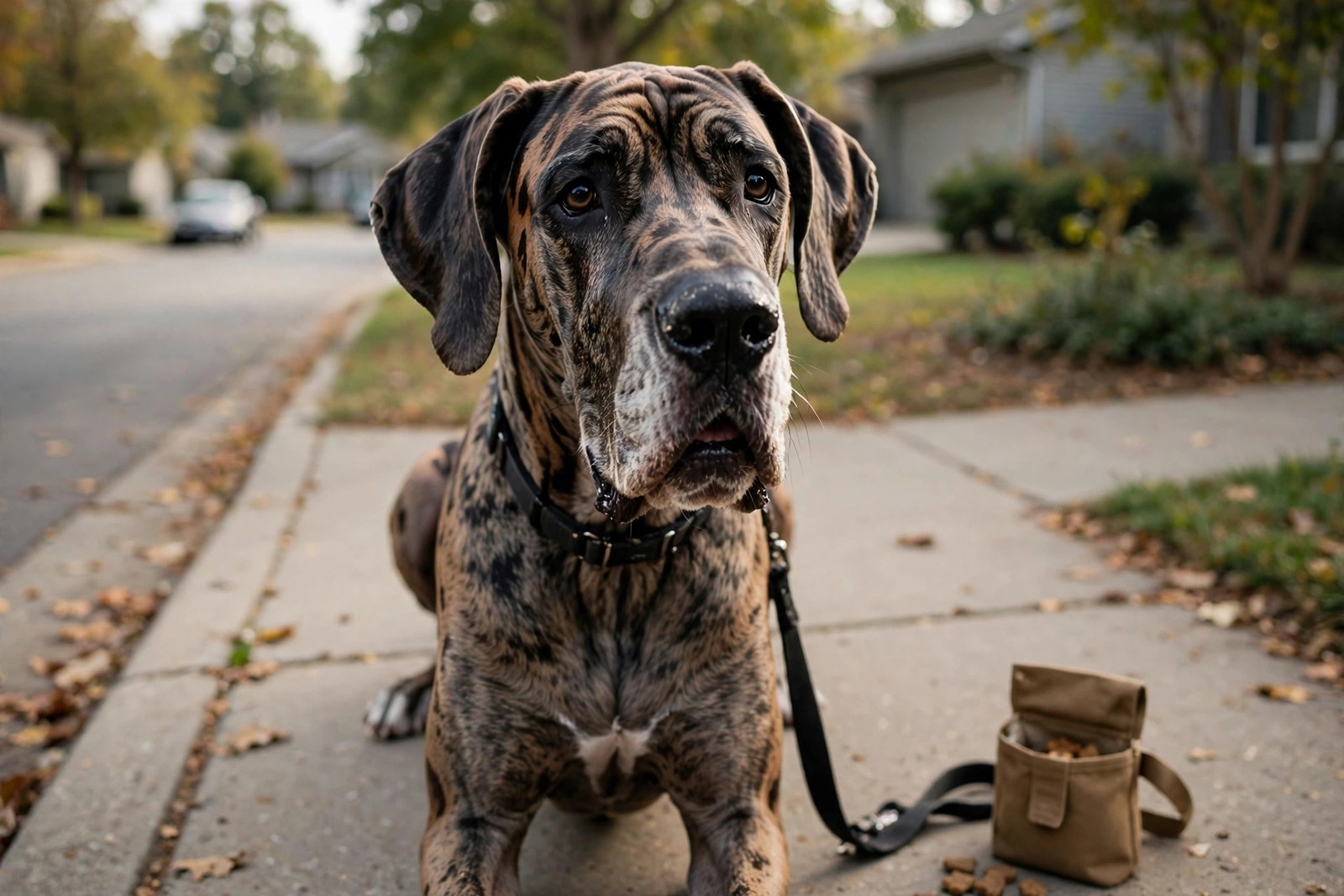
Ask about temperament and the Great Dane sounds like the perfect children's dog — and in character, it usually is. Danes are gentle, patient, affectionate, and famously devoted to their families, often earning the 'gentle giant' label honestly. The question that actually decides safety in your home is different: not whether the dog means well, but what a hundred-plus pounds of goodwill can accidentally do to a small child.
The Temperament Is Genuinely Lovely
A well-bred, well-raised Dane is typically calm indoors, tolerant of noise and fuss, slow to take offence, and deeply attached to its people — including the smallest ones. Many Danes seek children out, resting a huge head gently in a lap, following them at a stately pace, and accepting costumes, reading sessions, and devoted stroking with noble patience. They are not snappy, guardy, or high-strung with their own family, and their low exercise demands mean the adult dog's default mode is lying down — an underrated virtue around children. On character alone, few breeds score higher.
The Physics Are Not
Now scale everything up. A Dane leaning affectionately against a toddler — a classic breed gesture — can simply push the child over. The tail, wagging at exactly a standing toddler's face height, is a muscular whip that owners of the breed will confirm stings adults. A playful paw placed for attention carries the weight of a large dog behind it, a galloping adolescent in the garden has the stopping distance of furniture, and a Dane that sits on a small child while trying to share a lap is a real, reported hazard rather than a joke. None of this involves aggression; all of it can mean falls, bruises, and frightened children. The riskiest period is the dog's adolescence: Danes stay physically clumsy and mentally puppyish long after reaching near-adult size, so a ten-month-old combines maximum mass with minimum spatial awareness.
The Age Match, Done Honestly
School-age children with a calm adult Dane is the pairing that made the breed's reputation, and it usually delivers: children old enough to stand their ground, read a resting dog's signals, and enjoy a companion whose size makes ordinary walks and games feel epic. Toddlers and babies require a managed household — gates, no unsupervised contact, the dog's rest areas strictly child-free — maintained for years, and families should choose a Dane in that season only if they genuinely accept that workload. Children must also learn never to climb on, ride, or pull up on the dog: a Dane's back and hips are not built for it, and even a gentle dog may move suddenly when hurt.
Consider lifespan in the family calculation, too: Danes are a short-lived breed, often seven to ten years, which means children may face losing their dog while still young — worth preparing for honestly rather than discovering.
Supervise thoughtfully, manage the adolescent phase with exercise and training, and the gentle giant story is one many families live happily. Just never let the temperament headline make you forget the arithmetic underneath it.
KinsLe's Care Teams helps Dane families keep that arithmetic safe, assigning which adult supervises dog-and-child time and who covers the daily exercise that keeps a young giant calm — so gentleness is supported by management, not left to luck.