
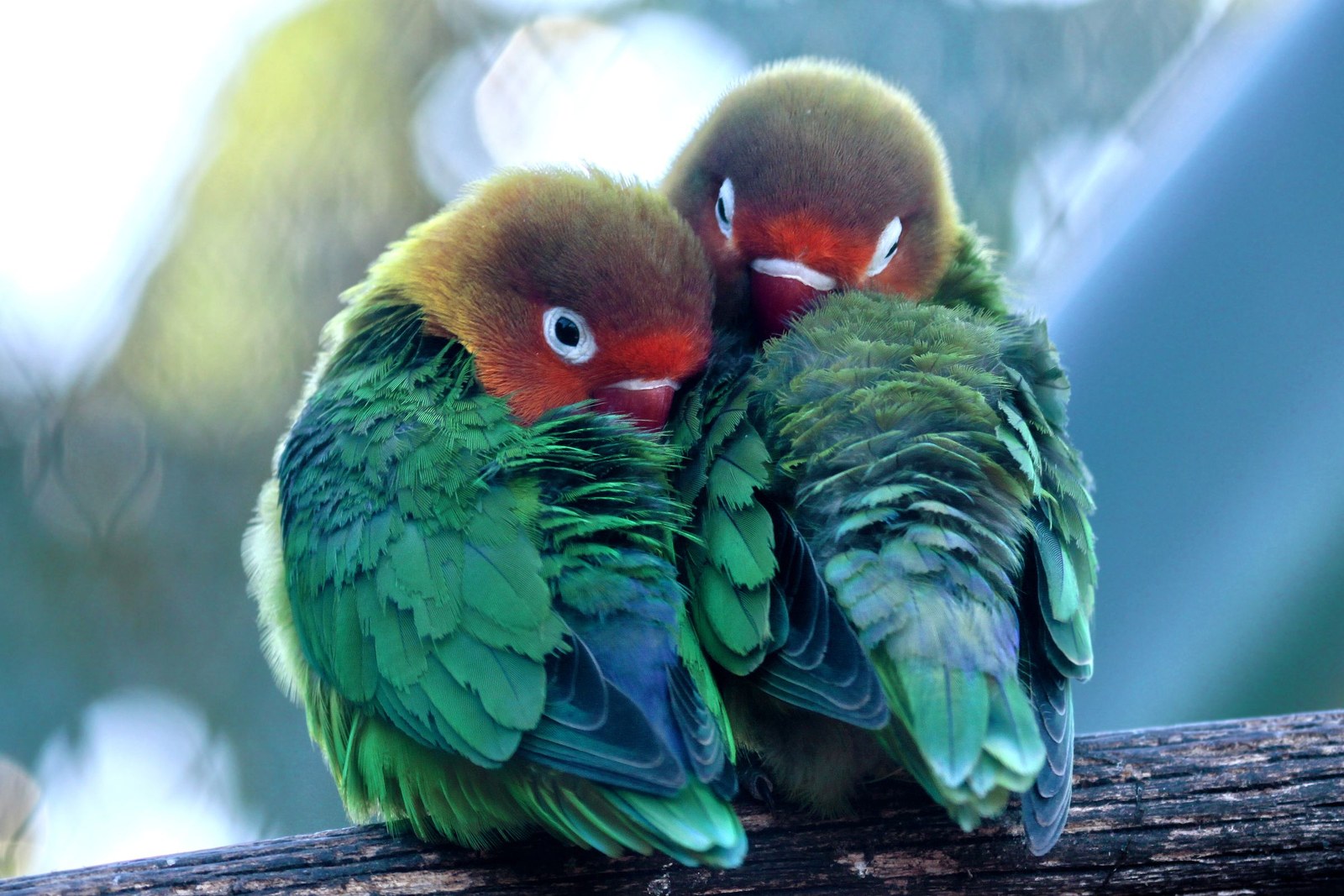
Despite their name, lovebirds do not have to be kept in pairs. A single lovebird can thrive and bond closely with you if you genuinely have several hours a day for it, while a bonded pair will keep each other company but may prefer each other over people. The deciding factor is not romance — it is your schedule, honestly assessed.
Life With a Single Lovebird
A single lovebird often becomes intensely people-focused: riding on your shoulder, preening your hair, and learning your routines. That bond is the reward, and the responsibility is just as real. Lovebirds are social flock animals, so a single bird left alone for a full workday, every day, can become lonely, loud, and frustrated — sometimes plucking feathers or biting from sheer understimulation. A single bird suits someone who works from home, is retired, or is home most of the day, and who treats the bird as a participant in daily life rather than a decoration.
If you choose one bird, build in structure: out-of-cage time morning and evening, foraging toys that make meals take effort, and a cage placed where family life happens — safely away from kitchen fumes.
Life With a Bonded Pair
Two lovebirds that get along will preen each other, chatter together, and entertain you enormously. They are also less dependent on you, which cuts both ways: less guilt about a busy day, but taming takes longer and some pairs never become cuddly with people. Watch before you buy — a true bonded pair feeds and preens each other, while two birds thrown together may fight, and lovebird disagreements can injure. Separate cages side by side are a safer start for birds that did not grow up together.
Pairs also bring practical notes: two birds are louder than one, mess is doubled, and a male-female pair may breed whether or not you want chicks. Same-sex pairs often live together happily with the right introduction.
The Honest Middle Questions
- Are you home most of the day, most days? One bird can work beautifully.
- Do you work long hours but love lovebirds? A compatible pair is kinder than a lonely single.
- Do you want a hands-on companion above all? One bird, hand-raised and well socialized, is the better bet.
- Is a child the main caregiver? A pair is more forgiving of a school day, with adults supervising care.
There is no wrong answer here — only mismatches. A loved single bird with an attentive owner and a contented pair are both success stories.
One Bird or Two: Daily Care at Home
Either way, lovebird care is daily: fresh food and water, spot-cleaning, playtime, and watching for squabbles in a pair. Divide feeding, cleaning, and playtime clearly between the people at home instead of assuming someone else did it. Each bird gets its own profile — your first pet profile is free — with a unique QR ID. A parent helping with a pair can open each lovebird's profile once the owner shares access through Family Sharing in KinsLe.