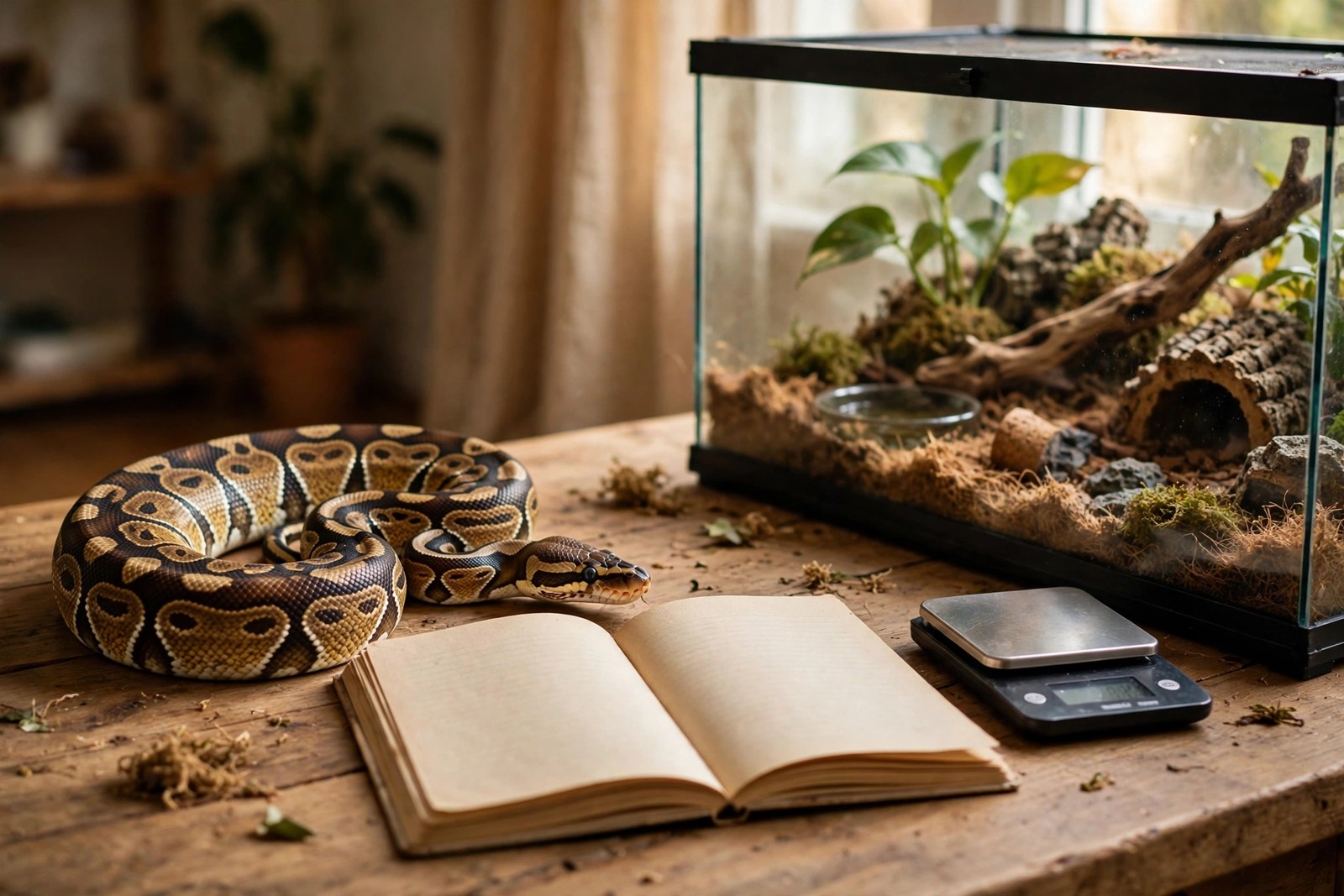
Yes. A snake gives you very few daily signals — it may eat only every one to four weeks depending on age and species, and it cannot show illness the way a dog does — so a written log becomes your memory and your early-warning system. Five short entries per event are enough, and they take under a minute each.
Exactly What to Write Down
For every feed, note the date, the prey type and size (for example, one medium frozen-thawed rat), whether it was taken quickly, taken overnight, or refused, and when the remains or a refusal were removed. For every shed, note the date, whether the skin came away in one long complete piece, and whether the clear eye caps came off with it — check the shed skin itself for the tail tip and eye caps if you are unsure. Once a month, add a weight using a kitchen scale with the snake in a tub, and note any regurgitation, unusual droppings, soaking behaviour, or long stretch hidden away.
What the Patterns Tell You
A ball python that refuses three feeds in winter while holding weight is showing a common seasonal pattern; a corn snake that suddenly refuses twice and is losing weight is telling a different story, and your dated notes show which is which. Two incomplete sheds in a row point first to humidity that needs checking, not to panic. A vet facing a snake that has not eaten in two months will ask exactly what your log already answers: when it last ate, what size prey, how much weight has changed, and when it last shed completely.
How to Keep It Without It Becoming a Chore
Keep the log where the feeding happens — a notebook beside the vivarium, a note on your phone, or a single page per month — and write the entry while the tongs are still in your hand. Batch the jobs: weigh on the first feed of each month, photograph the snake beside the log page every few months so condition changes are visible, and review the page before any vet visit, holiday handover, or enclosure change. Snakes are not routinely vaccinated or microchipped, so this feeding, shedding, and weight history, plus arrival date, source, and morph notes, is the health record that actually matters for this species.
Where the Log Earns Its Keep
The log pays off at three moments: a sitter who can see that a refusal last month was normal for this snake, a vet who gets exact dates instead of estimates, and you, six months from now, able to prove a change is new rather than guessing. KinsLe's Pet Passport brings that feeding and shedding history together with your snake's identification details and vet contacts in one portable packet, so the record travels with your snake whenever care changes hands.