
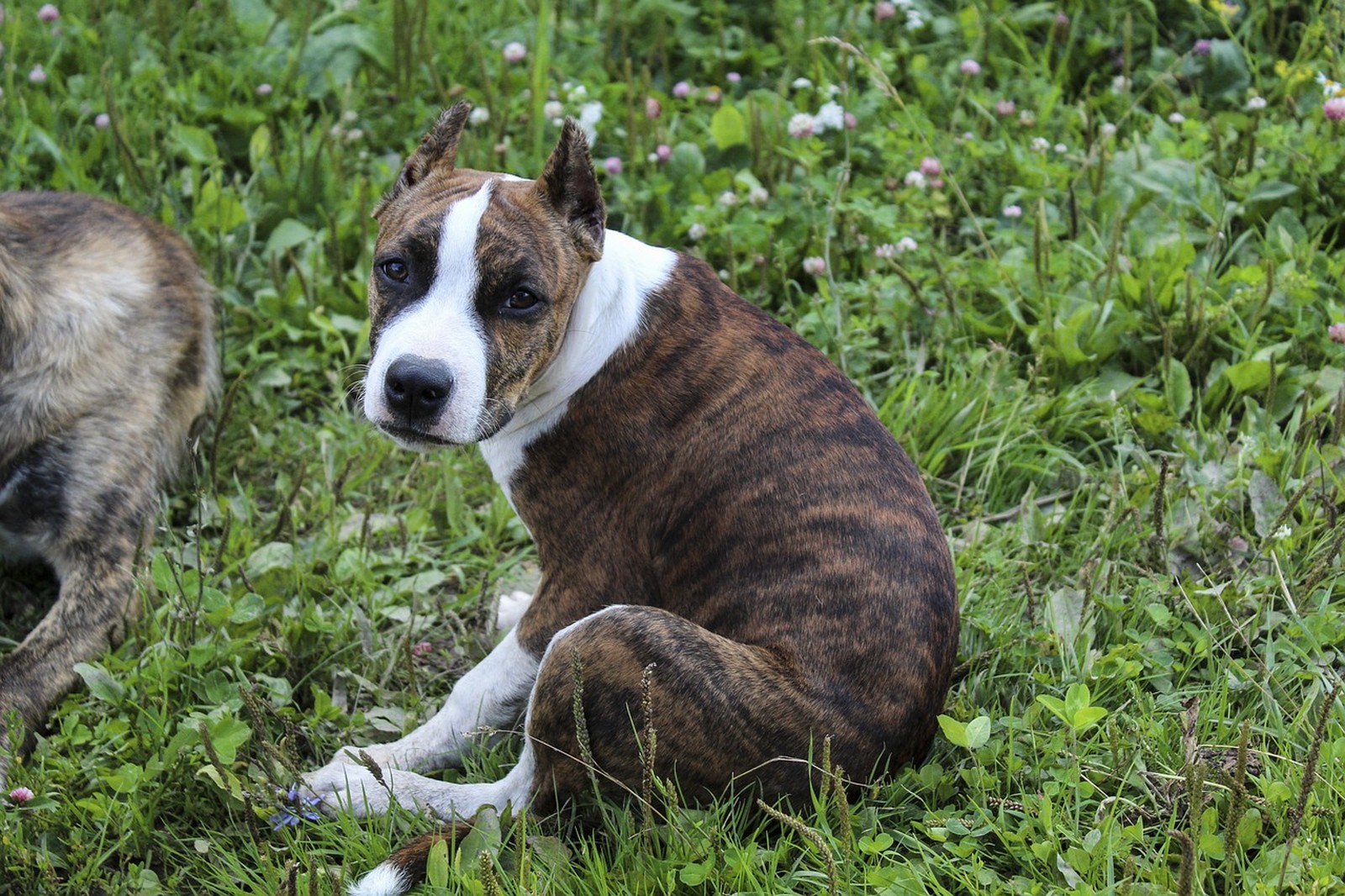
Muscle Hides Gain Better Than Fat Hides Itself
Yes — and for this breed the log solves a specific problem. The American Staffordshire Terrier is a compact dog built out of dense muscle, and muscle changes the picture in two directions at once. A young dog filling out its frame can look heavier than it is, while an adult quietly adding fat over a muscular base can look unchanged for months, because the outline stays powerful even as the padding thickens. Owners who judge by eye alone tend to discover both errors late.
A log cuts through the argument. Regular weights, taken the same way each time, show whether the number is actually moving, and pairing each weight with a hands-on condition note tells you whether a rise is a growing dog building itself or an adult dog storing surplus.
Puppies: Fast Growth Needs Portion Evidence
AmStaff puppies grow quickly and unevenly — a surge in height, then a broadening of chest and head — and their food needs move with those surges. Weighing every couple of weeks through the first year gives you the evidence to adjust portions in small steps rather than waiting until a puppy looks obviously round or obviously lean. Record the food being fed and the daily amount beside each weight, including training treats, which in a breed trained with enthusiasm can add up to a hidden extra meal across a day of sessions.
Note more than weight: a line on appetite, energy and how the harness or collar fits gives the numbers context. A puppy whose weight steadies for a fortnight during a height spurt is a different case from one whose weight stalls while its appetite fades, and the second pattern, with dates attached, is worth a conversation with your vet.
Adults: Monthly Weights and the Rib Check
For a healthy adult, a monthly weigh-in is a sensible rhythm — often easiest tied to something regular, like the day parasite prevention is given or the first weekend of the month. Use the same scales where you can; many vet practices are happy for owners to pop in and use theirs, which also keeps the dog relaxed about visiting the building.
Pair every adult weight with the rib check: hands flat along the ribcage should feel ribs under a thin layer, with a visible waist from above and a tuck from the side. Write the condition finding beside the number — 'ribs easy, waist clear' — because the pair together is the real record. A stable weight with ribs getting harder to feel is condition creeping up inside a muscular outline, and catching it at that stage is a small food adjustment rather than a diet.
Activity Changes Are Log Entries Too
This breed's weight responds quickly when life changes: a working owner whose dog walked twice daily with a dog walker, then starts working from home and walks at lunch instead; a young dog whose training classes end for the season; an older dog slowing down before its appetite does. When the routine changes, write it in the log on that date. Later, when a weight trend needs explaining, the explanation is sitting in the record instead of being guessed at, and your vet can see the whole picture — food, activity, weight — in one glance.
If the log shows loss you cannot explain, gain that food reductions do not move, or a puppy falling behind its own curve across several entries, that written pattern is the reason to book the vet and the evidence to take along. Filed in KinsLe's Pet Passport, an American Staffordshire Terrier's weight log travels with its vaccination and health records as one packet, so any clinician can read its growth story at once.