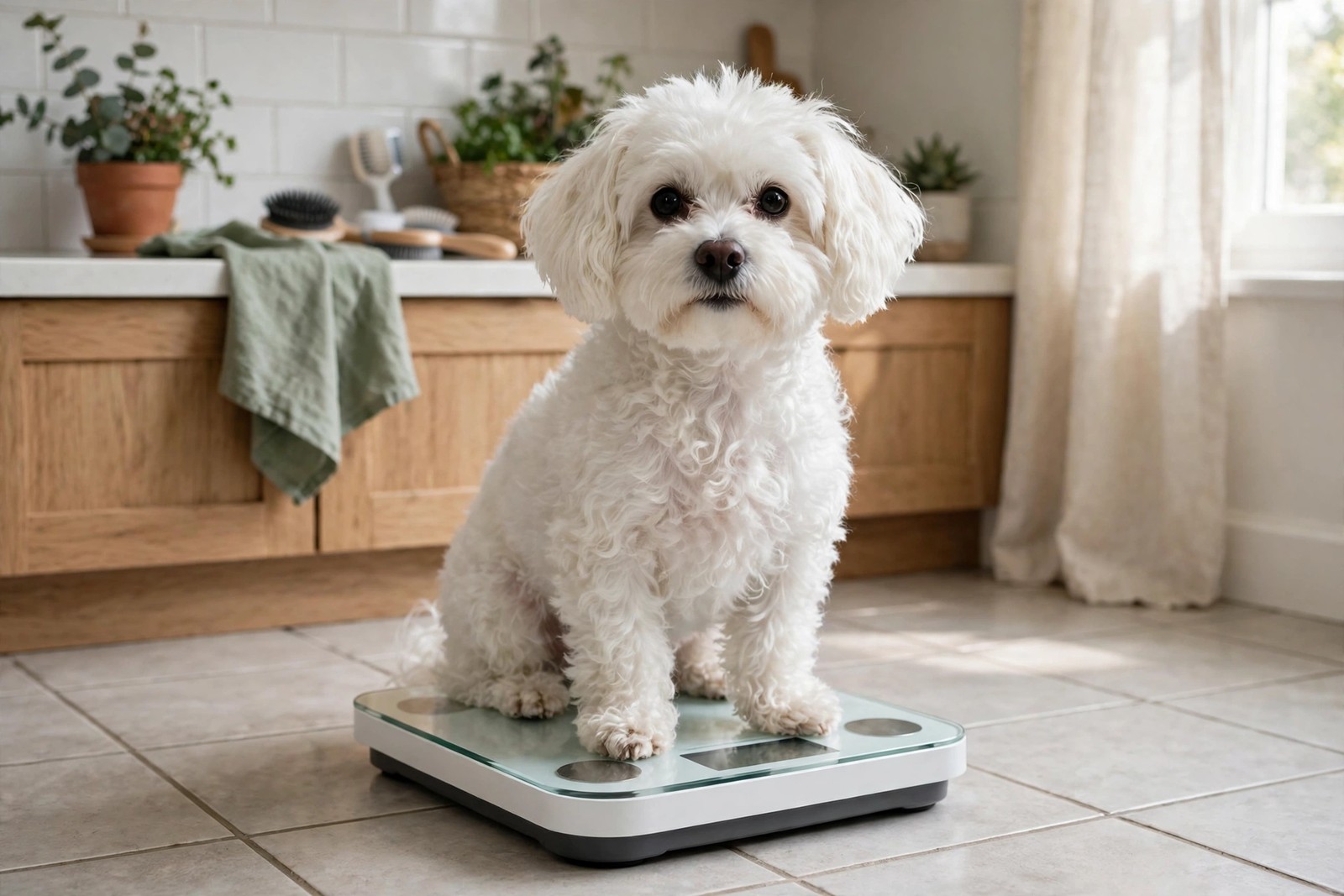
Why tiny changes count double in a Bolognese
Yes — keep the log, and treat small numbers with respect. A Bolognese is a small companion dog with a light frame under a cloud of white fluff, so a gain that would be trivial on a large breed represents a meaningful share of this dog's total body weight. That extra load falls on small joints and a little heart and lungs working at close quarters, and it typically arrives quietly through the breed's sociable home life: a bite of toast here, a training treat there, a family member who did not know someone else had already fed a snack.
The coat completes the concealment. Fluffed out, a Bolognese looks round by design, so owners cannot judge condition visually with any honesty. The scale, plus fingers finding ribs under the coat, is the only reliable report.
A gentle, practical logging routine
Weigh puppies every two weeks and adults monthly. Small dogs can be weighed at home by holding your Bolognese while you stand on a bathroom scale, then subtracting your own weight, or on a baby or kitchen scale for a tiny puppy — what matters is using the same method each time. Weigh at the same time of day, before breakfast, for comparable numbers.
Beside each weight, record the treat reality: how many extras, who gives them, and whether meals were finished or picked at. Add rib feel — ribs should be found easily under a light covering — plus walk length and play activity. For a breed that lives indoors in close company, also note appetite shifts carefully, because a Bolognese off food for more than a day is a more significant event than it would be in a large dog with bigger reserves.
Puppy growth in a slow, small package
Bolognese puppies grow in modest increments and mature toward a compact adult size, so expect a gentle curve rather than dramatic spurts. Steady small gains, bright engagement with the family, and good stools are the markers of a puppy doing well. Because the absolute numbers are small, judge the trend across three weigh-ins rather than reacting to a single flat reading, which may reflect nothing more than timing around a meal.
Contact your veterinarian promptly if a puppy stops gaining across several checks, loses weight, refuses food repeatedly, or seems weak or shaky — small puppies have less margin, and early advice matters more than home experimentation. An adult who loses steadily without a diet change, drinks noticeably more, or becomes less interested in company and walks likewise deserves a timely visit, with your dated log in hand.
Keeping the companion adult in trim
For adults, the log's main enemy is household generosity. If the number creeps, your treat notes will usually name the culprit, and the fix can be shared across everyone who feeds the dog: measured meals, treats counted into the day's total, and low-fuss rewards like play or praise for some of the moments that used to mean food. Recheck in a month and let the next number judge the change.
Bring the record to checkups, dentals, and any boarding or pet-sitting handoff, so others feed to the same measured plan instead of improvising for a charming small dog.
With KinsLe, Pet Passport stores those monthly weights and feeding notes as one tidy Bolognese file, so the small numbers that matter so much stay tracked across vets, sitters, and years.