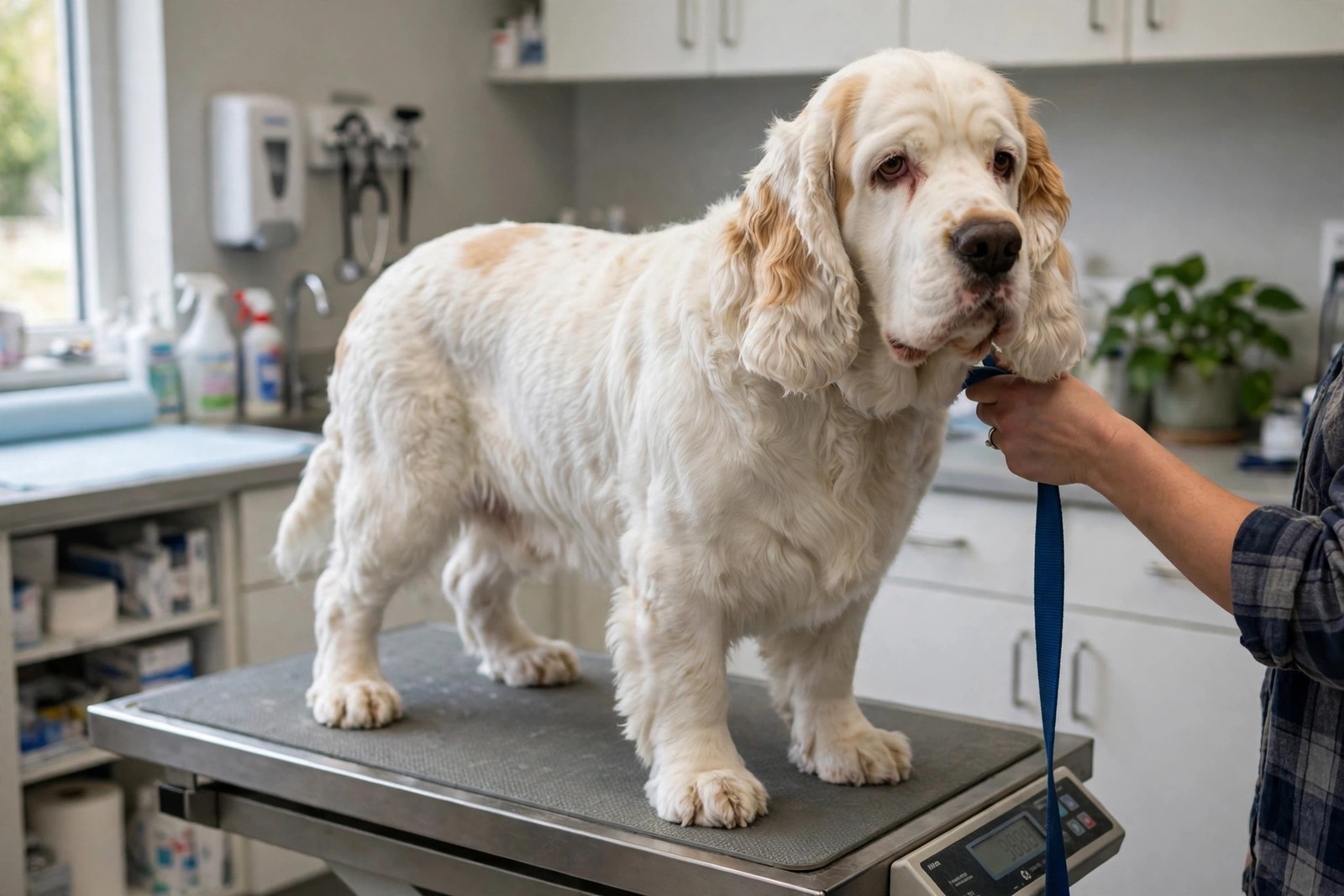
Why the Clumber, of All Spaniels, Needs the Paper Trail
The Clumber Spaniel is the heavyweight of the spaniel family — a long, low, massively boned dog who may weigh 55 to 85 pounds while standing shorter than retrievers of similar weight. Two traits conspire against him. His temperament indoors is placid and undemanding, so he does not burn calories fidgeting or pestering you for another walk. And his dense white coat, often lemon or orange marked, drapes over the body in a way that conceals a thickening middle almost completely. Owners routinely discover a Clumber's weight gain at a vet visit, months after it began. A monthly log replaces that surprise with a line you see forming in time to bend it.
What to Record for a Long, Low Dog
Weigh monthly once grown, every two weeks as a puppy, and write down more than the pounds. Record a rib check done firmly through the coat — you should feel ribs with definite pressure, and if you are pressing hard and finding padding, the number will confirm it. Note daily exercise in honest terms, because Clumbers are enthusiastic outdoors and theatrical couch companions indoors, and owners overestimate the first and forget the second. Add a mobility note each month: rising easily, stairs managed willingly, lagging on walks or not. In a breed where hip quality and extra weight amplify each other, the month the weight rises and the month the stairs get harder often turn out to be the same story told twice.
Puppy Entries: Building a Big Frame Slowly
A Clumber puppy grows into a lot of dog, and he should do it without hurry. Weigh every two weeks through the first year and record measured meals, watching for an even climb rather than spurts. A chunky Clumber puppy is not a healthy one — surplus weight loads developing hips and elbows in a breed already known for joint concerns, and the long back gains nothing from carrying it either. If the curve steepens sharply or the rib check softens, discuss portions with your vet at the next visit rather than cutting food drastically on your own. A puppy who gains poorly, tires unusually fast for the breed, or goes off his food should be examined promptly, entries in hand.
The Adult Pattern: Slow Creep, Real Consequences
Adult Clumbers rarely become overweight suddenly; they accumulate. A pound a season across two years is ten pounds on a frame that feels every one of them. When your log shows two consecutive monthly rises, review the full intake honestly — this breed is a committed food enthusiast, and counter-surfing, training treats, and a second family member's 'small' extras are frequent culprits. Increase exercise gradually rather than in weekend bursts, since an unfit, heavy Clumber is an injury risk. Weight loss you did not plan, particularly with reduced appetite or a dog who seems sore, stiff, or reluctant to rise, warrants a vet visit; in a heavy breed, pain and weight often mask each other, and the log helps your vet see which moved first.
One File for a Dog Who Sees Several Specialists
Between routine care, possible joint checks, grooming for that heavy coat, and boarding, a Clumber's information gets requested often — and 'he's a big spaniel' is not a weight. Filing your log in KinsLe's Pet Passport keeps your Clumber Spaniel's monthly numbers with the rest of his records in a single packet, so every professional who handles him works from the actual trend.