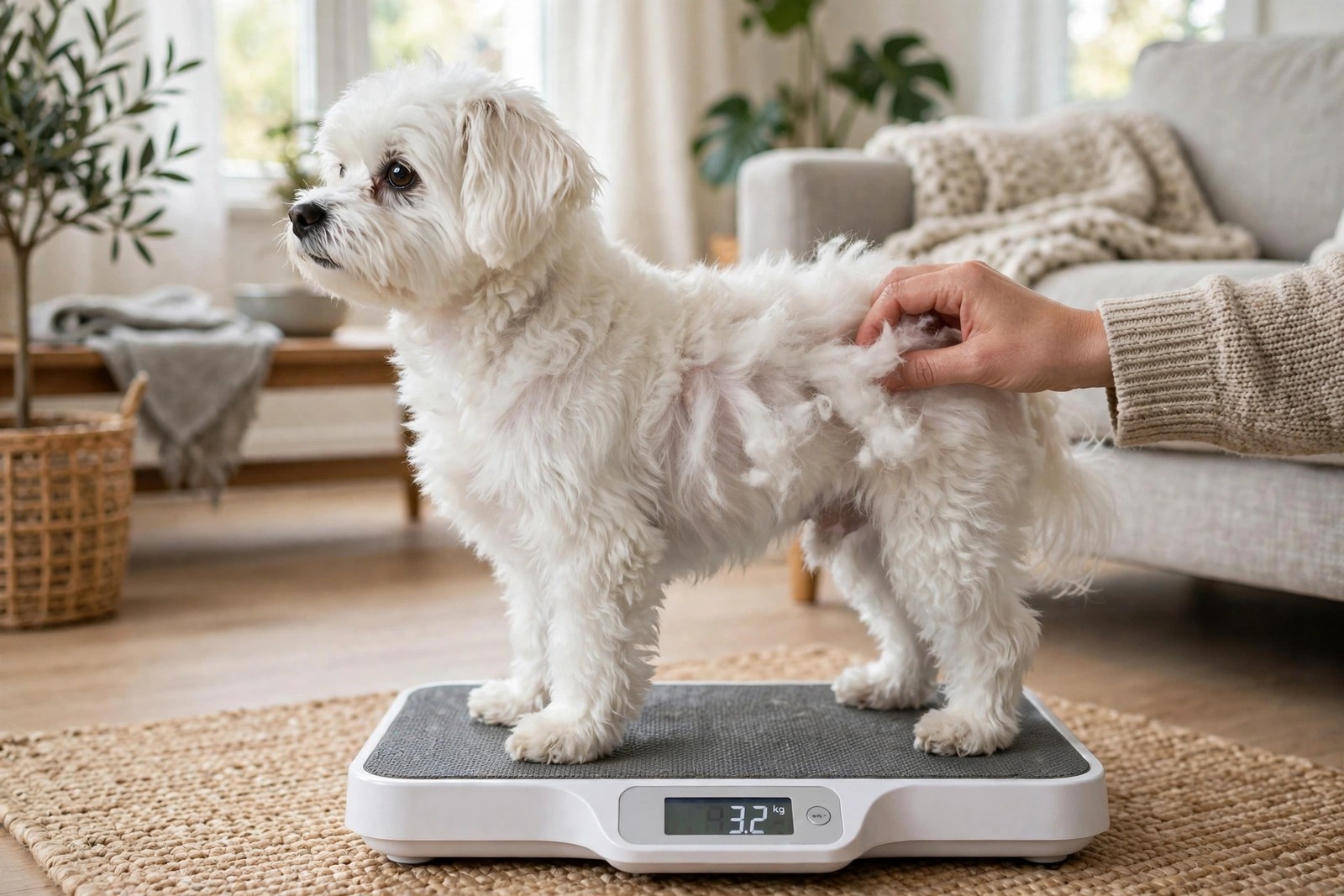
The Coat Problem: Why Cotons Defeat Visual Judgement
The Coton de Tulear is named for its coat — soft, white, and cotton-like — and that coat is a master of disguise. A Coton in full coat looks like a cheerful cloud on legs, and the cloud stays the same size whether the dog underneath has gained a pound or lost one. On a breed that typically weighs only 8 to 15 pounds, a pound is a serious share of the dog. Owners who rely on appearance discover changes late, usually when a groomer or vet mentions them. A monthly weigh-in, paired with your hands rather than your eyes, is the only reliable way to know what the fluff is hiding, and a written log makes the change over time impossible to rationalise away.
A Weighing Routine That Fits a Companion Dog
Cotons are small enough for the hold-and-subtract bathroom scale method, but a dedicated small pet scale gives steadier readings — pick one method and stay with it so entries are comparable. Weigh monthly as an adult, every two weeks for a puppy, at the same point in the day. In each entry, record the rib check you did with your fingers parting the coat: ribs felt easily under a thin covering is the goal. Add two Coton-specific notes. First, coat state — full coat, puppy cut, or just groomed — because coat changes explain apparent size shifts. Second, treat traffic: this breed lives at the centre of household affection, and the number of people slipping it rewards is often the real feeding programme.
Puppy Growth Under All That Hair
Coton puppies grow quickly in the early months and level off well within the first year or so, but their adult coat arriving at the same time makes them look as if they are growing long after the scale says otherwise. Your log separates the two stories. Expect steady early gains that taper; write down measured food amounts as you go. A puppy whose weight stalls across a couple of entries, or whose ribs feel sharp while the coat makes him look plump, needs a vet conversation — small-breed puppies have modest reserves, and causes from parasites to simple under-portioning are easier to fix early. Note appetite honestly too, since a puppy who is merely distracted at meals behaves differently from one who is unwell.
Adult Gain, Loss, and the Vet Threshold
The usual adult Coton story is gentle gain driven by love and leftovers. If two monthly entries rise, count every calorie source for a week before changing the main meal — training treats, chews, and tidbits from children's plates frequently outweigh the bowl itself in this breed. Trim those first, re-weigh in a month, and log the result. Loss deserves faster action: a Coton who drops weight without a diet change, especially if he is drinking more, eating less eagerly, or seems flatter in energy than his usual clownish self, should see a vet promptly rather than at the next routine visit. Dental discomfort is a common quiet cause in small breeds, and it hides well under a beard of white hair.
A Companion's Records, Kept Together
Cotons rotate through groomers, sitters, and family members who all adore them and all feed them slightly differently; a current weight in writing settles every 'how much does he get?' conversation. Storing your log in KinsLe's Pet Passport keeps your Coton de Tulear's weight history in the same packet as his other records, so anyone caring for him — or examining him — sees the real dog, not the fluff.