Why the Komondor Defeats Guesswork
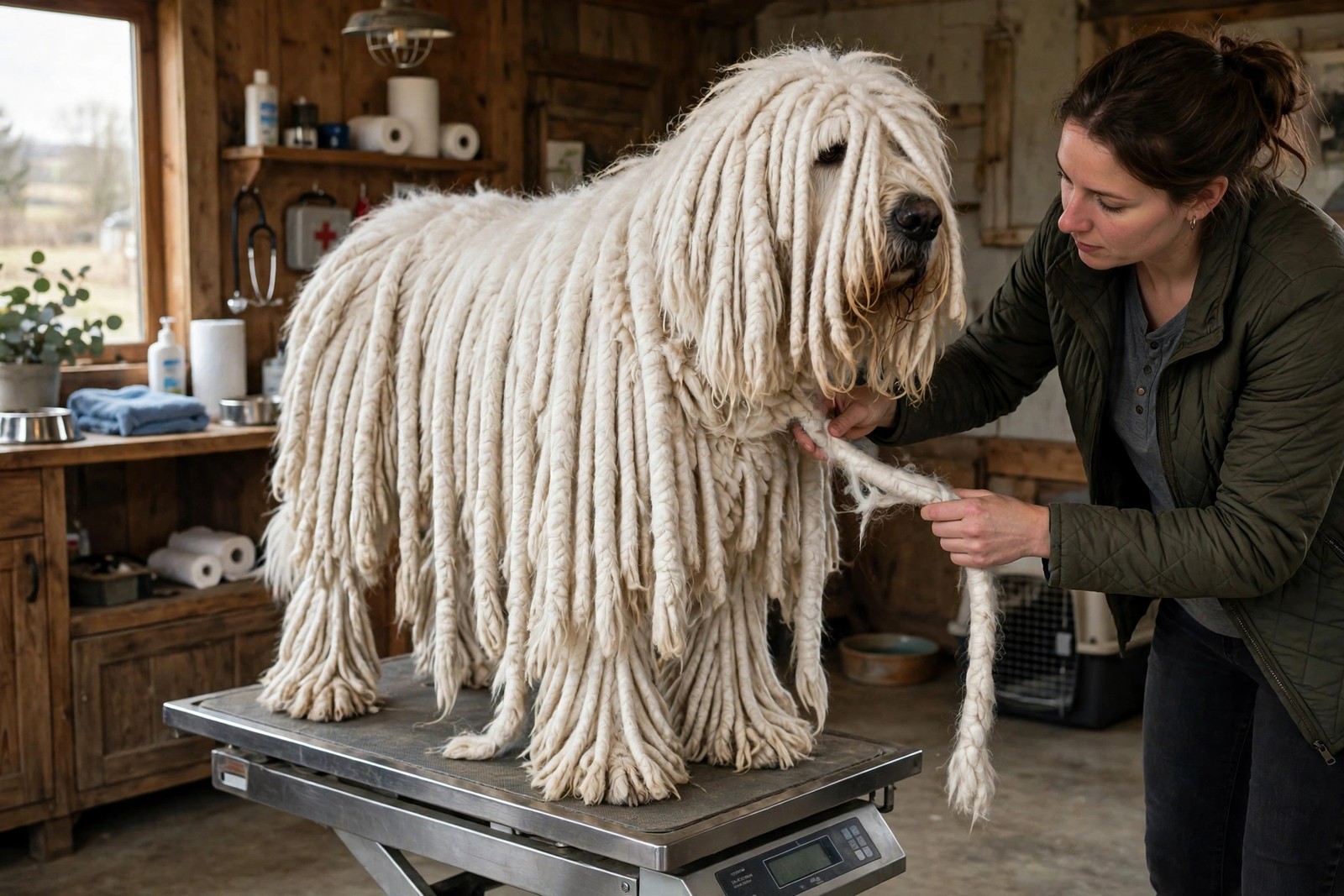
No breed makes weight monitoring harder to do by eye than the Komondor. This large Hungarian livestock guardian wears a dense, corded coat that falls in long tassels, completely concealing the outline other owners rely on. Worse, the coat itself is heavy, and it keeps growing: a maturing Komondor gains cord length and coat mass even when his body underneath has not changed at all. A scale reading alone can mislead, and a glance tells you almost nothing. A log that pairs every weight with a hands-on condition assessment is how you keep track of the actual dog inside the mop.
Building a Log That Separates Coat From Dog
Each entry needs three parts to be useful for this breed. First, the scale weight, taken on equipment rated for a large dog, ideally at your vet's office or a feed store with a platform scale. Second, a body-condition note made with your hands worked down through the cords to the ribs and spine: ribs felt with light pressure is the goal; ribs you have to hunt for means the dog, not the coat, is gaining. Third, a coat note covering cord development, any matting at the skin, and whether the coat was wet or freshly bathed, since a soaked Komondor coat carries surprising extra weight.
Growth Through the Guardian's Slow Puppyhood
Komondor puppies grow into a substantial guardian over a long maturation, and steady tracking helps you feed for even development rather than bulk. Weigh young dogs frequently, record height as well as weight, and note appetite and stool quality when you change foods, because giant-frame youngsters show feeding mistakes in their growth pattern before they show them anywhere else. Note too the stage when the puppy coat begins separating into cords, since from that point your condition checks must always be by hand, never by appearance.
When the Log Says See the Vet
Treat certain patterns as prompts, not trivia. A rising scale weight paired with ribs that are getting harder to find means genuine condition gain hiding under coat growth, and portions need attention. Weight falling, or a dog whose spine and hips become newly prominent to your fingers while appetite seems normal, deserves a veterinary workup rather than a wait-and-see month. Bring the log to that appointment: for a breed a vet cannot assess visually in the usual way, your dated hands-on notes are unusually valuable evidence.
Making Weigh-Ins a Calm Routine
A Komondor is a large, self-assured guardian, and weigh-ins go better when they are boring. Practise stepping onto the platform scale as a trained, rewarded routine rather than wrestling him aboard twice a year, and record how cooperative he was beside the weight; a dog growing more reluctant may be telling you about stiffness or soreness worth mentioning to the vet. Calm, repeatable handling also keeps readings consistent, because a leaning, shifting giant can move a platform scale's number more than a month of feeding does.
Keeping a Guardian's Records in Order
Komondors are not dogs whose paperwork improves by being scattered, and a working-style guardian may see vets, groomers, and helpers across a year. A single record that travels keeps everyone reading the same numbers. KinsLe's Pet Passport is built for exactly that, holding your Komondor's weights, condition notes, and health records together in one packet that is ready for any visit or handover.