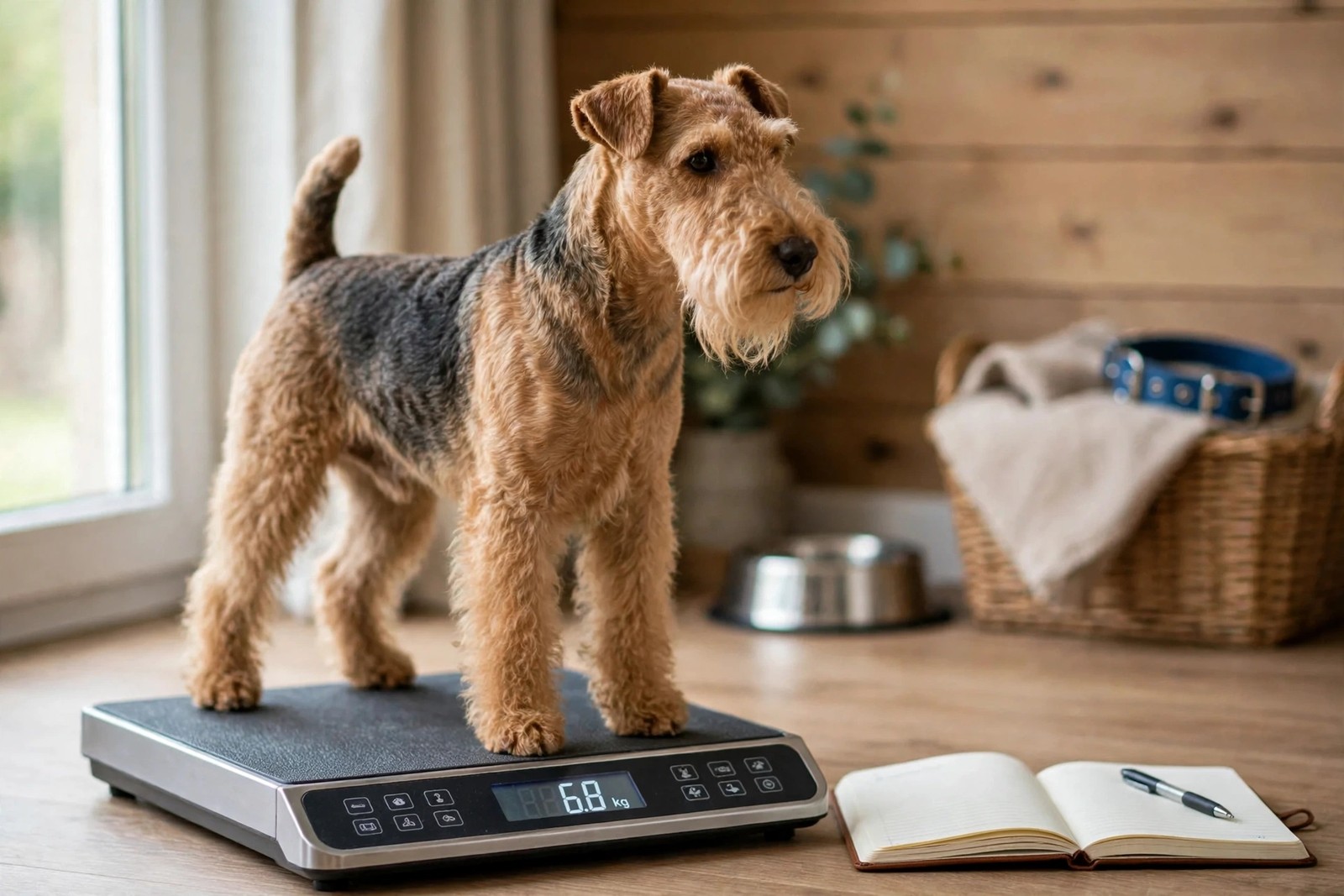
Why Small Numbers Matter on a Lakeland
The Lakeland Terrier is a small, hardy working terrier from England's Lake District, narrow-chested, square, and built to scramble over rough ground. On a dog of this size, the arithmetic of weight is unforgiving: a gain that would be invisible on a retriever can represent a real percentage of a Lakeland's whole body. That is precisely why a log suits the breed. You will not reliably notice gradual change on a dog you wrestle into a harness every day, but four monthly entries trending the same direction are impossible to argue with.
Setting Up a Terrier-Sized Log
Keep it deliberately simple so you actually maintain it. Weigh your Lakeland on a home scale by holding him and subtracting your own weight, or use the vet's scale at visits, and record the figure with a one-line condition note. Puppies get weighed every few weeks while they are growing into their frame; adults need only a monthly check. Add what he is eating, including the extras Lakelands are so good at obtaining: training rewards, chews, and anything contributed by admiring visitors. Note activity honestly too, because a terrier's energy in the house can disguise how little structured exercise a wet week actually contained.
The Wiry Coat and the Honest Rib Check
A Lakeland's harsh, wiry double coat holds its shape whether the dog beneath it is lean or padded, and hand-stripped or clipped coats change the outline again. Your condition check therefore has to be manual. Run your fingers along the ribcage each time you weigh: you want ribs felt readily under a thin layer, a waist you can find from above, and a tuck from the side. Write down what your hands found, not what your eyes reported. Over time those paired notes, weight plus touch, give a far truer picture than either measure alone.
Acting on What the Entries Show
Use the log for early, gentle corrections. A Lakeland trending upward usually needs slightly smaller portions or fewer casual treats, not a crash diet, and the next couple of entries will tell you whether the adjustment worked. A dog losing weight without a change in food or exercise, or one who seems less game for the rough, busy activity this breed lives for, should be checked by a veterinarian; small dogs have small reserves, and a written record of when the slide began helps the vet judge how fast it is moving.
From Puppy Entries to Adult Maintenance
A Lakeland puppy's entries come thick and fast, and they should: you are watching a tiny terrier assemble himself, and regular weights confirm he is gaining evenly rather than stalling or ballooning on oversized meals. Once adult size arrives, owners often stop logging because nothing seems to change, yet the adult years are when the slow creep the log exists to catch actually happens. Monthly is enough. The habit costs a minute and preserves the baseline that makes any future change, in either direction, immediately visible against his own history.
Keeping a Little Dog's Paperwork Together
A Lakeland's log is most useful where his other records live, so vaccination details, vet findings, and weight history can be read as one story. KinsLe keeps that story in the Pet Passport, which gathers a dog's records into one portable packet, meaning your terrier's growth and weight notes are ready at the vet, the groomer, or in a sitter's hands.