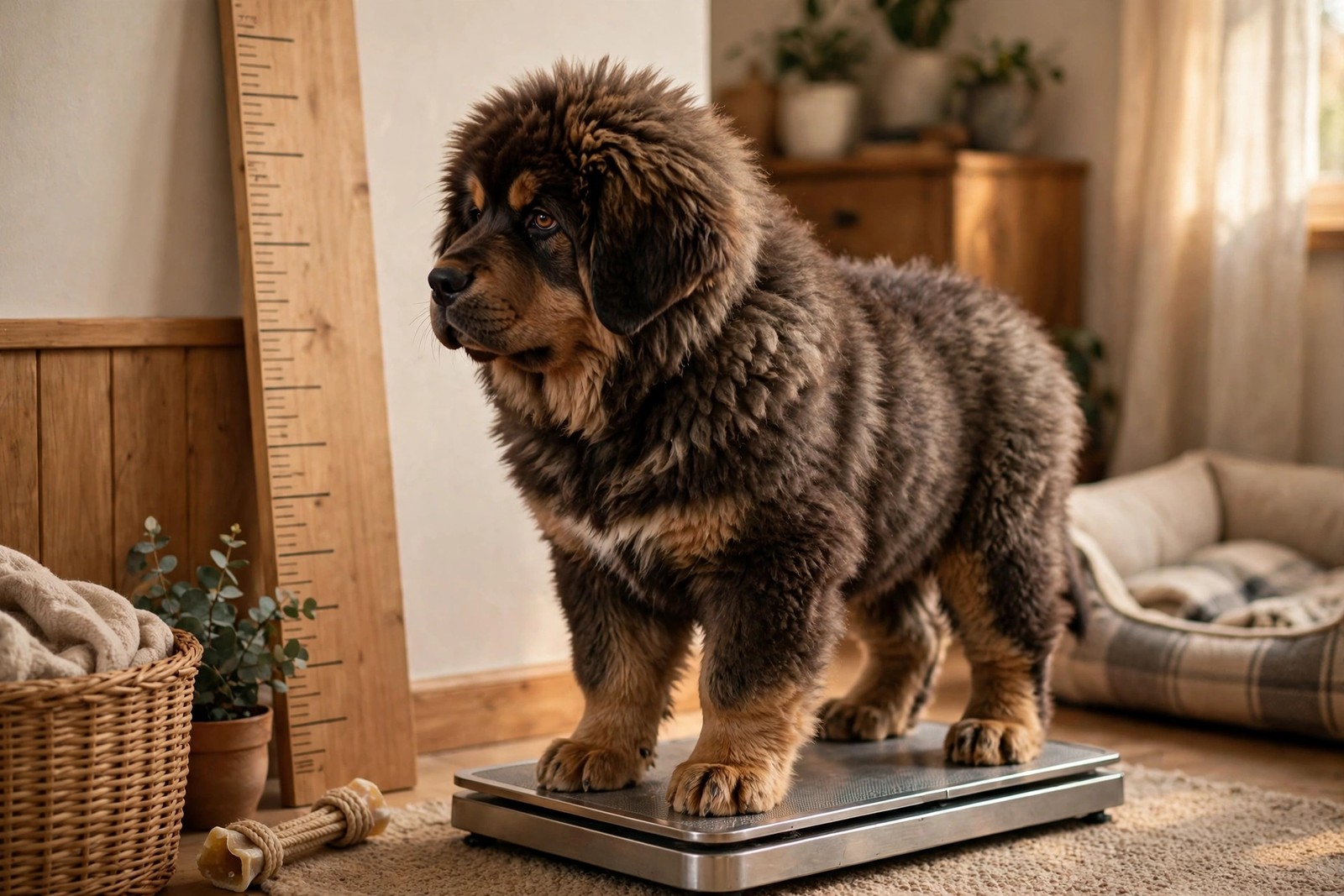
Why a Mastiff's Growth Chart Runs for Years
Yes, and expect to keep it far longer than you would for a smaller dog. A Tibetan Mastiff is a giant, primitive guardian breed that matures slowly, with males in particular continuing to fill out well into their second and third years. A log that stops at twelve months misses much of the story, including the late broadening of chest and head that changes what a healthy weight even means for that individual dog.
The coat is the other trap. A full mane and dense undercoat add dramatic visual bulk, and seasonal coat changes can make the same dog look heavier or lighter without any real change underneath. Owners who judge by silhouette alone routinely overfeed a dog in a blown coat or worry needlessly over one in full winter dress. The scale and your hands tell the truth the coat conceals.
What to Record for a Dog This Size
Each entry should carry the date, weight, height at the shoulder during growth, and a condition note made by touch: ribs felt with firm pressure under a moderate covering, a waist you can feel even if the coat hides it from view. Because home bathroom scales are useless at this size, plan weigh-ins around vet visits, training facilities, or large-platform scales, and always note which scale was used so readings stay comparable.
Add the seasonal context this breed demands. Tibetan Mastiffs often eat noticeably less in warmer months and more as cold weather arrives, and many keep a once-a-day rhythm of their own choosing. Recording appetite honestly beside the weight stops a normal summer dip from looking like a problem, and stops a genuine loss from being waved away as seasonal.
How to Pace Entries Through Slow Maturation
Weigh a puppy every two to four weeks in the first year, when growth spurts can be dramatic, then every one to two months until maturity, whenever a suitable scale is available. The aim is a smooth curve, not maximum speed. A giant puppy pushed to grow faster with oversized meals loads developing joints and bones, so if the log shows a sudden steep climb, discuss food amounts with your veterinarian rather than celebrating the gain.
Adults settle into a steadier pattern, but keep a few entries a year, timed perhaps to coat changes, so you hold a baseline for the dog's prime and early senior years. That baseline becomes invaluable if illness or reduced mobility ever changes the picture quickly.
Reading Spurts, Plateaus, and Warning Signs
Expect the chart to stair-step: fast gains, then flat months where height or breadth catches up. Plateaus during growth are usually normal for this breed and are exactly why the written record helps, since it shows the pause sits inside a longer upward pattern. Share the log at every vet visit so growth is judged against your dog's own curve.
Act sooner if weight falls steadily outside the usual seasonal appetite dip, if a puppy's growth stalls across several entries, or if ribs suddenly feel sharp under your hands. In a breed whose coat can hide a great deal, those log changes may be the first honest signal that a veterinary check is overdue.
Holding Years of Entries Together
A record spanning three years of growth, kept by several family members across two homes' worth of vet visits, fragments easily. Consolidating weigh-ins, height notes, and appetite observations with the rest of the dog's paperwork means the full growth story survives moves, vet changes, and the simple passage of time.
KinsLe puts that whole history into your Tibetan Mastiff's Pet Passport, gathering the dated entries into one portable record you can hand to a new veterinarian without rebuilding years of growth from memory.