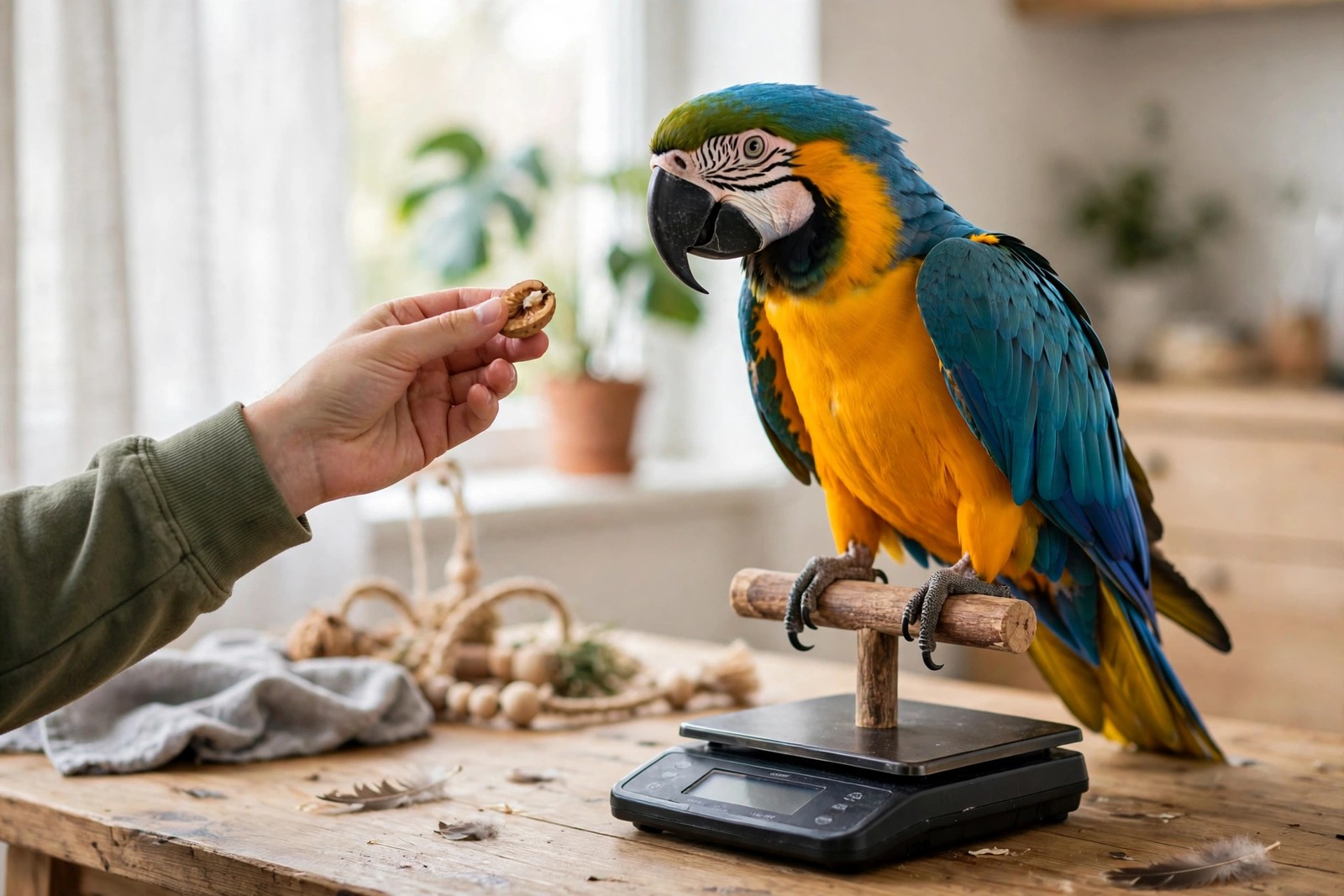
Yes, keep a weight log for your parrot — avian vets recommend it because weight is often the first measurable sign that a parrot is unwell. As prey animals, parrots instinctively hide weakness, so a bird can look bright, eat in front of you, and still be losing condition. Feathers hide the loss completely: a parrot can be noticeably thinner at the keel bone while looking identical on the perch. The scales tell the truth that the plumage conceals, which is why a weekly weight belongs in basic parrot care alongside diet and cage hygiene.
The Weighing Method That Gives True Numbers
Use a digital gram scale fitted with a small T-perch or a non-slip pad your parrot will stand on calmly. Grams matter: for a small bird a few grams is a large percentage, and even for a big macaw, gram-level readings make trends visible. Train the weighing as a game rather than a grab: let your parrot step onto the perch for a favourite treat, keep sessions under a minute, and weigh at the same moment in the routine each time.
Timing is the detail that makes or breaks the log. Weigh first thing in the morning, after the big morning dropping and before breakfast, because a full crop and a day of eating can swing the reading by more than the change you are trying to detect. Weekly suits most healthy adult parrots; weigh daily if your vet is monitoring an illness, a chick is being weaned, or a bird is recovering from treatment. Record the number, the date, and a word about appetite or droppings beside anything unusual.
Reading the Trend and Knowing the Alarm Line
First establish your individual parrot's normal range over the first month or two — healthy weights vary by species, build, and season, and your bird's own baseline is the figure that counts. Then watch the trend rather than single readings. A loss approaching ten percent of body weight is the widely used alarm line: treat it as a prompt call to an avian vet even if your parrot seems otherwise well, because by the time a parrot also looks sick, an illness is usually well advanced. A slower slide — a few grams a week for a month — deserves the same call once the pattern is clear in the log.
Gains matter too. A steadily climbing weight in a seed-fed, cage-bound parrot points to the fatty liver and heart risks that shorten so many pet parrots' lives, and it is far easier to correct with a gradual diet conversion and more exercise early than late. Weighing also protects hand-reared youngsters: a weaning chick should gain or hold steady, never slide, and the log shows a problem days before behaviour does.
Making the Log Part of the Record
Keep the log with your parrot's hatch details, microchip or band number, and vet history rather than on scattered sticky notes, and bring it to every appointment — avian vets genuinely use owner weight charts when judging whether a bird is stable, improving, or needs tests. Note diet changes, moults, and egg laying beside the weights, since all three legitimately move the number and save needless worry later.
A log that lives in one organised place is the one that actually gets shown to the vet, and KinsLe's Pet Passport keeps your parrot's weight history together with its identification and medical records in a single portable packet, ready for check-ups, boarding, and travel.