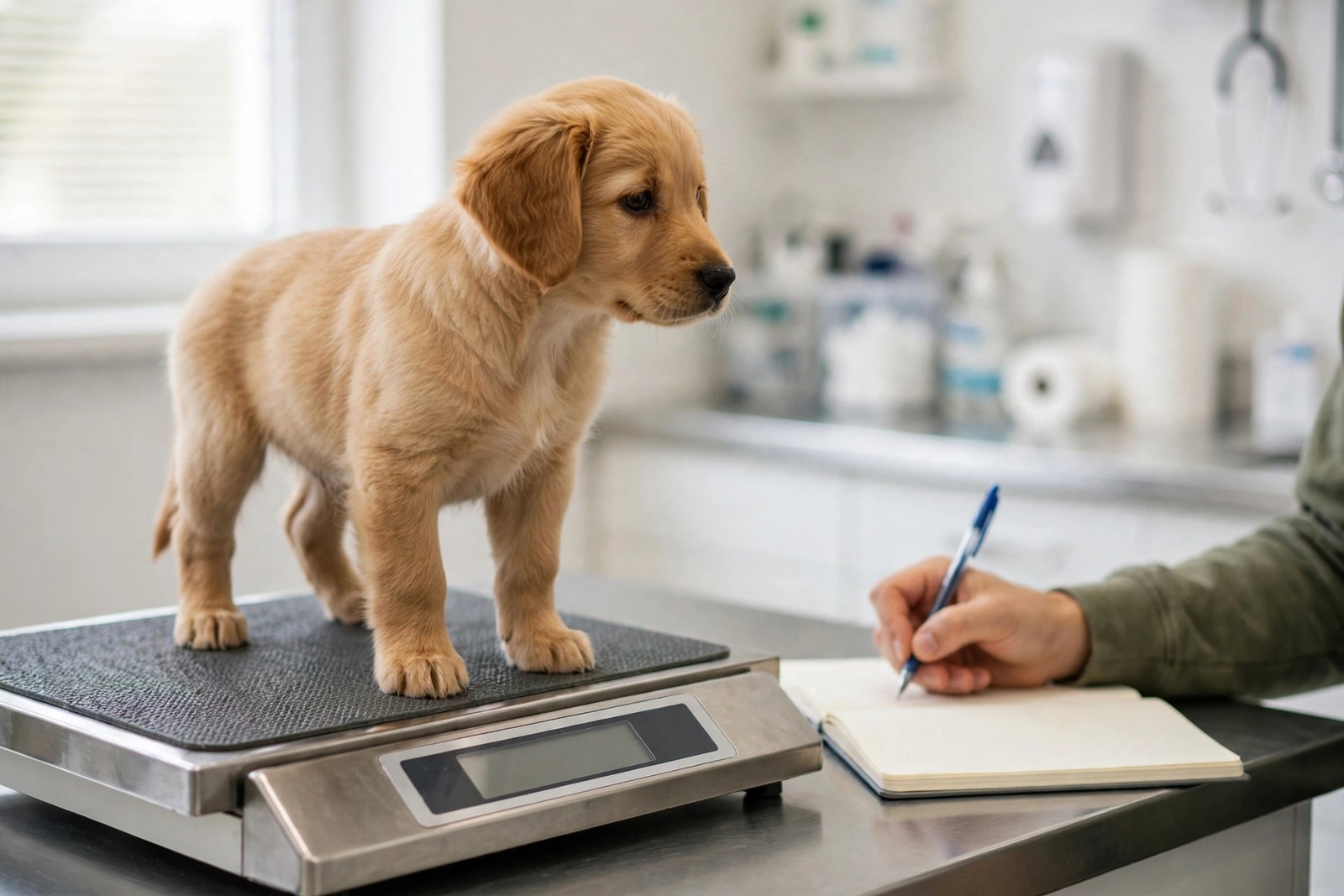
Yes. A puppy changes so fast in the first year that memory alone cannot keep up, and the record you keep becomes genuinely useful, not sentimental clutter. Vets judge a puppy against that puppy's own growth pattern, trainers build on what has already been learned, and you spot problems earlier when you can compare this week with last month instead of guessing.
Growth and health milestones to write down
Weigh your puppy weekly at first, on the same scales and at roughly the same time of day, and note the figure with the date and your puppy's age in weeks. Steady, even growth is what you want to see; a sudden stall, a sharp jump, or weight falling while appetite seems normal is worth raising at the next vet visit rather than waiting. Record the first vet visit and each check after it, including what the vet noted about teeth, joints, heart, and body condition, plus any vaccinations given and parasite prevention discussed, so the history reads as one story.
Note teething as it happens: baby teeth coming out, adult teeth arriving, and any baby tooth that lingers alongside its adult replacement, which your vet will want to know about. Record the conversation about neutering too, including the timing your vet suggests for your puppy's breed and size, so the decision is planned around growth rather than made in a rush.
Social and training firsts that matter
Social milestones are as health-relevant as weight. Log the first calm meeting with a friendly adult dog, the first walk past traffic without flinching, the first visit to a busy place, the first encounter with children, bicycles, and household noises like the vacuum. Note how the puppy reacted, not just that it happened, because a puppy who was worried by something needs that experience repeated gently soon, while the early social window is still open.
Training firsts mark where to aim next. Record the first reliable response to their name, the first recall away from a real distraction, the first settled night, the first clean day for housetraining, and the first relaxed car journey. When adolescence arrives and behaviour temporarily unravels, that log reminds you what the puppy already knows and which skill simply needs rebuilding, instead of feeling like you are starting again.
How to keep the record usable
Keep it brief and dated, or you will stop. A few lines per entry, a photo alongside the monthly weight, and one place for everything beats an elaborate scrapbook abandoned by month three. Add the practical facts a future helper would need: what food and how much, which commands the puppy knows and the exact words your household uses, fears discovered, and what settles them. If your puppy is ever cared for by someone else, boarded, or treated by a different vet while travelling, that history travels with them instead of being reconstructed from memory under pressure.
Review the log at each vet visit and bring questions it raises; growth, behaviour, and timing decisions are all easier with evidence in hand. KinsLe Pet Passport brings those dated milestones and health records together in one portable packet, ready to hand to any vet, trainer, or boarder who needs the full picture.