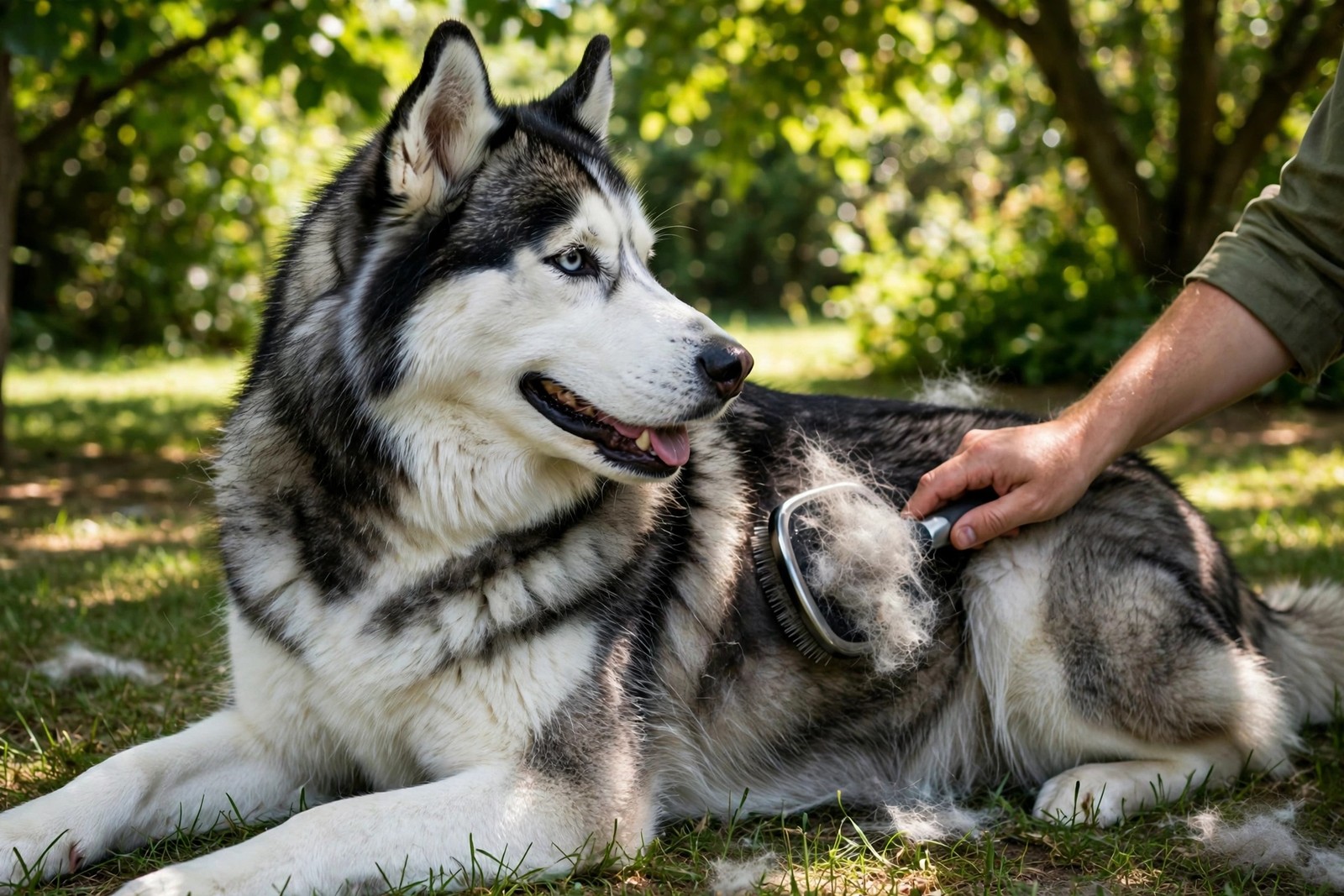
No. Shaving a double-coated dog for summer feels logical and works against the dog. Breeds such as Huskies, German Shepherds, Golden Retrievers, Pomeranians, and collies carry two distinct layers for a reason, and removing them leaves the dog hotter, exposed, and sometimes permanently worse coated than before.
How a double coat handles heat
The dense, soft undercoat sheds and regrows with the seasons, while the longer, coarser guard hairs on top repel water and dirt. Together, with air held between the layers, the coat acts as insulation in both directions: it slows cold reaching the skin in winter and slows heat reaching the skin in summer. It also shades the skin completely, which matters because dogs do not sweat across their bodies as people do; they lose heat mainly by panting and through their paw pads. A shaved dog has lost the shade and the insulation at once, and pale or thin-skinned areas can sunburn, sometimes badly, before an owner realises it has happened.
What shaving can do to regrowth
Shaving cuts both layers to one short length and upsets the cycle each layer normally follows. The undercoat often grows back faster than the guard hairs, crowding them out, so the new coat comes in thick, woolly, and prone to matting, without the weather-shedding top layer doing its job. In some dogs, particularly older dogs and certain spitz breeds, clipped areas regrow very slowly or not fully, leaving a patchy coat long after summer ends. Once that texture change happens it may never fully reverse, which is a high price for a haircut the dog did not benefit from.
Summer care that actually cools the dog
Work with the coat instead of removing it. During the spring shed, brush and rake out loose undercoat thoroughly and repeat weekly through summer; dead undercoat left packed in the coat is what genuinely traps heat and stops air moving. A bath followed by a thorough dry and brush-out helps release shedding fur. Tidy trims are fine: feet, the feathering that drags through mud, and a light belly trim for a dog who likes lying on cool floors do not disturb the insulating layers over the back and sides, where protection matters most.
Cooling is mostly management. Walk in the early morning and evening, rest in shade at midday, keep fresh water available, and never leave the dog in a parked car. Dogs with heavy coats, flat faces, or extra weight feel heat fastest and need the shortest, shadiest outings. If a dog seems unwell in heat, with heavy panting, drooling, or wobbliness, contact a vet promptly rather than waiting to see.
The narrow exceptions
There are legitimate reasons to clip a double coat, and they are specific: severe matting that cannot be brushed out without hurting the dog, a skin condition or wound a vet needs access to, or surgery preparation. In those cases the clipping is done for that reason, ideally with vet or experienced groomer guidance, and the exposed skin then needs shade and protection while it regrows.
A weekly brush-out only happens if someone owns the job, and KinsLe Care Teams lets you assign undercoat brushing, bath days, and coat checks for your double-coated dog across the household, with each completed task timestamped.