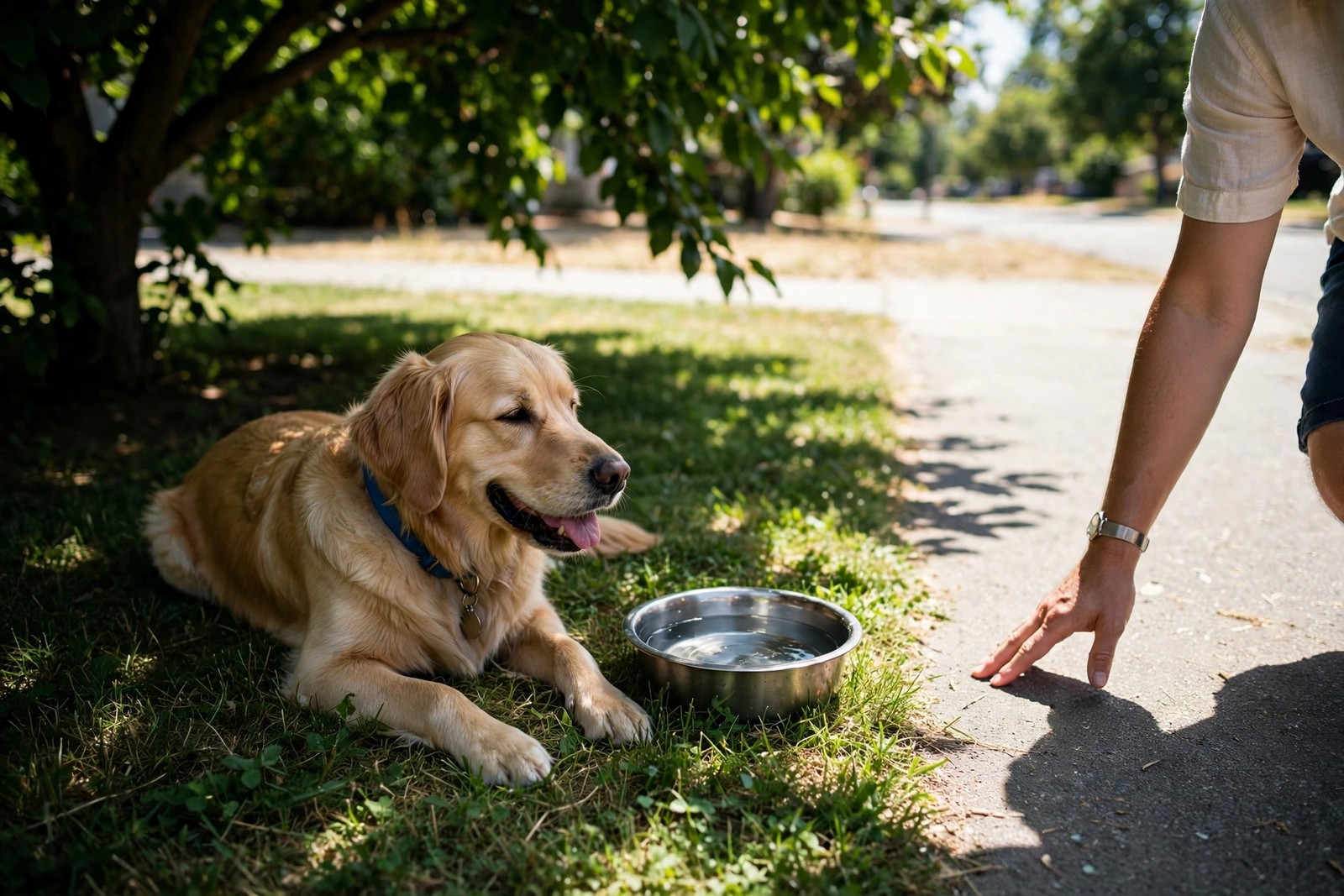
No. In hot weather the middle of the day is the wrong time for a dog's main walk, and shifting that walk is one of the simplest safety decisions an owner can make. Dogs are poorly equipped for heat: they cool themselves mainly by panting, which works less well as air temperature and humidity climb, and they walk barefoot on surfaces that have been baking for hours.
Pavement, paws, and the hand test
Tarmac and dark paving in strong sun become far hotter than the air above them, hot enough to blister paw pads on a normal-length walk. Test any surface before you set out by pressing the back of your hand flat against it for several seconds; if you cannot hold it there comfortably, your dog should not be walking on it. Grass, earth paths, and shaded routes stay markedly cooler, which is why the route matters as much as the hour. Burned pads may not show until later, when the dog starts licking their feet, limping, or refusing to walk, so prevention is the whole game.
Which dogs are at risk first
Heatstroke does not need extreme weather, only exertion in heat a particular dog cannot shed. Flat-faced breeds such as Bulldogs and Pugs struggle most because their airways already limit panting. Puppies overheat while playing without noticing, seniors regulate temperature poorly, overweight dogs carry insulation they cannot remove, and thick-coated and large breeds heat up fast and cool down slowly. A fit young dog may cope with a warm morning; that same dog at midday in humid heat is a different proposition. Heavy panting, thick drooling, bright red gums, restlessness, then wobbliness or collapse are warning signs that need a vet urgently, not a wait-and-see approach.
The midday toilet break, done properly
Most dogs still need a midday opportunity to toilet, and that outing should look nothing like a walk. Keep it to a few minutes, on grass or in shade, with no ball games or running, and offer water before and after. Let the dog sniff, toilet, and come back in. A dog who is reluctant to go out at midday is usually making a sensible choice; do not drag a dog who is planting their feet in the heat because the routine says walk.
Rebuilding the day around the heat
Move the main exercise to early morning, when ground and air are coolest, and add a second proper walk in the evening once surfaces have cooled, checking with the hand test again because pavements hold heat. On very hot days, replace one walk with indoor activity: scent games with treats hidden around a room, short training sessions, puzzle feeding, and gentle play in the coolest part of the house tire a dog mentally without the heat load. Keep curtains closed on sun-facing rooms, provide cool water in more than one place, and never leave a dog in a parked car, where temperatures rise dangerously within minutes even with windows cracked.
Instructions only protect a dog if the person holding the lead knows them, and KinsLe Care Pass gives your walker a temporary, scoped view of your dog's care notes stating plainly that midday means a short shaded toilet break only, with the main walk moved to cooler hours.