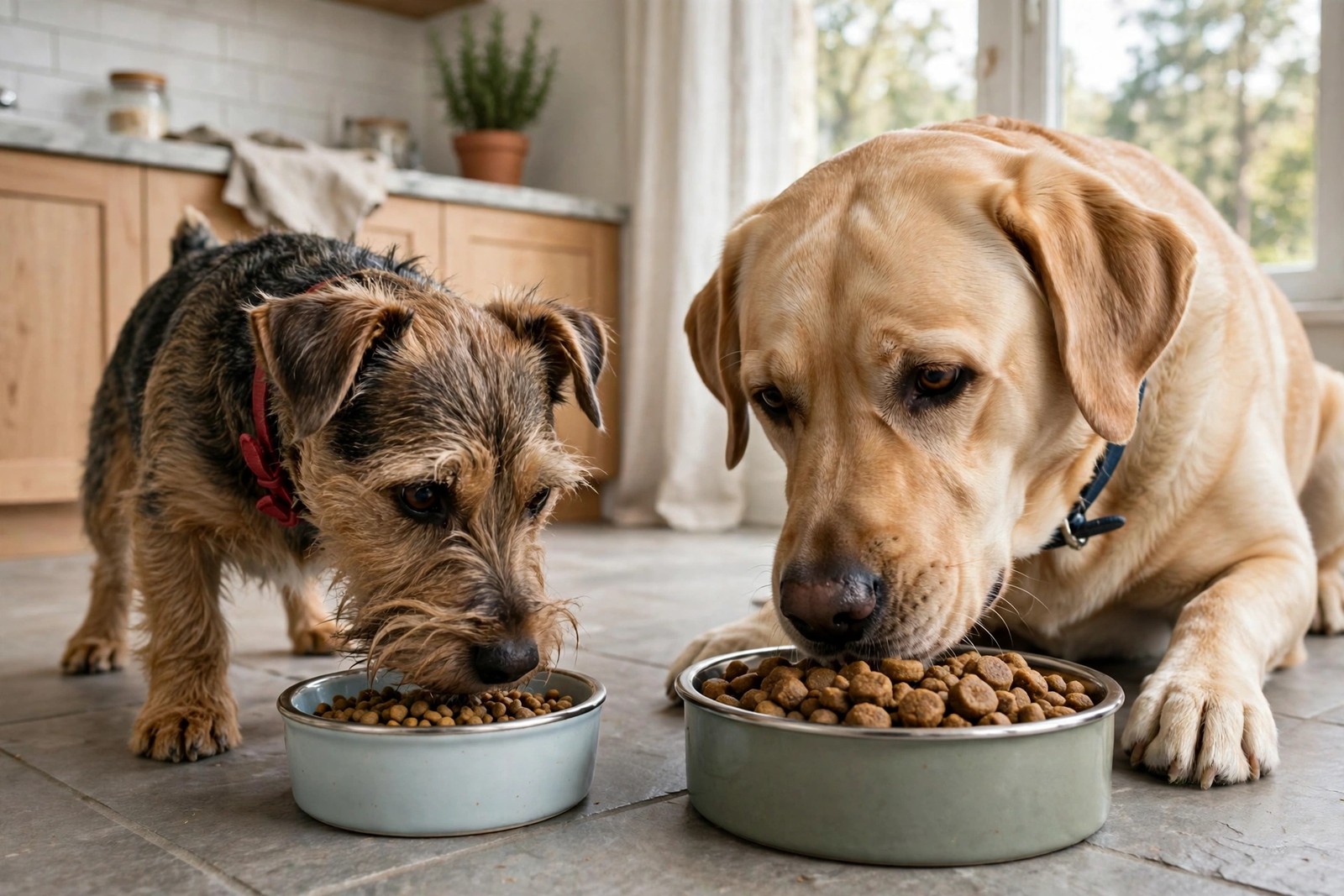
Yes. Kibble size is not marketing decoration; it is matched to the size of the mouth, jaw, and teeth doing the work, and feeding the wrong size creates real problems at both ends of the scale. Watch any dog eat and you can see whether the pieces fit the dog.
Small dogs and oversized pieces
A toy or small breed has a small mouth, small teeth, and a narrow throat. Given large pieces, many small dogs do one of two unhelpful things: they labour over each piece, dropping and re-gripping it until mealtimes become frustrating, or they swallow pieces whole, which raises the risk of coughing, gagging, or choking and sends unchewed food down in lumps. Small breeds are also prone to crowded teeth, and pieces sized so they can actually crunch them suit their bite. Small-breed foods are made with correspondingly small, easy-to-manage pieces and are also typically more energy-dense per mouthful, because a small dog has a small stomach but a fast metabolism and cannot simply eat a bigger volume.
Large dogs and tiny pieces
The mirror problem is just as common. A large breed presented with tiny kibble does not chew it; the pieces are too small to engage the teeth, so the dog vacuums up mouthfuls and swallows them with a lot of air. Fast eating is uncomfortable, can contribute to gulping and regurgitation, and mealtimes are over in seconds with the dog still feeling unfed. Appropriately large pieces force a big dog to crunch each one, slowing the meal down and using the jaw as intended. Large-breed formulations also reflect different nutritional priorities, particularly controlled growth for large puppies, whose joints should not be pushed by overly rapid weight gain, a point worth discussing with your vet when choosing a puppy food.
Chewing, teeth, and honest limits
Crunching kibble provides some abrasion against the teeth, and the right size maximises what little cleaning effect dry food offers. Do not over-claim it, though: kibble is not a substitute for tooth brushing or dental checks, and a dog who inhales any size without chewing gets no dental effect at all. Dogs who eat dangerously fast whatever the piece size need the cause addressed with slower feeding, smaller more frequent meals, or a puzzle feeder approach discussed with your vet if gulping persists, rather than simply bigger and bigger kibble.
Running a mixed-size household
Homes with a Chihuahua and a Labrador under one roof should feed them as the different animals they are. Keep the two foods clearly labelled and stored separately, feed in separate places so the large dog cannot steal the small dog's food and vice versa, and lift uneaten food rather than leaving bowls down for grazing and swapping. Check body condition on each dog monthly, because portion needs differ as much as piece size does. When switching any dog to a new size or food, change gradually over several days, mixing increasing amounts of new into old, and watch stools and appetite as you go.
Mistakes happen when a partner, child, or sitter grabs the nearest bag, so KinsLe Family Sharing keeps each dog's exact food, piece size, and portion on their individual shared profile, where anyone feeding them can check before filling the bowl.