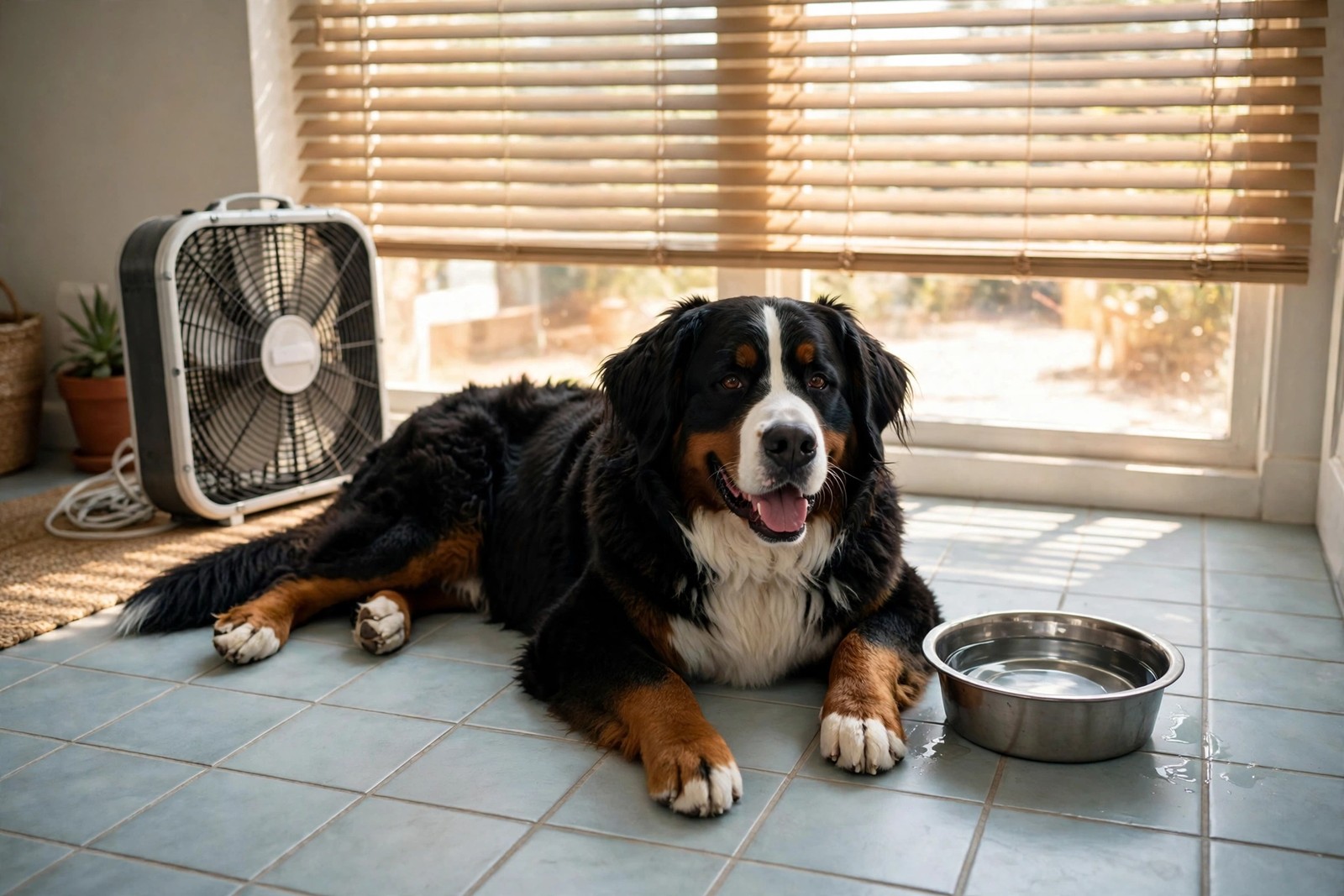
Heat is the Bernese Mountain Dog's hardest condition, and honesty matters more here than encouragement. This is a large Swiss farm breed developed for cold winters, with a thick double coat, a predominantly black outer layer that absorbs sunlight, and a heavy body that loses heat slowly. A Bernese does not adapt to hot summers by getting used to them. The dog copes only to the extent that the household reorganises the day so that heat is avoided rather than endured.
Why this breed struggles more than many
Size and coat work against the dog together. A large body generates more heat during exercise and holds it longer afterwards, while the dense undercoat that insulates against Alpine cold also slows cooling in summer. Bernese are willing, biddable dogs that will keep walking to stay with their people long after they should have stopped, so the decision to end an outing must always be yours. Puppies, older dogs, overweight dogs, and dogs with any breathing or heart concern are at greater risk again, and males at the top of the breed's size range carry the most body mass to cool.
The reshaped summer day
Walks move to dawn and late evening, when pavements and air have cooled, and the midday toilet break becomes a brief, shaded garden visit rather than a walk. Test pavement with the back of your hand for several seconds: if it feels hot to you, it can burn pads. Indoor life through the hot hours means air conditioning or, at minimum, a cool tiled room with moving air, because a heavy-coated dog cannot cool itself in a warm house by panting alone. Offer cool drinking water in several places, refresh it often, and expect the dog to choose the coolest floor in the house and stay there. Exercise totals shrink on the hottest days, and mental work indoors, such as scent games and gentle training, replaces the second walk rather than adding heat stress to meet a target.
Coat care that helps, and care that harms
Never shave a Bernese double coat down. The coat, kept clean and free of packed undercoat, insulates in both directions and protects the skin from sun; clipping it short removes that protection and the coat may regrow unevenly. What helps is thorough brushing to remove loose undercoat during the spring shed, so air can move through the coat, plus prompt drying after swimming or bathing so moisture does not sit against the skin. A dog that swims for exercise, under supervision in safe water, gets fitness without the heat load of running, and many Bernese take to water happily despite their farm origins.
Heatstroke signs, and the response
Learn the signs before summer arrives: heavy, laboured panting that does not ease with rest, thick drooling, a bright red tongue, wobbliness, vomiting, or collapse. A dog showing those signs needs cooling started at once with cool, not ice-cold, water over the body and an immediate journey to a vet, because heatstroke damages internal organs quickly and is an emergency, not a wait-and-see illness. Travel is part of the same vigilance: never leave a Bernese in a parked car in warm weather, plan car journeys for cooler hours, and carry water and a bowl on every outing, however short.
The honest decision
Choose a Bernese in a warm climate only if your home has reliable cooling, your schedule genuinely allows dawn and evening walking for months at a time, and your summer pleasures can move indoors or to the day's cool edges. If your life centres on midday hiking, outdoor work with a dog alongside, or long summers without air conditioning, the kind answer is a different breed, however much the Bernese temperament appeals. Splitting dawn walks, evening walks, and midday garden checks between household members through KinsLe's Care Teams makes the heat-safe routine sustainable across a whole summer.