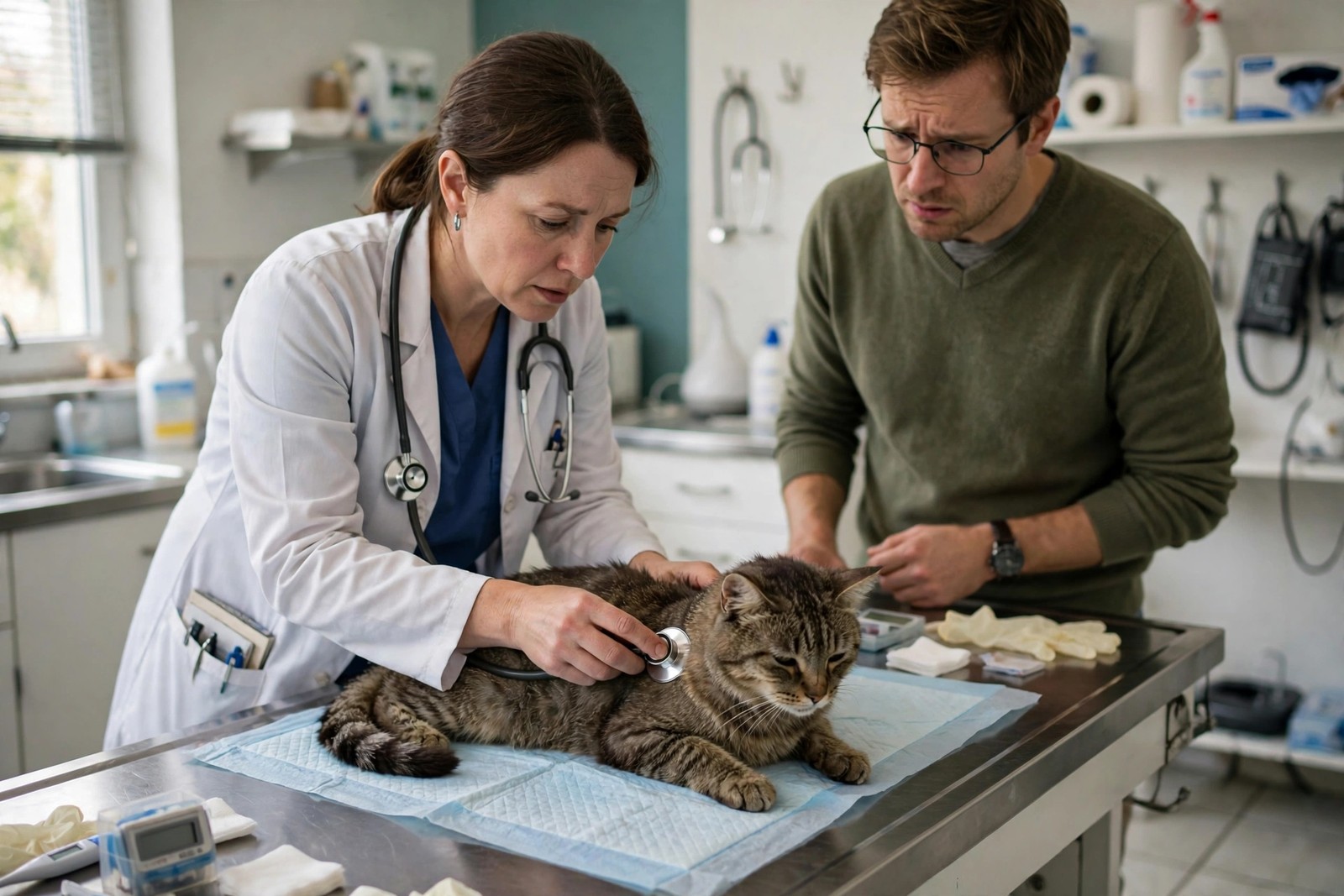
Because cats mask illness, watch for drift from her own normal rather than waiting for one dramatic symptom. Book promptly if she stops eating for over a day — sooner for a kitten or an overweight cat — drinks or urinates far more than usual, vomits or has diarrhoea repeatedly past a day, loses weight, hides or behaves differently for days, jumps less or moves stiffly, develops a lump, coughs or sneezes persistently, has discharge from eyes or nose, strains in the litter tray, or develops bad breath and drooling. Same-day or emergency signs are listed below — those do not wait for a routine slot.
The Emergency List — Same Day, No Waiting
Go straight to a vet or emergency clinic for: straining to urinate with little or no urine produced (especially a male cat — a blocked bladder is life-threatening within a day), open-mouth breathing, panting, or laboured breathing at rest, collapse, seizures, pale or white gums, a swollen painful belly, unproductive retching, known or suspected poisoning (lilies are the classic cat emergency — even pollen on the fur counts), major bleeding, or a road traffic accident even if the cat seems unhurt. Cats deteriorate quietly and then quickly; vets would always rather assess a cat who turns out fine than meet one a day late.
Working With Your Vet
For this cat, start by watching closely: jot down when appetite, drinking or litter habits shifted and what else changed at the same time, then let a veterinarian examine her and name the cause. This article can help you judge urgency and decide what to track, but only an examination can say what is wrong — bring dated notes, plus photos or a short video of coughing, straining or laboured breathing if you captured them.
When you call, describe the change and its timing (when it started, eating/drinking/toileting status) — that information triages your cat correctly. This list is general information to help you judge urgency; if you are ever unsure which list your cat is on, treat it as the urgent one.
For a cat under watch, log her weight, meals eaten, water-bowl refills, litter output and energy each day, with the date any symptom first appeared. A fortnight of those entries can show a vet whether drinking is climbing or appetite is fading in a way a worried recollection at the desk cannot. Refresh that baseline after a house move, a new pet joining, a medication starting or her move into the senior years, since each changes what normal looks like for her.
Holding her vaccination record and past visit summaries alongside that log means the next appointment picks up where the last one ended. Her KinsLe Pet Passport stores those records, dates and notes as one portable packet she can carry into boarding, travel or a handover.