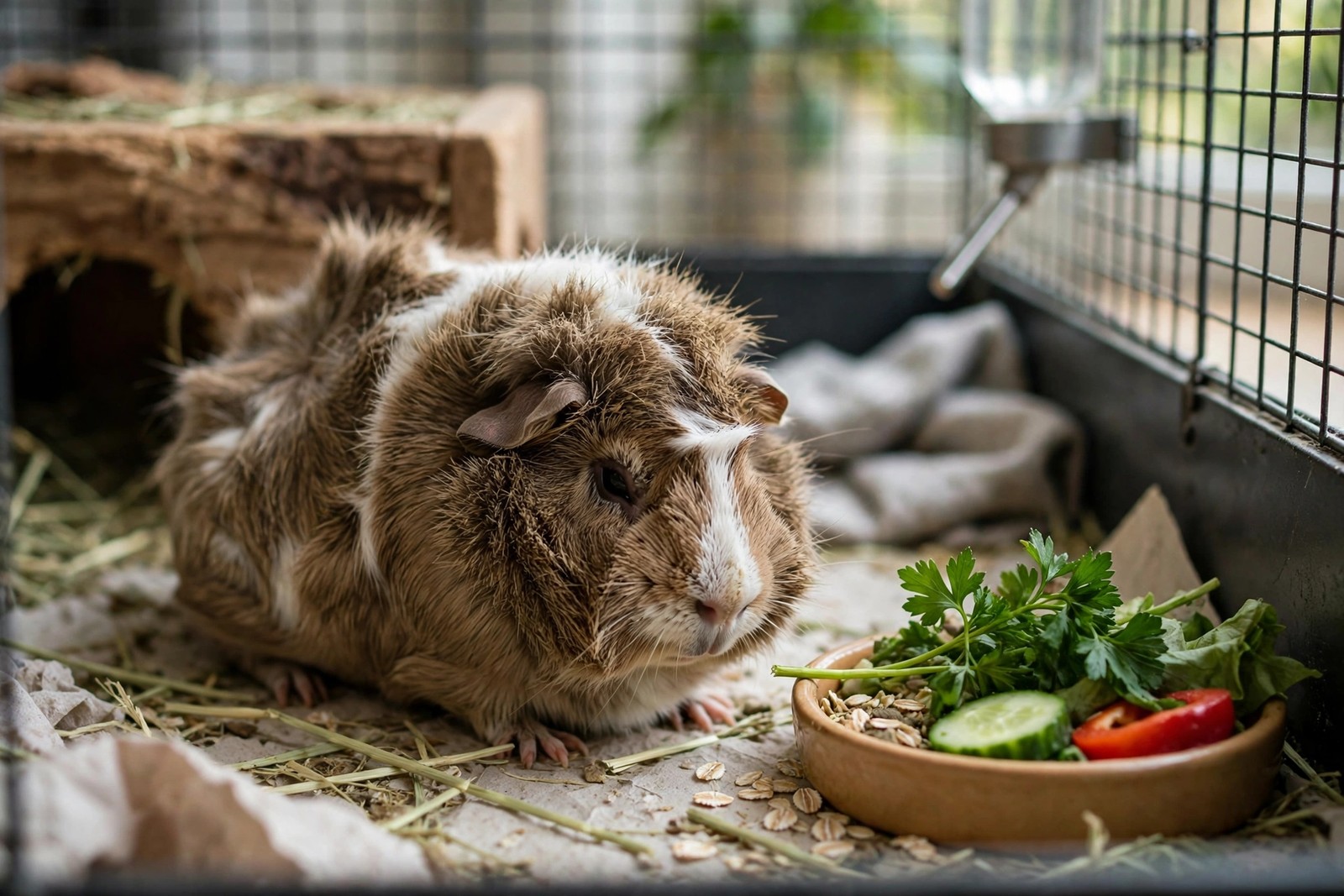
Because guinea pigs mask weakness for as long as they can, illness often announces itself through small departures from routine rather than obvious collapse. Look first at the hay pile and the droppings tray: untouched favourite foods, scant or shrunken droppings, longer hours hidden away, and a hunched, puffed-up sit all deserve attention. Specifics to watch: weight loss (weigh weekly — a drop of 50 grams or more matters), drooling or dropping food (teeth), discharge from eyes or nose, sneezing fits, laboured or noisy breathing, diarrhoea or a soiled rear, blood in the urine or squeaking when urinating, hair loss and intense scratching (mites can cause seizures in severe cases), lumps, limping, and a head tilt.
The Two Guinea-Pig Specifics Every Owner Should Know
First, vitamin C: guinea pigs, like us, cannot make their own, and deficiency causes scurvy — rough coat, sore joints, reluctance to move, poor healing — prevented by a proper diet with a reliable vitamin C source as your vet advises. Second, gut slowdown: a guinea pig who stops eating and passing droppings can decline dangerously within a day and needs same-day veterinary care. Keep a weekly weight log and a mental picture of normal droppings; change from your guinea pig's own baseline is the signal. Dental disease is common and often hides at the back teeth, so food-selectivity (eating soft food but leaving hay) is a dental flag, not fussiness.
Turning Your Observations Into a Vet Visit
With a guinea pig, the numbers you bring can matter as much as the symptoms you describe. Record the weekly weight in grams, the day hay intake dropped, and whether droppings have shrunk, dried out, or stopped, because those three threads together help a veterinarian judge urgency. Photograph a soiled rear or a fluffed, hunched posture if handling for a closer look would add stress. Only an examination can name the cause — back-teeth overgrowth, infection, mites, and gut slowdown can look alike from outside the cage.
Same-day vet contact for a guinea pig who is not eating, has laboured breathing, diarrhoea, blood in urine, or is limp and unresponsive. Book within days for weight loss, persistent scratching, eye discharge, or any lump. Take your weight log with you — it is often the evidence that turns a vague worry into a diagnosis.
At the surgery, open the Pet Passport in KinsLe and walk through weights, droppings and recent eating changes without relying on memory alone.