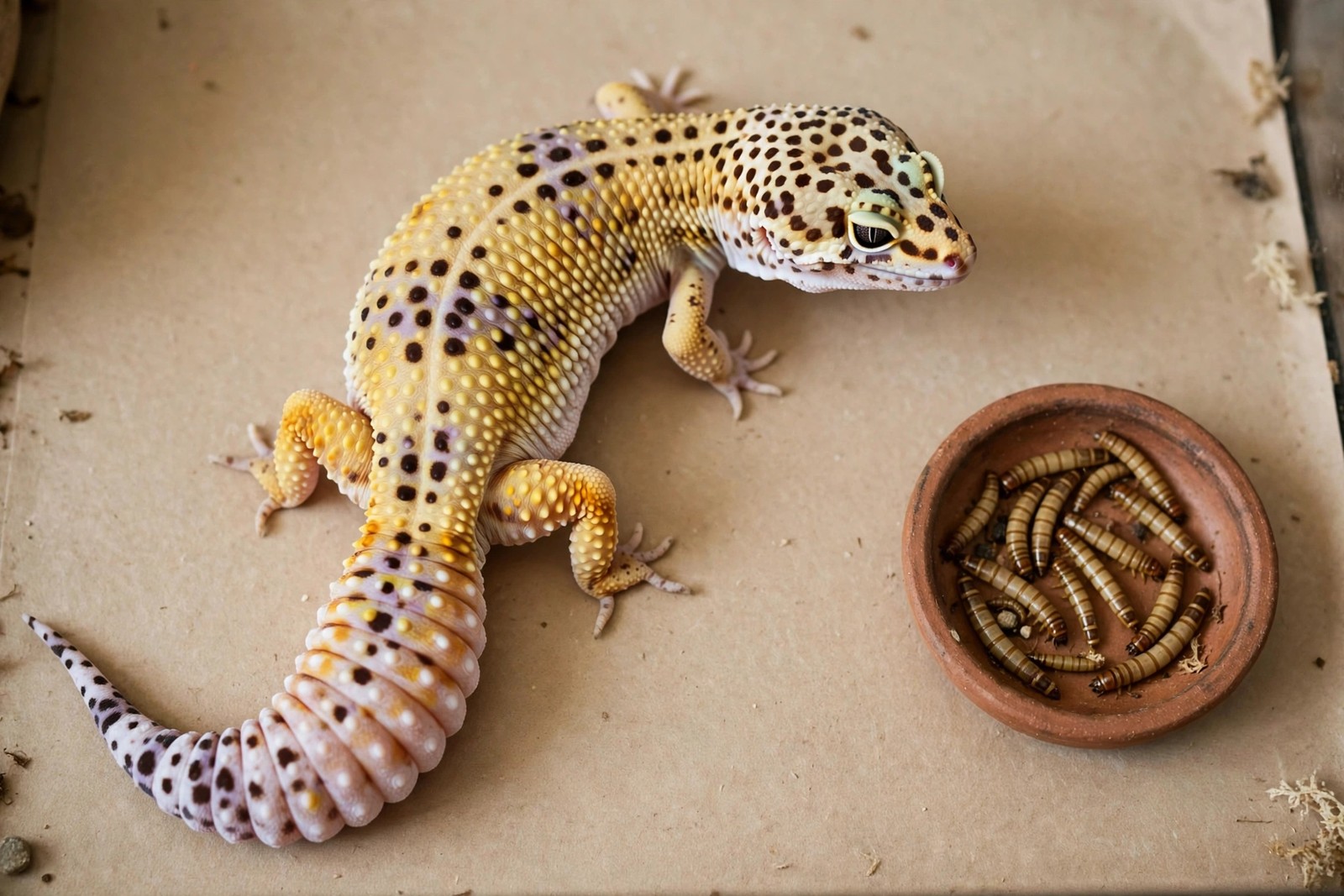
A healthy leopard gecko is built to store fat. The tail is the pantry — plump, smooth, and roughly in proportion with the body — so a fat tail by itself is no cause for concern. Too many fatty feeders show up somewhere else first: the body starts keeping up with, then overtaking, the tail. Reading that change early matters, because an overweight gecko is harder to turn around than one that is merely well fed.
The Body Widens Beyond the Tail
Compare the widest point of the body with the widest point of the tail, viewed from above. In a gecko carrying the right condition, the tail is the broadest part of the silhouette. When the belly and midsection widen until the body matches or exceeds the tail, the extra is not storage doing its job — it is surplus spread where the gecko has no proper place to put it. The change creeps in over weeks, which is why owners miss it: the gecko looked fine yesterday and the day before, and the drift only shows across a month of meals.
Fat Deposits Behind the Front Legs
The most telling single sign is a pair of soft, bubble-like deposits tucked behind the front legs, in the gecko's armpits. These bulges are stored fat with nowhere else to go, and keepers watch for them precisely because the tail can look normal while they grow. A gecko in good condition has clean, flat lines behind the front legs. Once those pockets appear and persist, the diet's fat share has been too high for too long, whatever the tail is doing.
A Sluggish Hunter and a Fading Appetite
Behavior gives the third signal. A gecko that once struck eagerly — tracking a feeder, tail tip twitching, striking fast — may turn slow and picky on a rich diet: half-hearted lunges, feeders watched and abandoned, whole meals refused. Read appetite change in both directions. A gecko turning down the fatty treats it used to love is often a gecko that is simply full in the long-term sense. A gecko that stops eating entirely, loses interest in everything, or lets the tail thin is a different matter and belongs in front of a veterinarian, because a total stop is never explained away as overfeeding alone.
Waxworms: The Usual Culprit
Waxworms are the classic high-fat feeder in this story. Soft, rich, and easy to catch, they are the feeder many geckos prefer over everything else, and a gecko offered them often may start holding out for them and refusing leaner staples. The correction is rebalancing, not banning: staple feeders such as crickets and roaches carry the everyday feeding, fatty feeders return to being rare treats, and the gecko's hunting edge usually sharpens within weeks as meals get leaner. Body shape, tracked over time, is the measure to follow rather than any set amount, and a veterinarian who knows reptiles can judge condition hands-on at a check.
Track the Trend, Not the Impression
Weigh the gecko on a small scale on a regular rhythm and note the shape beside the figure — tail width against body width, and whether the leg deposits are present. Pet Passport on KinsLe is the packet that holds those weight entries and feeder notes together, ready to carry into a reptile vet appointment where a six-month drift in shape is worth more than any single weigh-in. A photograph from directly above, taken monthly in the same light, makes the widening obvious in a way memory never does.
Pet Passport, kept current on KinsLe, gives that slow change in shape a dated history instead of a guess when the next check comes around.